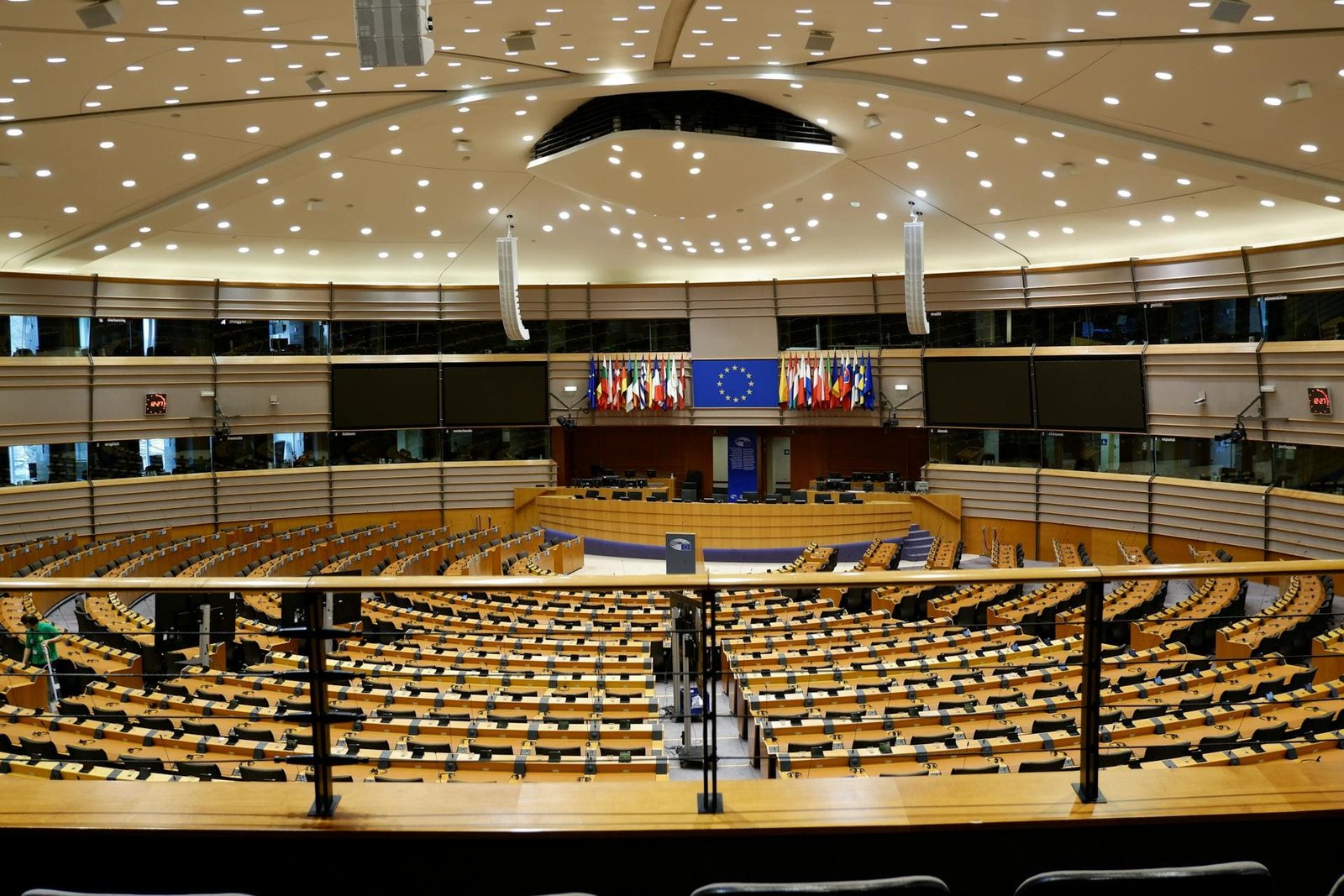
The European Parliament has adopted a resolution firmly condemning the Houthi missile and drone attacks against Saudi Arabia, Israel, the United Arab Emirates and maritime navigation. It calls for an immediate cessation of hostilities, the strengthening of the EUNAVFOR ASPIDES naval operation and the listing of the Houthi movement on the Union's terrorist list, with humanitarian exemptions. This text is not a law: it expresses the Parliament's political position and calls on the Council, the Commission and the Member States to act.
Since July 2026, the Houthis have stepped up missile and drone attacks against Saudi cities, energy infrastructure and civilian airports, and have declared a naval blockade against Saudi Arabia. These attacks disrupt maritime trade in the Red Sea and the Bab el-Mandeb Strait, driving up energy and transport prices. Parliament considers that the stability of the region and the security of European supplies are at stake.
Condemnation of the attacksParliament condemns the missile and drone attacks against Saudi territory, in particular King Khalid Airport in Riyadh, schools and residential areas, as well as the attacks against Israel, the United Arab Emirates and ships in the Red Sea.
Listing on the terrorist listIt calls on the Council, on a proposal from the High Representative, to add the Houthi movement, its military and political branches and its leaders to the EU terrorist list without delay. Any restrictive measure should be targeted and accompanied by clear humanitarian exemptions, in accordance with United Nations Security Council Resolution 2664 (2022).
Strengthening EUNAVFOR ASPIDESIt deplores the fact that the EUNAVFOR ASPIDES naval operation has far fewer than the ten ships deemed necessary for its launch. It calls on the Member States to provide frigates with air defence and counter-drone capabilities and maritime patrol aircraft, and on the Council to extend the operation beyond 28 February 2027.
Assessment for energy and pricesIt calls on the Commission to urgently assess the consequences of the disruption of the Bab el-Mandeb Strait for the EU's energy security, inflation, supply chains and European ports, and to present emergency measures, including diversification of supplies and targeted support for households and small and medium-sized enterprises.
Humanitarian aid under controlIt calls for strict control of EU-funded humanitarian aid in Yemen, independent verification of partners and safeguards against any diversion to armed groups. It calls for an increase in aid and for addressing funding shortages, in particular through the future Europe in the World instrument.
The resolution was adopted by 291 votes to 271, with 8 abstentions, in the roll-call vote of 22 October 2026.
For European citizens, this vote does not add any directly applicable rule. However, it sends a strong political signal: Parliament is calling for the Houthis to be added to the EU terrorist list, which could ultimately lead to the freezing of their assets and a ban on making funds available to them. It also calls for an assessment of the effects on energy and maritime transport prices, and for targeted support for households and small businesses if the situation worsens. Strengthening the naval operation aims to protect freedom of navigation in the Red Sea, on which many goods imported into Europe depend.
The European Parliament has adopted a resolution condemning the Houthis' attacks and calling on the Council to list the movement as an EU terrorist organisation. This is not a law, but a clear political signal: maritime security and freedom of navigation are direct European interests, and the Union must stop outsourcing their protection.
Listing the Houthis as an EU terrorist organisation is not about appearances. Such a decision, taken on a proposal from the High Representative, makes it possible to freeze the assets of the movement and its facilitators, and to prohibit the provision of funds. Parliament is not content merely to condemn: it calls on the Council to act without delay, targeting the military and political branches, the leaders and the security apparatus. The counterpart is explicit: any measure must be targeted and accompanied by clear humanitarian exemptions, so as not to block aid to Yemeni civilians. That is the right approach: hit those responsible, not the victims.
The text does not stop there. It calls for dismantling financing channels, including oil smuggling and illicit capital transfers, and for strengthening cooperation between financial intelligence units, Europol and Eurojust. It also calls for extending restrictive measures to all those supplying weapons and components to the Houthis, and for better enforcement of the UN arms embargo. On this point, Parliament pushes member states to shoulder their responsibilities: rigorous and transparent arms export assessments, in line with Common Position 2008/944/CFSP and the Arms Trade Treaty.
The Red Sea and the Bab el-Mandeb Strait are not dots on a map. They are trade routes on which entire cargoes bound for Europe depend. The Houthis' attacks on ships, and the declared naval blockade against Saudi Arabia, drive up transport and insurance costs and threaten the security of energy supplies. Parliament says it plainly: disruption of logistics flows has become an instrument of strategic pressure. In the face of this, Operation EUNAVFOR ASPIDES is essential, but it is undersized. Parliament deplores that it has far fewer than the ten ships deemed necessary at its launch and calls on member states to provide frigates with air defence and counter-drone capabilities, as well as maritime patrol aircraft.
This is where the problem lies. Member states that are not yet contributing must do so, and the Council must extend the operation beyond 28 February 2027. But the question of cost cannot be ignored: every ship sent is a ship withdrawn from another mission, and every delay in contributing means merchant ships left exposed. Parliament also calls for an urgent assessment of the consequences for energy, inflation and European ports, and for targeted support for households and SMEs. An approach based on individual responsibility and cooperation with Gulf partners, rather than a new layer of bureaucracy, would be more effective. The text moves in that direction by calling for coordination with the Saudi-led maritime coalition and with NATO.
Condemning is not enough: financing must be dried up, routes protected and the cost of ships shouldered.