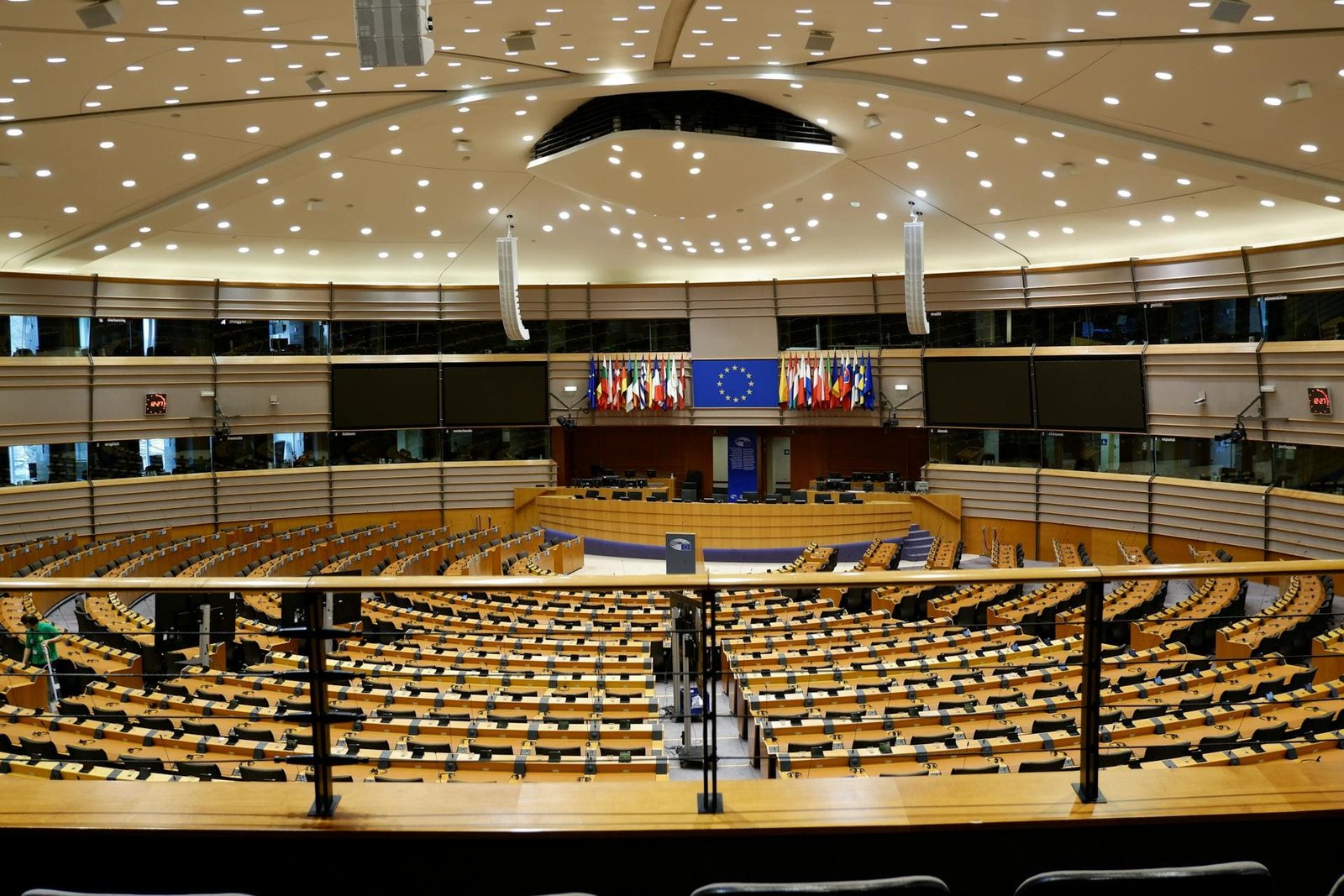
The European Parliament adopted amendments that postpone to 5 February 2030 for operated assets and to 5 August 2031 for non-operated assets the obligations to report methane measures at site level, originally provided for by Regulation (EU) 2024/1787. It also set 31 May 2031 as the deadline for importers to demonstrate equivalence and to report methane intensity. For third countries subject to EU restrictive measures, it instead brought certain deadlines forward to 2028 and 2030. The text is Parliament's first-reading position; it must now be negotiated with EU governments.
Regulation (EU) 2024/1787 governs the monitoring, reporting and verification of methane emissions in the energy sector. The Commission had proposed postponing some of these obligations. Parliament amended that proposal by setting new dates for operators and importers, while adding a stricter regime for supplies from countries under EU sanctions.
Reporting of site-level measurementsEU operators and companies must submit a source-level methane emissions quantification report, supplemented by site-level measurements, for operated assets by 5 February 2030 at the latest, and then every year before 31 May. For non-operated assets not yet reported, the deadline is set at 5 August 2031, and then annually before 31 May.
Equivalence for importersBy 31 May 2031 at the latest, and then every year, importers must demonstrate that, for contracts concluded or renewed from 4 August 2024, the imported oil, gas or coal comes only from producers applying monitoring, reporting and verification measures equivalent to those of the regulation. They must also inform the authorities of the results of their efforts for the previous year.
Methane intensity of fuelsEU producers and importers must report the methane intensity of oil, gas and coal placed on the EU market by 5 August 2031 at the latest, and then every year before 31 May, for contracts concluded or renewed from 4 August 2024. For earlier contracts, they must make all reasonable efforts and report annually on those efforts from 5 August 2031.
Earlier deadlines for countries under sanctionsFor oil, gas and coal originating in or exported from third countries subject to EU restrictive measures (prohibiting or restricting their import), the equivalence obligations for importers apply from 31 May 2028, methane intensity reporting from 5 August 2028 and the additional obligations from 5 August 2030. Importers must indicate the volumes concerned separately, including in mixed cargoes.
Commission reportThe Commission must present to the European Parliament and the Council, by 1 July 2029 at the latest, a report on the implementation of Articles 27 to 29, covering in particular sanctions regimes, the accreditation of verifiers and security of supply. It may propose amendments in the event of persistent difficulties.
Parliament adopted the text by 341 votes in favour, 225 against and 6 abstentions (electronic roll-call vote).
For EU citizens, this vote means that energy sector companies and importers of oil, gas and coal have more time, until 2030 or 2031, to comply with methane emissions reporting obligations. By contrast, imports from countries under EU sanctions will be subject to these obligations earlier, from 2028 for some of them. The text is not yet final: it must be negotiated with the Member States before becoming law.
The European Parliament has adopted a first-reading position that postpones methane emissions reporting obligations to 2030 and 2031, while imposing earlier deadlines, from 2028, for imports from countries under EU restrictive measures. A compromise that combines flexibility for operators with geopolitical firmness, but leaves intact the administrative burden denounced by businesses.
The postponement of site-level reporting obligations, to 5 February 2030 for operated assets and 5 August 2031 for non-operated assets, gives operators a respite of several years. It is an implicit recognition that the initial deadlines were untenable. But the mechanism remains unchanged: each site will have to produce a source-level quantification, supplemented by site-level measurements, and have the report verified by an accredited verifier. The compliance cost is not postponed, it is simply deferred.
For an SME in the sector, this means continuing to mobilise scarce resources for a reporting exercise whose real climate usefulness remains to be demonstrated. The postponement removes no substantive obligation, it shifts the expense. A real simplification would have consisted of removing the duplication between source-level reporting and site-level measurements, or exempting small operators. The text does not do this.
The addition of an Article 29a, which brings forward to 2028 the deadlines for imports of oil, gas and coal from countries under restrictive measures, is consistent with the objective of not circumventing sanctions. It would be absurd for Russian or Iranian products to benefit from an additional delay granted for reasons of security of supply. Parliament is right to close this door.
But the mechanism creates a new category of products, with distinct dates, an indicative list of countries to be kept up to date, and an obligation for importers to isolate the volumes concerned, including in mixed cargoes. For companies, this means setting up additional traceability, country by country, contract by contract. The Commission will have to publish a list, but it will be indicative: operators will have to check themselves whether a country is covered, at the risk of getting it wrong. The cost of legal certainty rests on them.
The Commission report on 1 July 2029 is a good thing: it will make it possible to assess whether national sanctions regimes are being applied and whether verifier accreditation is keeping pace. But it comes after the 2028 deadlines, which limits its ability to correct problems in time.
The postponement does not remove the burden, it shifts it in time. And for countries under sanctions, Parliament brings the deadline forward without simplifying the paperwork.