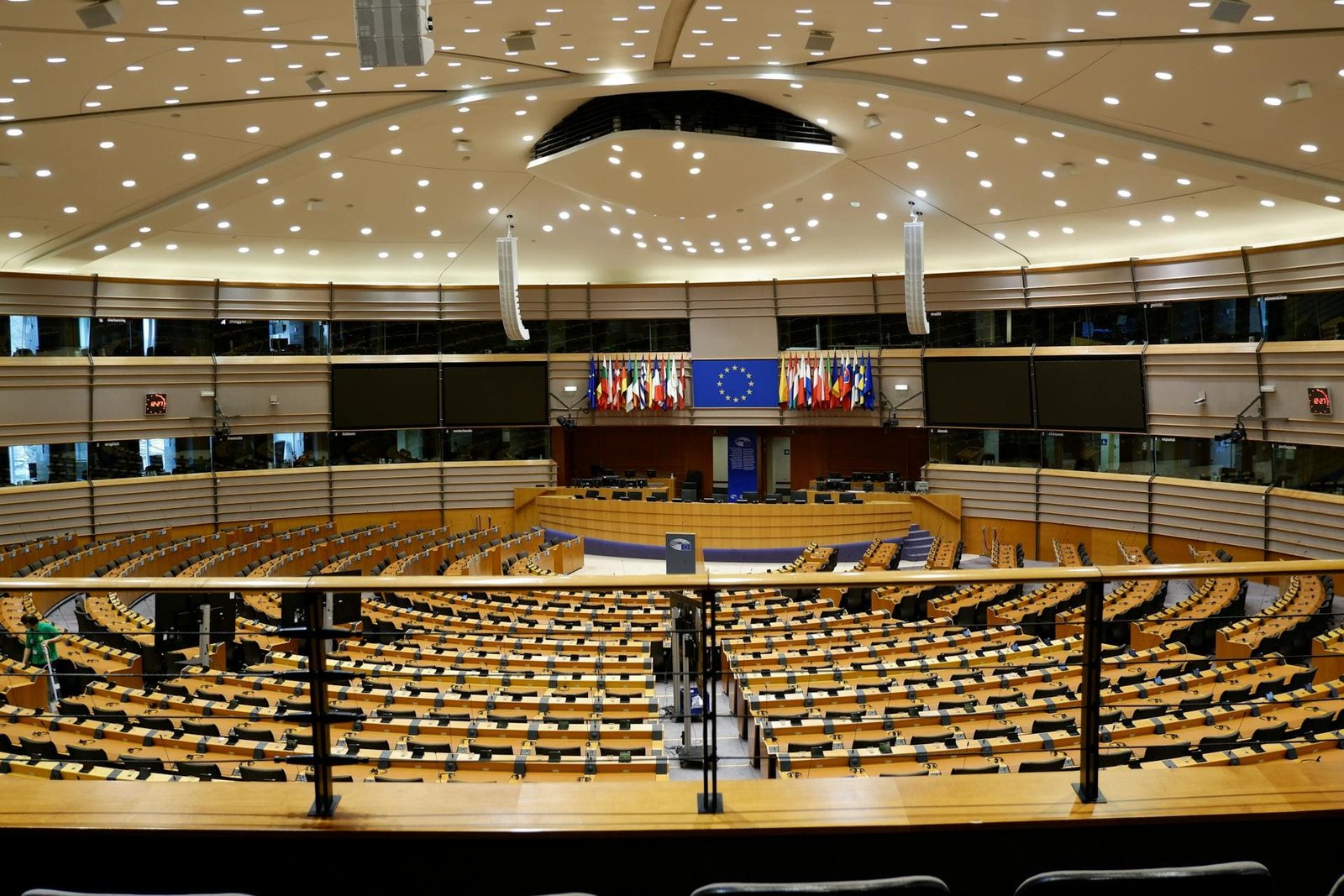
On 20 October 2026, the European Parliament adopted by 531 votes for, 93 against and 41 abstentions a text that sets common rules to protect vulnerable adults in cross-border situations. It approves the agreement reached with the governments of the Union. This text is the final negotiated version; member states must still give their formal agreement before it becomes law.
Today, when a vulnerable adult (for example an elderly person with cognitive disorders) has their protection arranged in a country of the Union, decisions taken in one country are not automatically recognised in another. Families and professionals face long and costly procedures. The adopted text aims to remedy this legal uncertainty by organising cooperation between authorities and by creating a European certificate.
A European certificate of assistance and representationThis document will make it easier to have recognised in another country of the Union the powers of a representative designated to protect an adult.
Clear rules for choosing the competent courtThe text determines which country of the Union is competent to take measures to protect the person or their property, which avoids conflicts between jurisdictions.
Automatic recognition of protection measuresMeasures taken in one country of the Union will be recognised and may be enforced in the other countries, without a new burdensome procedure.
Strengthened cooperation between authoritiesJudges, competent authorities and central authorities of the countries of the Union will have to cooperate and will be able to exchange information electronically through a uniform legal framework.
A broadened scopeThe text explicitly covers measures of assistance in the exercise of legal capacity and powers of representation conferred by an adult, including supported or joint decision-making.
Parliament adopted the text by 531 votes for, 93 votes against and 41 abstentions.
For the families concerned, this text simplifies life: a protection measure taken in one country of the Union (such as the appointment of a guardian) will be recognised in another country, without going through long procedures again. The European certificate will facilitate the steps for people who accompany a vulnerable adult abroad. Electronic exchanges between authorities will make decisions faster. The text applies only to cross-border situations and excludes in particular maintenance obligations, matrimonial property regimes, successions and social security.
A vulnerable adult protected in France, an account blocked in Germany, a guardian who has to start all over again: that is what the regulation adopted on October 20, 2026 by 531 votes for, 93 against and 41 abstentions puts an end to. Parliament approves the agreement negotiated with the Council, which creates a European framework for the mutual recognition of protection measures and a European certificate of assistance and representation. This is not one more bureaucratic step forward: it is the end of an administrative nightmare for thousands of families.
Today, when an elderly person loses cognitive capacity and a judge organizes their protection in one country, that decision is worth nothing in another. A family that moves or manages assets abroad must start a new procedure, sometimes taking years, with lawyer and translation costs. The regulation establishes a principle of mutual recognition: a measure taken in one Member State is recognized in the others, subject to limited exceptions. The European certificate, a uniform document issued by the authority of origin, replaces the cascade of legalizations and certified translations. For a guardian or an agent, this means time and money given back to protecting the person, not to paperwork.
The text also clearly defines the applicable law and the competent jurisdiction, which avoids races between courts. It includes powers of representation conferred by the adult themselves, including supported or joint decision-making, and not only measures imposed by a judge. This is a liberal advance: the person's autonomy is recognized before coercion.
The regulation applies only to cross-border situations and leaves aside successions, matrimonial property regimes and social security. These exclusions are justified by subsidiarity, but they create blind spots: a protected adult whose estate includes a house abroad will still have to go through separate succession procedures. A more ambitious approach could have integrated recognition of future protection mandates into successions, but it would have encroached on national family law, which the principle of subsidiarity prohibits.
Another limitation: the European certificate remains optional. Families will have to decide whether to use it, and national authorities will have to ensure that their registers are interconnected via the decentralized IT system provided for by Regulation 2023/2844. The cost of implementation will fall on administrations, not on litigants, but the risk is that local courts will continue to demand additional documents out of habit. Simplification will be real only if judges apply the principle of recognition without friction.
Mutual recognition of protection measures is not a favor done to families, it is the condition for free movement not to become a trap for the most vulnerable.