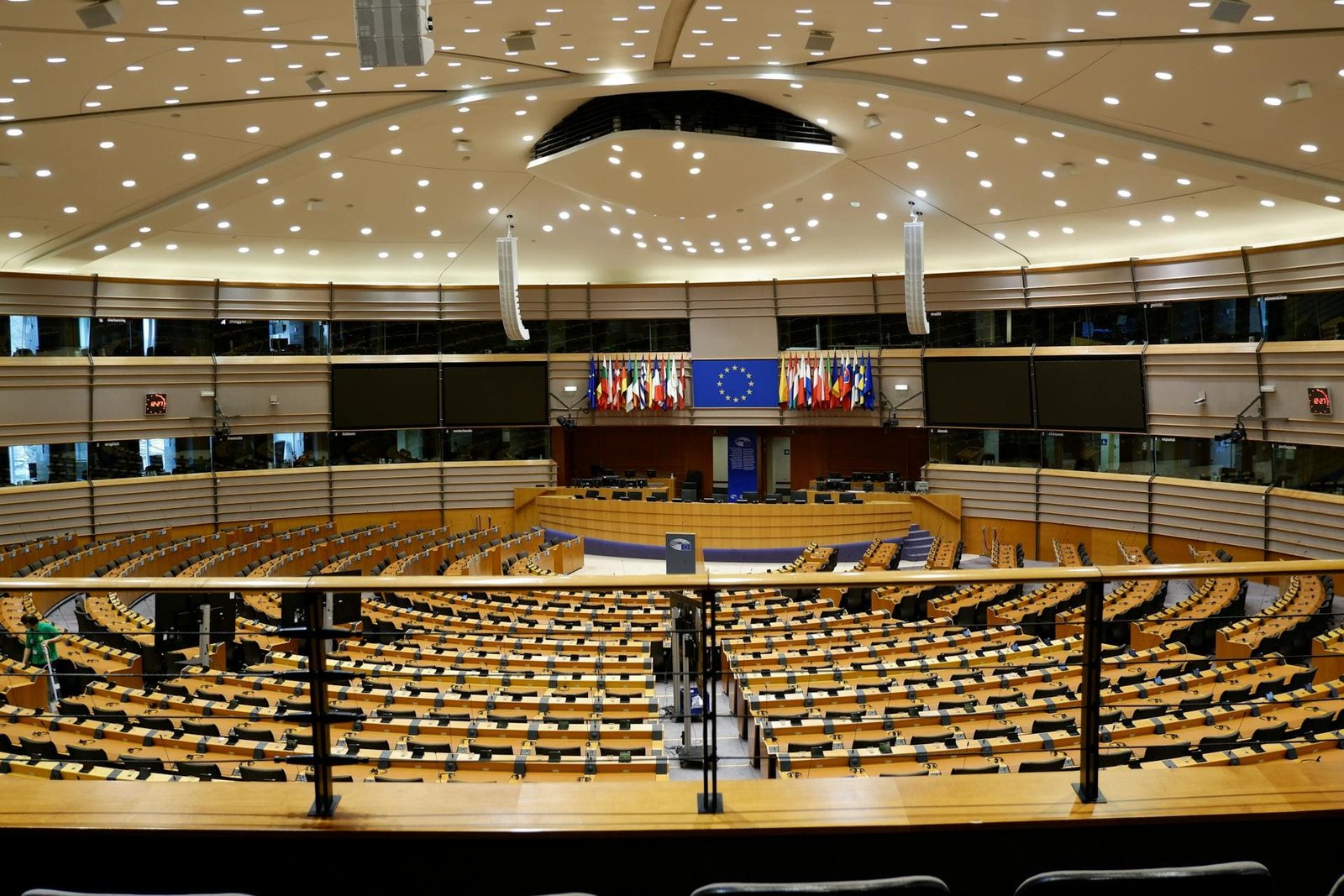
The European Parliament has adopted a recommendation condemning Chinese support for the Russian war in Ukraine and calling for concrete measures: targeted sanctions, investment screening, customs duties on small parcels and a coordinated strategy on semiconductors. This text is not a law: it asks the Commission, the Council and the EU's chief diplomat to act. Parliament also calls for the lifting of Chinese sanctions against more than 100 European citizens and parliamentarians.
China is the EU's leading trading partner, but relations have become strained: unfair trade practices, support for Russia, reciprocal sanctions since 2021 and critical dependencies (rare earths, batteries, medicines). Parliament wants a united European response rather than country-by-country reactions. It also calls for a de-risking strategy in strategic sectors and tighter screening of Chinese investments.
Sanctions over support for RussiaParliament condemns China's role as a decisive supporter and supplier of dual-use technologies in Russia's war against Ukraine. It calls for expanding targeted restrictive measures and the list of entities and supply chain nodes providing material assistance to Russia, including enforcement measures against the shadow fleet and re-export schemes.
Customs duties on small parcelsParliament calls for strict enforcement of customs duties on non-EU small parcels valued at 150 EUR or less, in force since 1 July 2026, and of the EU-wide small parcel handling fee, applicable from 1 November 2026. It also wants intensified checks on non-compliant goods sold via platforms such as Temu, Shein or AliExpress.
De-risking in strategic sectorsParliament calls for continuing the de-risking and economic rebalancing strategy, targeting critical raw materials, critical medicines, industrial magnets, biotechnology, quantum computing, batteries, electric vehicles, ICT and semiconductors. It also calls for investigating China's coercive behaviour on rare earths and for considering the anti-coercion instrument.
Screening of Chinese investmentsParliament calls for measures to prevent security risks linked to Chinese investments, by strengthening the screening of foreign direct investment in strategic sectors such as media services, critical raw materials and critical infrastructure and technologies.
Lifting sanctions against EuropeansParliament calls on the Chinese authorities to lift all sanctions imposed in March 2021 on current and former European national parliamentarians, European institutions and bodies and their staff. It notes with concern that more than 100 European citizens and several organisations remain under Chinese sanctions.
The recommendation was adopted by 454 votes in favour, 86 against and 110 abstentions in the electronic roll-call vote of 7 October 2026.
In practice, this vote does not yet change the law: it sets Parliament's position and calls on governments and the Commission to act. For consumers, it supports the customs duties already in place on small parcels of 150 EUR or less since 1 July 2026 and the handling fee applicable from 1 November 2026, which may make purchases on Chinese platforms more expensive. For European businesses, it pushes for diversifying supplies of rare earths, batteries and semiconductors, and for better screening of Chinese investments in sensitive sectors. For researchers and European parliamentarians still sanctioned by China, Parliament calls for these sanctions to be lifted and describes those targeting researchers as a hostile political act.
On 7 October 2026, the European Parliament adopted a recommendation condemning Chinese support for Russia's war in Ukraine and calling for targeted sanctions, customs duties on small parcels and tighter scrutiny of Chinese investment. This text is not a law: it addresses requests to the Commission, the Council and the EU's foreign policy chief, who remain free to follow them or not. The vote, 454 in favour, 86 against and 110 abstentions, sets out a political position, not a legal obligation.
Parliament is not voting on a law, it is voting on a wish. The recommendation addressed to the Council, the Commission and the High Representative commits no one: it expresses a majority, it does not change the law. Calls to extend sanctions against entities supplying Russia with dual-use technologies, to fight the shadow fleet or to tighten scrutiny of Chinese investment will remain words if member states and the Commission do not turn them into action. The cost of this inertia is borne by European businesses, which are already facing unfair competition and critical dependencies.
This weakness is structural: Parliament has no say over foreign policy or sanctions, which are decided unanimously in the Council. It can only create political pressure. Yet in a Europe where decisions are often taken by 27, a recommendation without a binding deadline risks remaining a dead letter. The real question is whether national governments, which hold the competence, will take up the most concrete demands, particularly on parcels and investment.
Two measures are already in law, or nearly so: customs duties on non-EU parcels of EUR 150 or less, in force since 1 July 2026, and the EU-wide parcel handling fee, applicable from 1 November 2026. Parliament calls for their strict enforcement, which is a good thing: these parcels escaped VAT and duties, creating a distortion of competition to the detriment of European traders. But the fee and the duties will not be enough if controls remain weak. For a small trader, the difference is made on the ground, not in a resolution.
On rare earths, batteries and semiconductors, Parliament calls for a de-risking strategy. The mechanism is simple: China controls a dominant share of the processing of these materials, and excessive dependence gives Beijing a lever of coercion. In the event of tension, it can restrict exports and paralyse entire supply chains. Parliament calls for investigating Chinese coercive behaviour and considering the anti-coercion instrument, but without setting a binding diversification target. A more liberal approach would have consisted of opening markets and securing supplies through trade partnerships, rather than piling up control mechanisms.
Scrutiny of Chinese investment in the media, critical raw materials and critical infrastructure is a legitimate demand for economic security. But every additional filter has a cost: it slows projects, discourages capital and can backfire on European companies seeking partners. Parliament does not say who will pay for this scrutiny, nor how to prevent France, Germany or the Netherlands from applying different rules, which would fragment the single market still further.
A recommendation without a deadline or sanction is not a foreign policy, it is a pious wish.