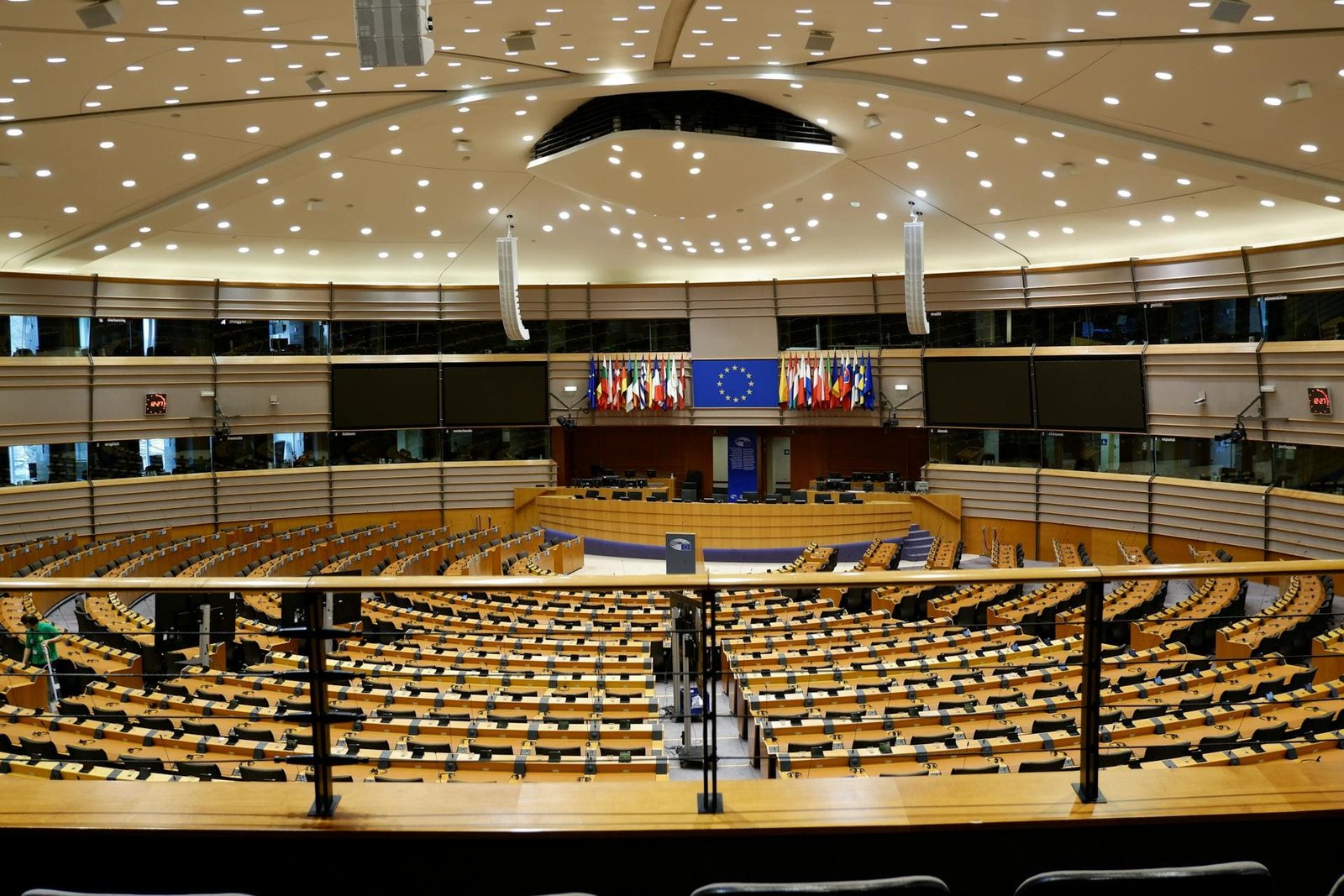
The European Parliament adopted a resolution that strongly condemns the attempt by the ruling Georgian Dream party to ban opposition parties in Georgia and demands the immediate withdrawal of the constitutional complaint filed against them. It also calls for the immediate and unconditional release of all political prisoners, the repeal of provisions allowing disproportionate restrictions, and reiterates its call for targeted sanctions and visa bans against Georgian officials. The text was adopted by 445 votes in favour, 37 against and 97 abstentions. The Parliament calls on the Commission and the Member States to act, but this resolution is not a law and does not impose legal obligations.
The situation in Georgia has been deteriorating for several years in terms of democracy, media freedom and the rule of law. In November 2025, the Georgian parliament controlled by Georgian Dream initiated proceedings before the Constitutional Court to ban several opposition parties, including the United National Movement, the Coalition for Change and the Strong Georgia coalition, Lelo. In September 2026, the party For Georgia, the only opposition party still represented in parliament, was added to this procedure. The European Parliament considers that this move aims to eliminate any legitimate political opposition and to transform Georgia into a one-party regime. It recalls that any attempt to ban established parties distances Georgia from the European Union and prevents progress towards accession.
Withdrawal of the constitutional complaintThe Parliament strongly condemns the attempt to ban Georgian opposition parties and demands the immediate withdrawal of the constitutional complaint filed against them.
Release of political prisonersIt calls for the immediate and unconditional release of all political prisoners, including Elene Khoshtaria, Mzia Amaglobeli, Mikheil Saakashvili, Giorgi Baramidze and Nika Melia, as well as all persons detained for peacefully protesting.
Repeal of disproportionate restrictionsIt calls for the repeal of provisions that allow disproportionate restrictions to be imposed on parties and persons associated with banned parties, and for an end to the obstruction of European political foundations.
Targeted sanctions and visa bansIt reiterates its call for targeted sanctions and visa bans against those responsible for democratic backsliding, violent repression and political persecution, starting with Bidzina Ivanishvili, Irakli Kobakhidze, Shalva Papuashvili and Kakha Kaladze.
Support for European aspirationsIt reaffirms its unwavering support for the European aspirations of the Georgian people and recalls that any attempt to ban established political parties distances Georgia from the Union and prevents any progress towards accession.
The resolution was adopted by 445 votes in favour, 37 against and 97 abstentions in an electronic roll-call vote.
For European citizens, this resolution expresses the official position of the European Parliament on the political situation in Georgia. It does not create new laws or legal obligations for the Member States or for Georgia. It calls on the European Union and its Member States to take concrete measures, including targeted sanctions and visa bans against named Georgian officials, and to ensure that the deterioration of the situation in Georgia has consequences. The Parliament also reaffirms that the European aspirations of the Georgian people are supported and that banning opposition parties constitutes an obstacle to accession to the Union.
The European Parliament has adopted a resolution condemning Georgian Dream's attempt to ban opposition parties and demanding the immediate withdrawal of the constitutional complaint. By 445 votes to 37 with 97 abstentions, it names four individuals responsible and calls for targeted sanctions. But a resolution is not a law: it creates no legal obligation. The real issue lies elsewhere: will the Union and the member states finally turn these words into concrete consequences?
Parliament does not stop at condemnation. It notes that banning the only opposition party still represented in parliament contradicts the regime's claim that only parties "boycotting" parliament were targeted. This is an admission: the maneuver is indeed aimed at eliminating any legitimate opposition, including those who play by the institutional rules. By naming Bidzina Ivanishvili, Irakli Kobakhidze, Shalva Papuashvili and Kakha Kaladze, Parliament identifies individual responsibilities. But a resolution is not a law: it creates no legal obligation. Sanctions and visa bans remain appeals addressed to the Council and the member states. Yet without a binding decision, these names remain words on paper.
Parliament further deplores that the Union and most member states have still not taken measures so that the deterioration in Georgia carries concrete consequences. This is the weak point of the resolution: it notes inaction without creating the mechanism that would correct it. An approach based on subsidiarity and responsibility would have consisted in explicitly conditioning aid and visas on verifiable criteria, and in letting each member state assume responsibility for its own decisions. Here, the Union speaks with one voice but does not decide.
The resolution recalls that any attempt to ban established parties pushes Georgia away from the Union and prevents any progress toward accession. The mechanism is simple: without operational political opposition, there is no democracy, and without democracy, the Copenhagen criteria are not met. Georgia therefore cannot move toward accession as long as this constitutional complaint remains pending. Parliament reaffirms its support for the European aspirations of the Georgian people, but it sets a clear condition: the withdrawal of the complaint and the release of political prisoners.
The text also calls for the repeal of provisions allowing disproportionate restrictions on parties and persons associated with banned parties, and for an end to the obstruction of European political foundations, whose Konrad Adenauer and Friedrich Naumann offices were forced to close in Tbilisi in September 2026. These are concrete measures, but they remain requests addressed to the Georgian authorities. Parliament cannot impose them. It can only note that the current regime is drifting away from the values it claims to defend.
Naming those responsible is only worth something if the Union stops settling for words.