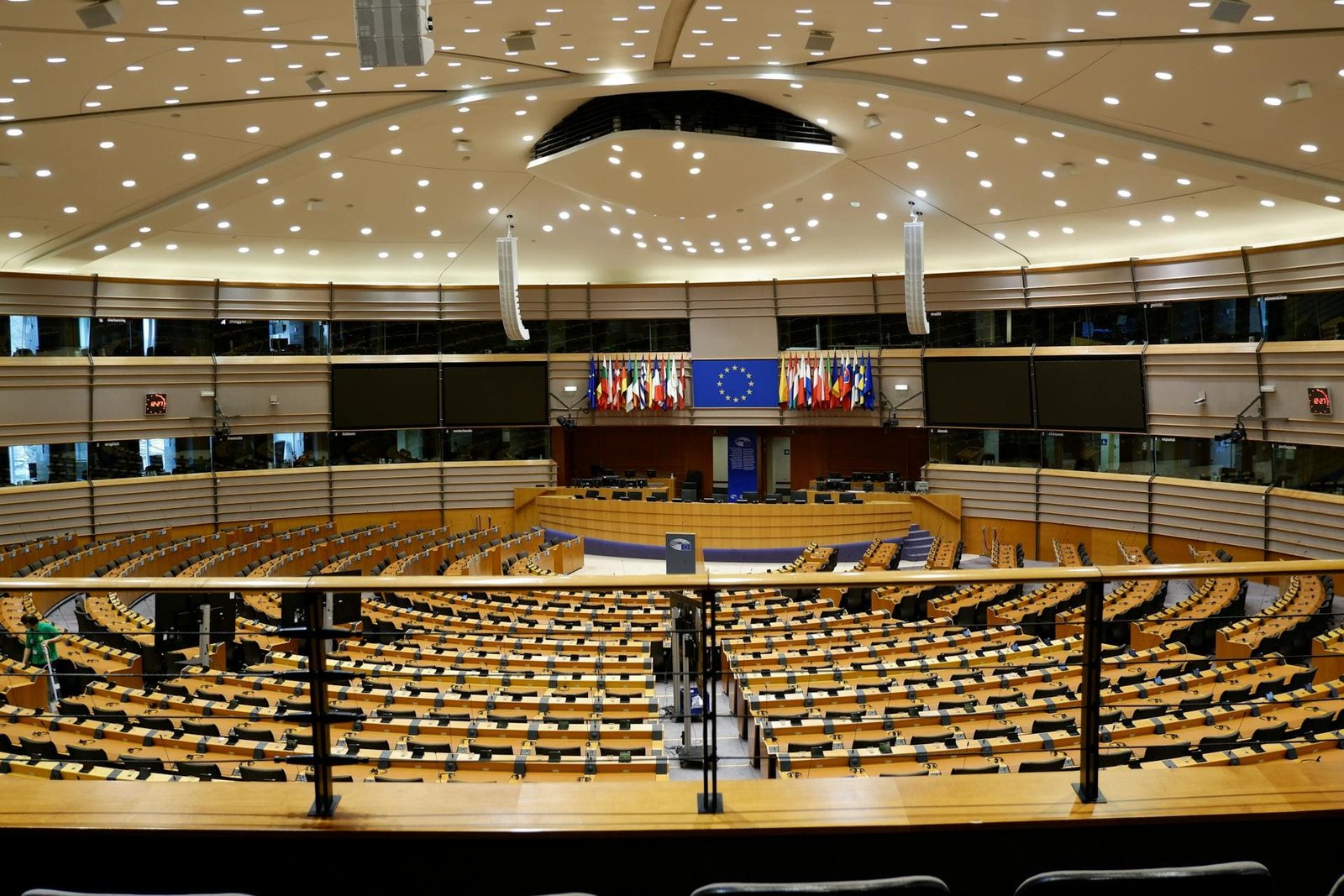
The European Parliament has adopted a resolution declaring the elections to the Russian State Duma held from 18 to 20 September 2026 illegitimate and undemocratic. It refuses to recognise this Duma as the legitimate representative and legislative body of the Russian Federation and rejects any legal or political consequence of the elections organised by Russia in the temporarily occupied Ukrainian territories. Parliament calls on the Council and the Member States to adopt the same position of non-recognition. The text is an own-initiative resolution of Parliament: it is not a law, but a political position calling on the Council and the Member States to act.
The elections to the Russian State Duma took place from 18 to 20 September 2026, for the first time in wartime, with electronic voting extended to 33 regions and voting spread over several days. According to Parliament, these elections were held without genuine opposition, without free media, without credible observers and in a climate of repression. Russia did not invite the OSCE/ODIHR election observation mission, and Russian observation organisations such as Golos were closed or persecuted. Elections were also organised in Crimea and in parts of the Donetsk, Kherson, Luhansk and Zaporizhzhia regions, as well as in Transnistria (Moldova) and in the Georgian regions of Abkhazia and Tskhinvali/South Ossetia. Parliament responds to this situation with an own-initiative resolution, adopted on 8 October 2026.
Non-recognition of the DumaParliament refuses to recognise the Russian State Duma as the legitimate representative and legislative body of the Russian Federation and rejects any legal or political consequence of the elections organised by Russia in the temporarily occupied Ukrainian territories.
No official contactIt calls on the Union institutions and the Member States to maintain no official contact with the newly constituted Duma or its members, to oppose their participation in interparliamentary assemblies and to consider null and void any act by which this Duma would claim to legislate on the occupied Ukrainian territories, annex them or ratify their status.
46 MPs singled outParliament condemns the entry into the new Duma of 46 individuals who served in the Russian forces that took part in the invasion of Ukraine or held positions in the occupation administrations.
Targeted sanctions requestedIt calls for Union sanctions against electoral officials, judges, prosecutors, Rosfinmonitoring executives, members of the occupation authorities and newly elected MPs not yet sanctioned, in particular those who served in the invasion forces or in the occupation administrations, with an entry ban covering the entire Schengen area.
Release of political prisonersIt demands the immediate and unconditional release of Grigory Melkoniants, co-chair of Golos, and other imprisoned election observers, as well as the release and full political rehabilitation of all political prisoners, human rights defenders, peace activists, journalists and minors detained in Russia, including Alexei Gorinov, Lev Shlosberg, Maxim Kruglov, Maria Ponomarenko and Aleksandr Kynev.
The resolution was adopted by 530 votes in favour, 32 against and 10 abstentions, in an electronic roll-call vote.
For European citizens, this resolution means that the Union will not treat the Russian Duma as a legitimate parliament and that the Russian MPs concerned could be banned from entering the Schengen area. People who defend human rights in Russia, independent journalists and persecuted election observers are supported by Parliament, which calls for their release and long-term European funding for Russian civil society. Parliament also calls on the Member States to better protect threatened Russians who reside legally in the Union and can no longer renew their documents at Russian consulates. Finally, it reaffirms that there will be no normalisation of relations with Russia without a just and lasting peace for Ukraine, the total withdrawal of Russian troops and an end to domestic repression.
The European Parliament declares the Russian elections of 18 to 20 September 2026 illegitimate and refuses to recognize the Duma as the representative and legislative body of the Russian Federation. This is not a law, it is a political position: it binds no one, but it sets a course that member states and the Council are invited to follow. The real issue is not Moscow, it is here: will the Union agree to treat as a parliament a sham that legislates over occupied Ukrainian territories?
The resolution adopted by 530 votes for, 32 against and 10 abstentions imposes no legal obligation. It does not close embassy doors, does not freeze assets, does not suspend visas. It says one simple thing: the Russian Duma is not a legitimate parliament, and the acts by which it claims to annex or ratify the status of the occupied Ukrainian territories are null and void. In doing so, it deprives Vladimir Putin's regime of the appearance of normality it seeks to cash in.
The mechanism is that of recognition: a parliament that legislates over an occupied territory needs other parliaments to treat it as an interlocutor. By refusing all official contact and asking member states to do the same, Parliament puts a stop to this implicit recognition. The cost is nil for European citizens. The benefit is not letting the idea take hold that a vote without opposition, without free media and without credible observers counts as an election.
Parliament calls for sanctions against precise categories: election officials, judges, prosecutors, Rosfinmonitoring executives, members of occupation administrations and newly elected MPs not yet sanctioned, with a ban on entry into the entire Schengen area. The logic is sound: hit those who carry out repression, not the Russian population. But a list of names is not a policy. The Council can adopt these measures unanimously, or not adopt them at all. The text provides no binding mechanism, no timetable, no consequence in the event of inaction.
The liberal and subsidiary alternative would be to make non-recognition an explicit condition of all interparliamentary cooperation and all European funding, rather than an appeal. A clear rule, applied by the institutions and the member states, is worth more than a wish list. Parliament is right on substance; it leaves it to the Council to turn intention into action.
The text supports independent journalists, human rights defenders and persecuted election observers, and calls for the release of Grigory Melkoniants and all political prisoners. It sets a clear condition: Russian democratic forces will be credible partners only if they unambiguously support the sovereignty and territorial integrity of Ukraine. That is the right line: support the victims of the regime, do not whitewash those who went along with the war.
Parliament also encourages member states to find coordinated solutions for threatened Russians who reside legally in the Union and can no longer renew their documents at Russian consulates. Here again, the mechanism is simple: without valid papers, these people slide into irregularity and lose their ability to work, to rent, to receive care. A coordinated solution prevents bureaucracy from doing the work of repression.
To recognize the Duma would be to recognize that elections without opposition, without free media and without observers can produce a legitimate parliament.