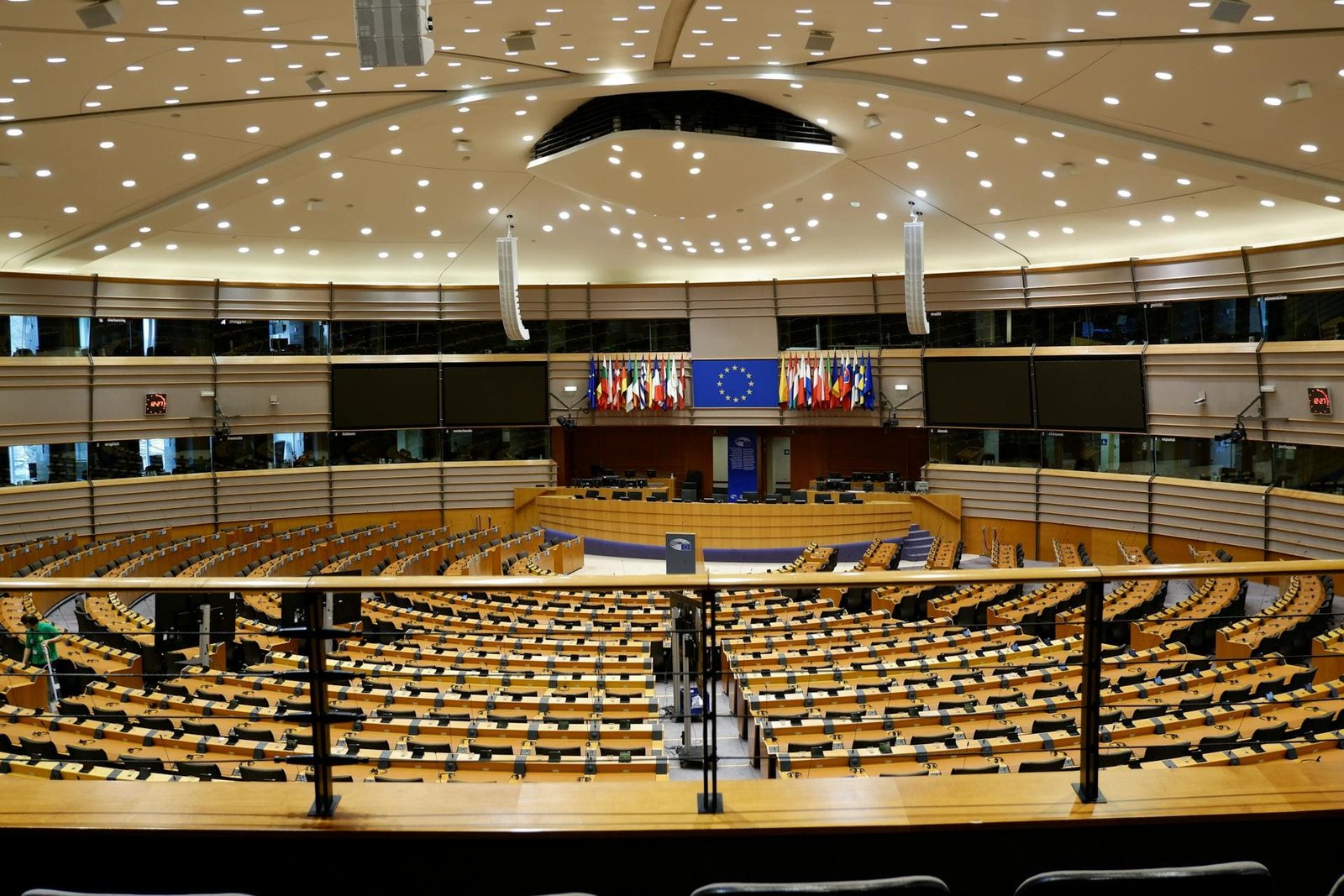
The European Parliament approved the conclusion of the agreement between the European Union and the United Kingdom concerning cooperation in the enforcement of their respective competition law. It followed the Commission's proposal, which had negotiated this agreement. The text is now adopted on Parliament's side; it will become law after official publication.
The European Union and the United Kingdom negotiated an agreement to cooperate in the enforcement of their respective competition rules. This agreement aims to enable the competition authorities of both parties to exchange information and coordinate their actions when companies operate in both markets. The Commission negotiated and proposed to conclude this agreement, and asked the European Parliament to give its approval. The Council had already forwarded its request for approval to Parliament.
Approval of the agreementParliament gives its approval to the conclusion of the agreement between the European Union and the United Kingdom on cooperation in the enforcement of their respective competition law.
Transmission of the positionThe President of Parliament is instructed to transmit Parliament's position to the Council, to the Commission, and to the governments and parliaments of the Member States and of the United Kingdom.
No changes to the textParliament made no changes to the agreement: it voted for or against the text as negotiated, without proposing amendments.
The vote was adopted by 640 votes in favour, 5 against and 26 abstentions.
This agreement will allow the EU and UK competition authorities to cooperate more closely. In practice, when a company is suspected of anti-competitive practices affecting both the European market and the British market, the two authorities will be able to exchange information and coordinate their investigations. This should make investigations more effective and prevent anti-competitive behaviour from slipping through the net. For citizens, this means better protection against abuses of a dominant position and cartels, which can drive up prices. The agreement does not create new competition rules: it organises cooperation between the existing authorities.
The European Parliament gave its green light, by 640 votes for, 5 against and 26 abstentions, to the agreement organizing cooperation between the competition authorities of the Union and the United Kingdom. It amended nothing: it approved the text as negotiated by the Commission. A massive vote that masks a substantive question: does this agreement make markets freer, or does it add a layer of bureaucracy without touching the real barriers?
The agreement will allow the EU and UK competition authorities to exchange information and coordinate their actions when a company is suspected of anticompetitive practices affecting both markets. In practice, investigations should be more efficient and anticompetitive behavior less likely to slip through the net. For citizens, this is increased protection against cartels and abuses of dominant position, which drive up prices.
But let us be clear: this agreement creates no new competition rule. It removes no barrier to entry, reduces no administrative burden for companies that want to grow in Europe. It adds a communication channel between bureaucracies. That is useful, but it is not a competition policy geared toward growth. A genuinely liberal approach would have used the occasion to ask a simple question: why must companies still bear heavy and fragmented authorization procedures to operate in both markets?
Cooperation between authorities can reduce investigation times, but it only makes smoother a system that remains fundamentally defined by national and European legislators. The real issue for entrepreneurs is not the coordination of investigations, it is the predictability and speed of decisions. Every month of regulatory uncertainty is a postponed investment project, a delayed hire, a market not conquered.
Parliament could have used this vote to demand from the Commission a report on the concrete obstacles to cross-border competition, or to condition its approval on simplification commitments. It did not. It approved, full stop. That is not a scandal, but it is a missed opportunity to recall that competition is not only a matter for enforcers, but first and foremost a framework that allows new players to enter and prosper.
Cooperation between enforcers does not replace a policy that opens markets.