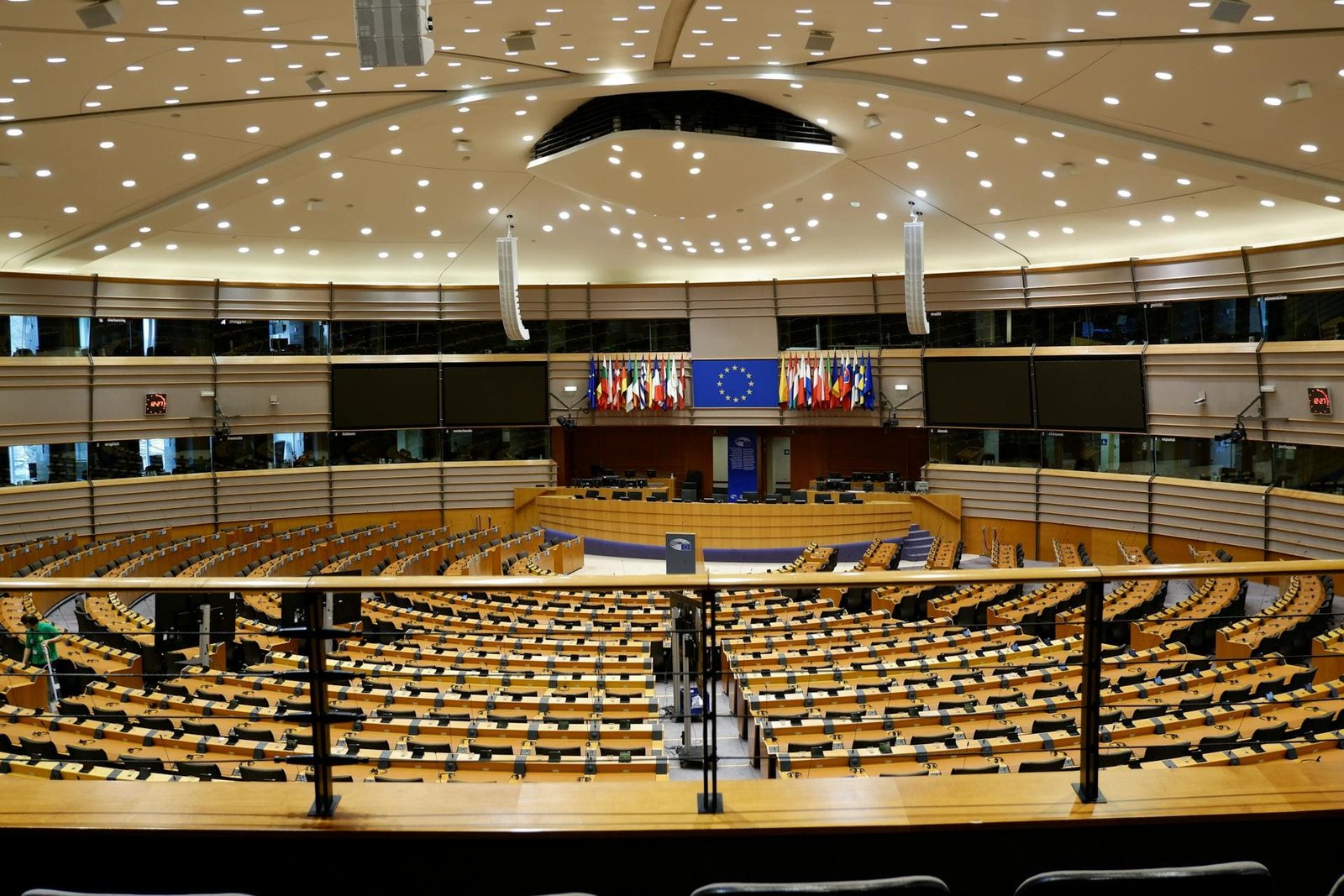
Parliament approved 678 million euros in European aid to decommission the Ignalina nuclear power plant in Lithuania between 1 January 2028 and 31 December 2034. The EU will cover up to nearly 86% of the costs, with the rest financed by Lithuania and other sources. The adopted text amends the Commission's initial proposal by adding rules on protecting the site against hybrid threats and on knowledge sharing. This is Parliament's position; the Council must still decide.
When it joined the EU in 2003, Lithuania committed to closing the two Ignalina reactors, inherited from the Soviet era, and to decommissioning them. The EU has been financing this operation since 2007. The current programme expires at the end of 2027 and the Commission proposed extending it. Parliament voted in favour of this extension, adding security and transparency guarantees.
Budget of 678 million eurosThe programme has an envelope of 678,000,000 euros in current prices (602,720,000 euros in 2025 prices) for the period from 1 January 2028 to 31 December 2034.
Coverage of up to 86%The maximum EU co-financing rate approaches 86% of eligible costs. The rest is financed by Lithuania and other sources.
Protection against hybrid threatsThe decommissioning site must be protected against hybrid threats, including drone attacks on critical infrastructure. The programme can finance measures to strengthen this security.
Knowledge sharing coordinated by the JRCThe Commission's Joint Research Centre coordinates the dissemination of decommissioning knowledge to Member States and, under conditions, to third countries, with confidentiality guarantees.
End of the old programme in 2028The 2021 regulation is repealed from 1 January 2028. Ongoing actions continue until their closure.
Parliament adopted the text by 625 votes in favour, 20 against and 22 abstentions.
This decision commits European taxpayers' money to a very long-term project: dismantling and decontaminating the equipment and reactor shafts at Ignalina, managing radioactive waste and protecting workers and the environment. It also aims to prevent Lithuania from bearing alone a bill deemed disproportionate to its size. The knowledge gained from this project will be shared among Member States, which can help other countries decommission their own facilities. The text is not yet final: the Council must decide, and Parliament has asked to be consulted again if it substantially amends the proposal.
Parliament voted 678 million euros to continue decommissioning Lithuania's Ignalina nuclear plant from 2028 to 2034, with EU co-financing close to 86 percent. The text adds two useful novelties, site protection against drones and knowledge sharing. It does not settle the fundamental question: why is the European taxpayer still paying, twenty years after closure, for a project whose ultimate responsibility remains Lithuanian?
Decommissioning Ignalina is a legitimate undertaking: two RBMK reactors of the Chernobyl type, shut down in 2004 and 2009, leave equipment and wells that must be dismantled and decontaminated. Lithuania cannot bear alone a bill out of proportion to the size of its economy, and Protocol No 4 to the 2003 Act of Accession committed it to close. But the extension to 2034, with an envelope higher than the 552 million proposed by the Commission, turns exceptional aid into a recurring budget appointment. Parliament increased the budget without further conditioning disbursement on performance milestones. Yet a nuclear project whose financing is guaranteed in advance has no incentive to meet deadlines: the cost of delay is borne by the Union budget, not by the project owner.
Parliament's additions go in the right direction. Protecting the site against hybrid threats, drones included, is a concrete security expenditure, not a stylistic clause: an attack on critical infrastructure undergoing decommissioning would have consequences beyond Lithuania. Knowledge sharing, coordinated by the Joint Research Centre and financed 100 percent by INSC-D, can help other Member States decommission their own facilities. The fact remains that these two additions do not correct the financial architecture: the 86 percent rate remains an overall maximum, and additional Member State contributions are added to the envelope without further parliamentary scrutiny.
An approach grounded in subsidiarity would have maintained European solidarity but tied each tranche of financing to verifiable milestones in the decommissioning plan, with an independent cost audit and a clawback clause in the event of overruns. It would also have capped the Union's contribution in absolute value, rather than leaving an envelope open to additional resources. Parliament preferred a budget increase and security guarantees, without a performance mechanism. For the taxpayer, the difference is simple: in one case, the money follows results; in the other, it follows the calendar.
The text is not final. The Council must decide, and Parliament asks to be reconsulted if it substantially modifies the proposal. This is the opportunity to correct what is missing: binding milestones, a real cap and an independent cost assessment before each tranche. Without that, European solidarity will remain a budget line, not a commitment to results.
Exceptional aid becomes a budget annuity as soon as delay costs nothing to the one who produces it.