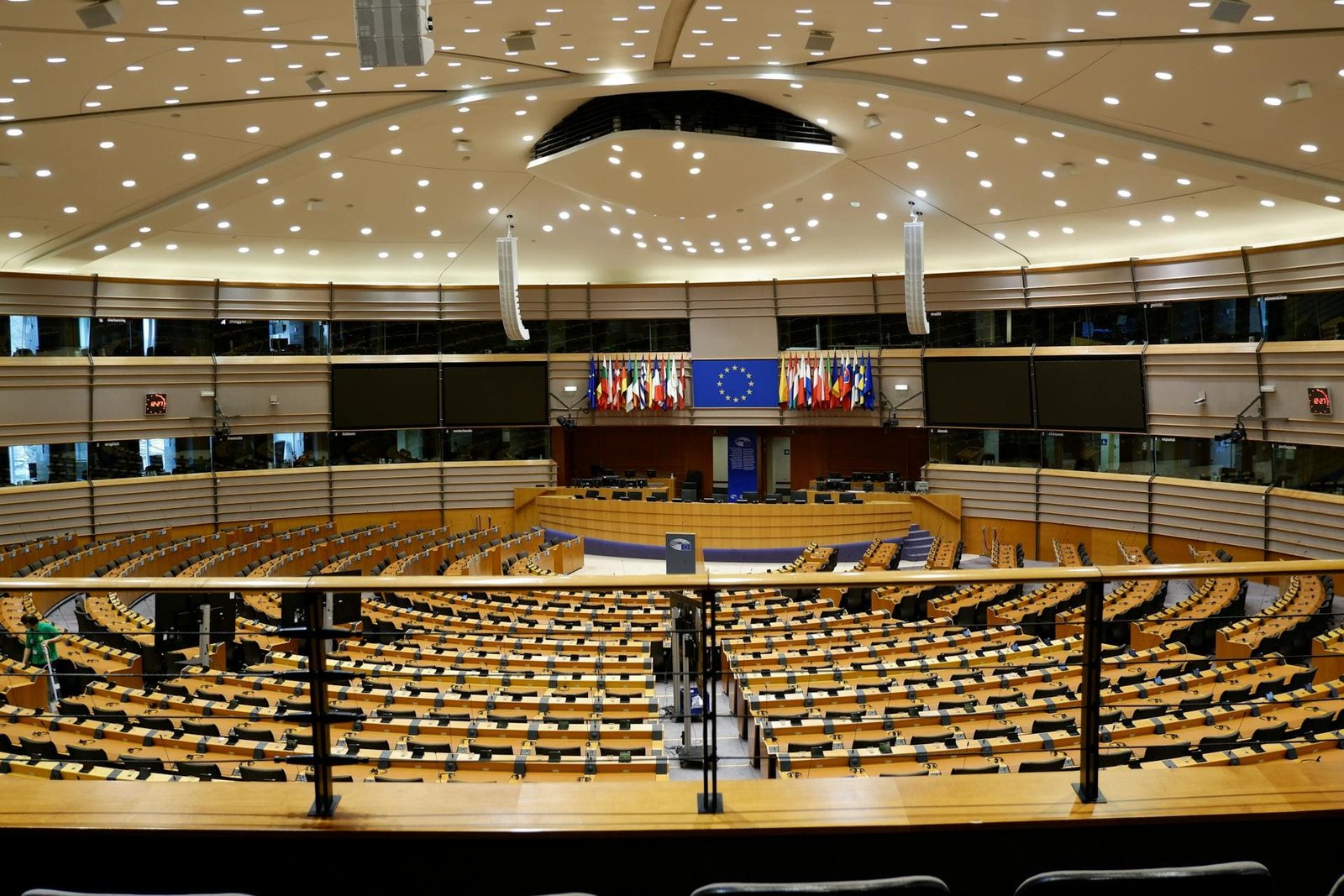
The European Parliament adopted on 16 September 2026 a resolution calling on the Union and the Member States to recognise that hybrid acts can constitute a form of war, even without conventional forces. It calls for treating hybrid operations that remain below the threshold of armed conflicts and cannot be managed by law enforcement alone as collective security issues, with a combined civil and military response. The text is not a law: Parliament asks the Commission, the Council and the Member States to act, but does not itself create legal obligations.
Hybrid attacks (cyberattacks, disinformation, sabotage, pressure on infrastructure) blur the line between war and peace. Parliament considers that the European response remains too reactive and lacks real-time monitoring, attribution and proactive reaction capabilities. The resolution adopted is a political position: it does not replace existing laws, but it sets the priorities that Parliament wants to see applied by the Commission, the Council, the High Representative and national governments.
Recognise hybrid acts as possible warParliament invites the Union and the Member States to acknowledge that hybrid acts can constitute a form of war, whether or not conventional forces are used.
Treat sub-threshold operations as collective securityIt asks the Commission and the Council to assess existing legal frameworks, to close the gaps and to consider hybrid operations that cannot be managed by law enforcement alone as collective security issues requiring a combined civil-military response.
Strengthen early warning and preventive rebuttalParliament calls for a strengthened early warning system to counter disinformation in real time, with clear operational responsibilities, and for harmonised mechanisms for preventive rebuttal and rapid response at Union level and with partner countries.
Target illicit networks and financial flowsIt invites the Commission, the High Representative and the Member States to make full use of the toolbox against information manipulation and foreign interference and the deterrence handbook, including through coordinated public attribution and restrictive measures targeting not only isolated incidents, but also illicit financial flows, technical infrastructure and intermediary networks.
Integrate cognitive vulnerabilities into the security strategyParliament asks that cognitive vulnerabilities be recognised and addressed in the future security strategy of the Union and that the Commission provide a mapping of these vulnerabilities and resilience criteria.
The resolution was adopted by 470 votes in favour, 129 against and 62 abstentions, in an electronic roll-call vote.
For citizens, this vote does not directly change the law, but it pushes the European institutions and governments to better protect critical infrastructure (energy, health, finance, submarine cables) and to fight faster against disinformation and foreign interference. It also encourages strengthened cooperation with partners such as the United Kingdom, Norway, Canada, Japan, South Korea, Australia, New Zealand and Taiwan, as well as with Ukraine, Moldova, Armenia and Montenegro for joint exercises and training. Finally, Parliament asks that the missions of the European Centre for Democratic Resilience be clearly defined to avoid duplication.
On 16 September 2026 the European Parliament adopted a resolution calling on the Union and the member states to recognise that hybrid acts can constitute a form of warfare, even without conventional forces. It calls for operations that remain below the threshold of armed conflict and cannot be handled by law enforcement alone to be treated as collective security matters, with a combined civilian and military response. The text is not a law: it sets political priorities without creating legal obligations.
The resolution, adopted by 470 votes to 129 with 62 abstentions, is not binding. It invites the Commission, the Council and the member states to act, but creates no legal obligation. Its importance is political: it sets the priorities the Parliament wants to see applied, and it commits the institutions to account for their implementation.
The text asks the Union to recognise that hybrid acts can constitute a form of warfare, whether or not conventional forces are used. This is not an automatic war clause, but a call to treat these operations as serious threats rather than isolated incidents.
Parliament calls for hybrid operations that cannot be handled by law enforcement alone to be treated as collective security matters requiring a combined civil-military response. That implies coordination between intelligence services, armed forces and civilian authorities, but also a clarification of operational responsibilities.
It calls for a strengthened early warning system to counter disinformation in real time, with clear responsibilities, and for harmonised mechanisms for pre-emptive rebuttal and rapid response across the Union and with partner countries. The FIMI toolbox should include countermeasures against advanced influence techniques, such as reflexive control.
The text also calls for targeting not only isolated incidents but also illicit financial flows, technical infrastructure and intermediary networks that support these campaigns. An approach that sanctions only the symptoms leaves the capacity to cause harm intact.
Recognising hybrid warfare means refusing to treat it as a series of isolated incidents.