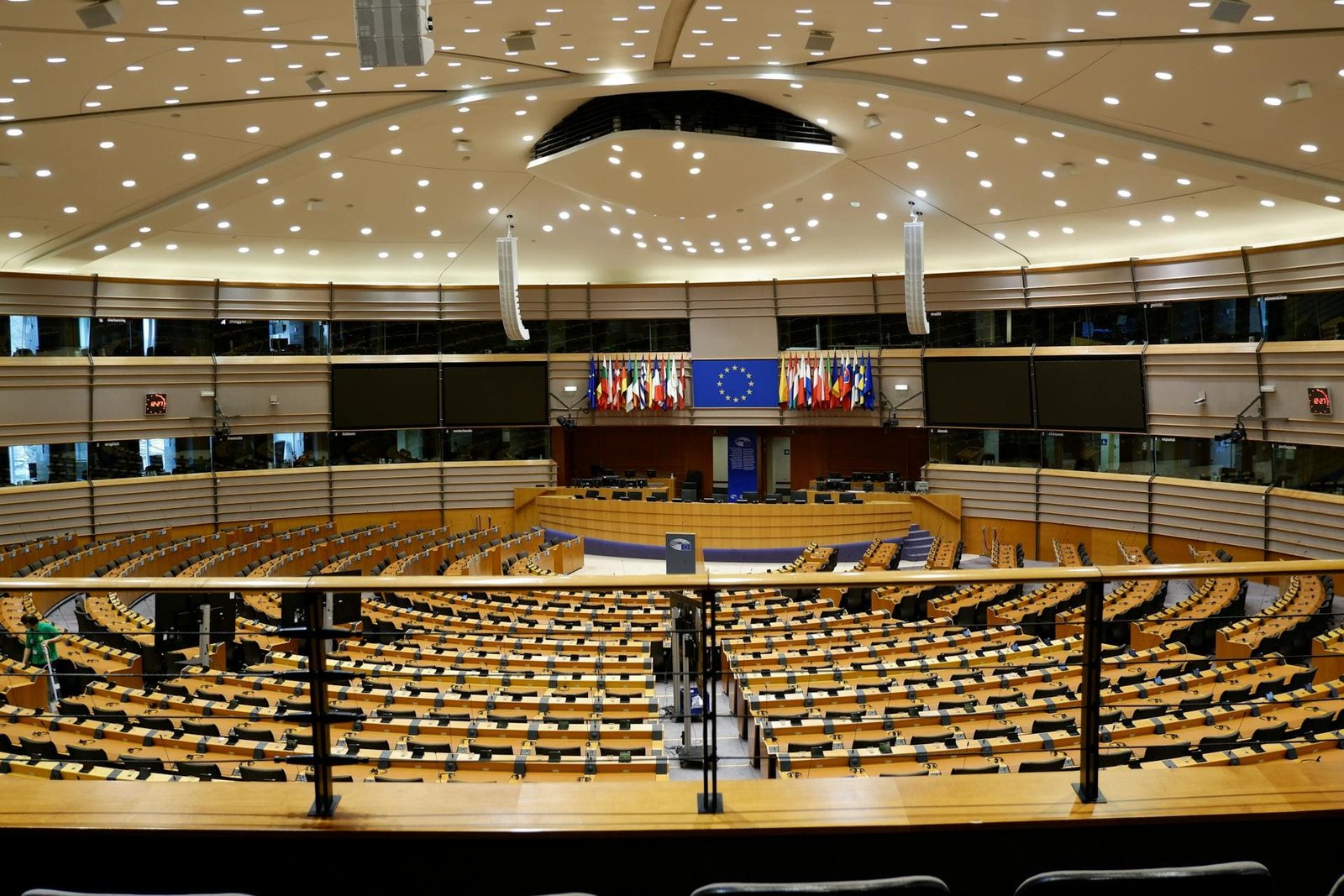
On 16 September 2026, the European Parliament adopted a text setting the maximum deadline for issuing the authorisations needed for defence preparation projects at 42 working days, with a tacit agreement if the administration does not respond in time. This is the final text negotiated with the EU governments; they must still formally approve it before it becomes law.
Defence-related projects (factories, infrastructure, modernisation of industry) often have to obtain multiple national and local authorisations, which can take months or years. The Commission had proposed speeding up these procedures; the Parliament changed its approach by negotiating with the Member States a binding deadline and a tacit agreement mechanism, while leaving each country the possibility of derogating from it in very limited cases.
42 working day deadlineThe authorisation procedure may not exceed 42 working days from confirmation that the file is complete. This deadline may be extended twice, by up to 60 working days per extension, without ever exceeding 102 working days in total.
Tacit agreement if the administration stays silentIf the single point of contact does not inform the promoter of the decision within the deadline (or the extended deadline), the requested authorisations are considered granted. Member States must ensure that these tacit authorisations can be challenged by the parties concerned.
Structured national derogationA Member State may, by a law adopted within 12 months of entry into force, exclude the tacit agreement in strictly limited and exceptional cases, after a case-by-case assessment demonstrating a serious risk to human health or national security. Any derogation must be notified to the Commission.
Single point of contact within 3 monthsEach Member State must designate a single point of contact no later than 3 months after the entry into force of the regulation. This point of contact checks whether the file is complete within 14 working days of receiving it; a second request for missing information is possible within 10 working days, but a third incomplete submission closes the procedure.
Monitoring and evaluationMember States must send the Commission an annual statistical report on authorisations approved, including tacitly. The Commission will evaluate implementation by 31 December 2028 at the latest, and then every four years, examining in particular the application of the tacit agreement.
Parliament adopted the text by 540 votes in favour, 105 against and 22 abstentions.
For companies and workers in the defence sector, authorisation requests should be processed more quickly: 42 working days in principle, 102 working days at most in the event of an extension. If the administration does not respond within the deadlines, the permit is deemed granted, which reduces delays. Citizens and local communities retain the possibility of challenging an authorisation granted tacitly, and Member States may refuse the tacit agreement in exceptional cases related to health or national security.
On 16 September 2026 the European Parliament adopted a text setting a maximum of 42 working days for issuing the authorisations needed for defence preparation projects, with tacit approval if the administration does not respond in time. This is the final text negotiated with EU governments; they must still formally approve it before it becomes law. The vote (540 for, 105 against, 22 abstentions) sends a clear signal: administrative slowness is no longer inevitable.
The heart of the text is simple: once the file is complete, the administration has 42 working days to decide. If it lets the deadline pass without notifying a decision, the requested authorisations are deemed granted. This reversal of the burden of proof is decisive: it is no longer up to the project promoter to chase endlessly, but up to the administration to justify its silence. For a defence SME, this can mean months less cash tied up, and equipment delivered sooner to the armed forces.
The mechanism is nevertheless framed. Member states may, by law adopted within 12 months of entry into force, exclude tacit approval in strictly limited and exceptional cases, after a case by case assessment demonstrating a serious risk to human health or national security. Any derogation must be notified to the Commission. This escape hatch is justified by legitimate grounds, but it creates a risk: if derogations multiply, the text's accelerating effect evaporates. The Commission will have to monitor their use, as provided for in the 2028 evaluation.
The 42 working day deadline may be extended twice, by up to 60 working days per extension, without ever exceeding 102 working days in total. These extensions are possible in cases of exceptional complexity, the location or size of the project, or exceptional risks to health, safety or the environment. The text specifies that any extension must be notified in writing and justified. For cross border projects, coordination between member states is provided for, but without prejudice to national security requirements.
The regulation applies only to applications submitted from 3 months after entry into force. Projects already caught in administrative maze remain subject to the old procedures. Moreover, the text leaves it to member states to determine which projects may be considered defence preparation projects (Article 3). This margin of discretion can lead to restrictive interpretations, or even refusals of qualification, which would deprive certain projects of the benefit of the accelerated deadline.
Finally, tacit approval does not dispense with possible challenge by the parties concerned. Authorisations deemed granted can be contested, which is normal in law, but opens the door to dilatory appeals. The text treats appeal procedures as urgent where national law so provides, which is progress, but does not guarantee that all member states have such procedures. A more liberal approach would have been to simply remove the authorisation requirement for defence projects meeting predefined safety standards, instead of creating a new procedural right. Radical simplification remains to be done.
The administration's silence will now count as authorisation: a reversal of the burden of proof that benefits those who build.