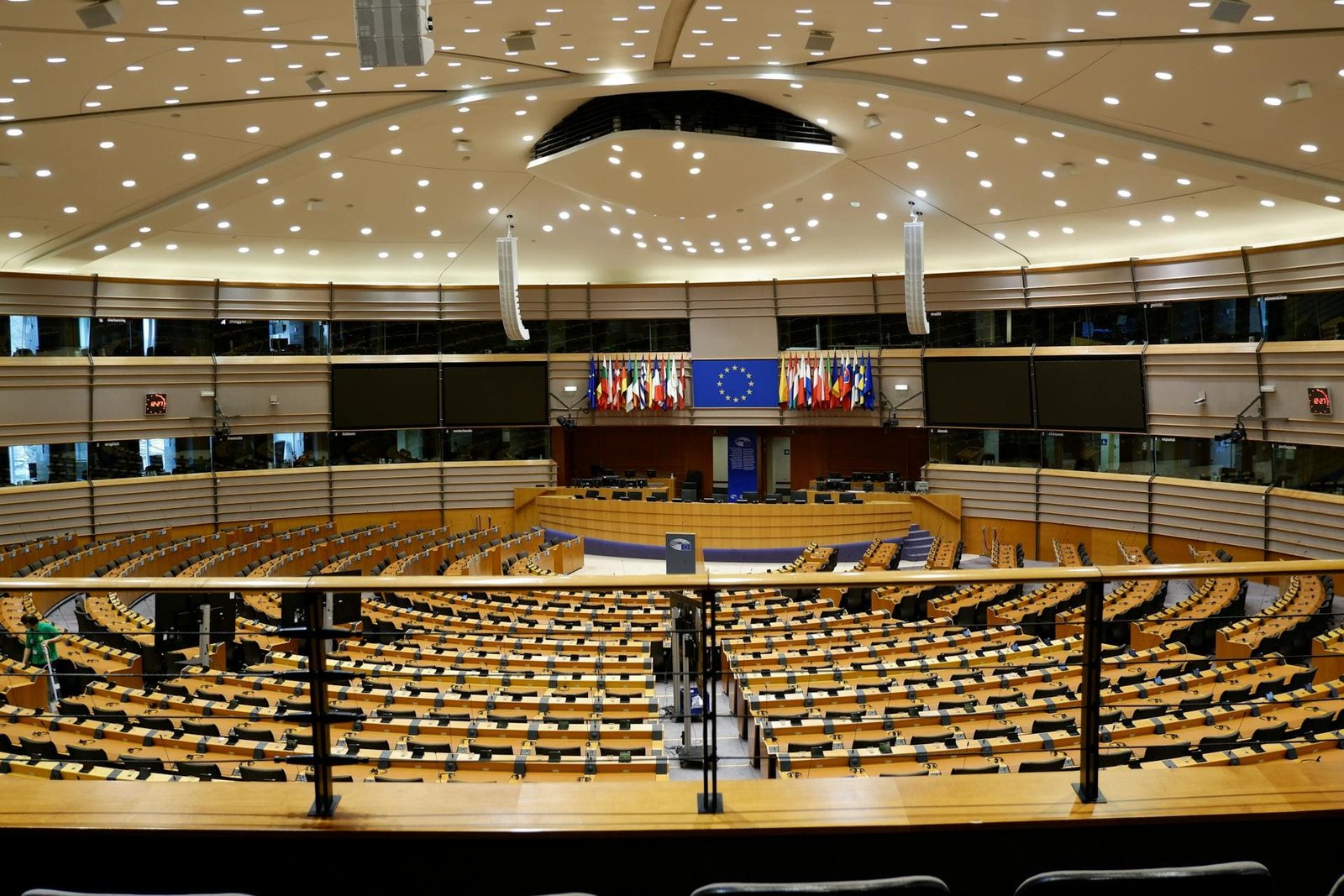
Parliament adopted a position that removes import customs duties in the Union for Armenian products. Some products are exempt without volume limits, others within tariff quotas. This exemption is temporary: it applies for up to two years after the entry into force of the text. Parliament follows the Commission's proposal, with conditions and suspension and safeguard mechanisms.
The Union and Armenia are linked by a partnership agreement in force since March 2021. Since May 2026, Russia has taken trade measures that disrupt Armenian exports, notably alcoholic beverages, mineral water, fruit and vegetables. To support the Armenian economy, the Commission proposed opening the European market to these products. Parliament examined this proposal and set out its position.
Duty exemption for Annex IArmenian products listed in Annex I enter the Union without ad valorem customs duties, without volume limits.
Tariff quotas for Annex IIProducts listed in Annex II enter without customs duties only within the limits of the volumes set out in that annex.
Conditions to be met by ArmeniaThe exemption depends on compliance with rules of origin, administrative cooperation (verification of origin), the absence of new restrictions on European imports and respect for democratic principles and human rights.
Possible suspension in case of breachThe Commission may suspend all or part of the exemption if it finds a breach. If a Member State requests it, the Commission issues a reasoned opinion within four months.
Safeguard measuresIf Armenian imports cause harm to the European market, the Commission may impose safeguard measures. In case of urgency, provisional measures may be taken within 21 days of a Member State's request, for a maximum of 120 days.
Duration limited to two yearsThe regulation enters into force the day after its publication and applies for up to two years after that date.
Parliament adopted its position by 583 votes in favour, 49 against and 39 abstentions (electronic roll-call vote).
Armenian businesses and producers will be able to export to the Union without customs duties, which should lower prices or increase the supply of certain products (alcohol, mineral water, fruit and vegetables) for European consumers. In return, safeguards are provided: if Armenia does not meet the conditions or if imports disrupt the European market, the Union may reinstate duties or take safeguard measures. This opening is temporary: it ends two years after the entry into force of the text, unless extended. The text must still be formally approved by the Union's governments before becoming law.
Parliament voted to open the European market to Armenian products: 583 votes in favour, 49 against, 39 abstentions. Customs duties removed for Annex I products with no volume limit, and for Annex II products within the tariff quotas. The opening is real, but it is limited to two years and conditional. That is the right instinct: a trade favour is not an acquired right.
Since May 2026, Russia has been strangling Armenian exports: alcoholic beverages, mineral water, fruit and vegetables. The Union responds by opening its market. The gesture is right, but we must see what it really does: it shifts trade flows towards Europe, it does not create production capacity. Armenian producers who found an outlet in Moscow must now meet the standards, volumes and deadlines of a market of 450 million consumers. Many will not manage it within two years.
Every condition has a price. Verifying origin means paperwork for the Armenian exporter and for European customs. The tariff status quo clause protects European exporters from an Armenian reversal, but it gives the Commission discretionary power: it judges whether a restriction is "duly justified", and it is the one who decides. The safeguard mechanism, for its part, is slow by construction: four months of assessment, twenty one days for urgency, one hundred and twenty days of provisional measures. A European producer of tomatoes or wine hit by a wave of imports will wait a quarter before the first measure.
The real risk is not there. It lies in the temptation to turn a temporary two year measure into a permanent arrangement, without a public evaluation of what the opening has actually brought to Armenia and to the Union. The report to the partnership committee is a start, not a reckoning. An approach based on subsidiarity and the market would have done the opposite: open more widely, more quickly, without political conditions, and let the standard WTO safeguard mechanisms do their work if a sector suffers. Here, conditions and committees are added, and it is called solidarity.
583 votes in favour, 49 against, 39 abstentions: near unanimity. EPP, S&D, Renew, ECR and a large part of the other groups voted for the opening. The 49 against probably come from protectionist ranks and from those who refuse any favour to a country outside the Union. The signal is clear: when it comes to countering Russia, Parliament knows how to be liberal. It should remember that when it comes to opening the market to European producers themselves.
A two year opening, conditional and revocable, is not a trade policy: it is a gesture, and gestures do not create businesses.