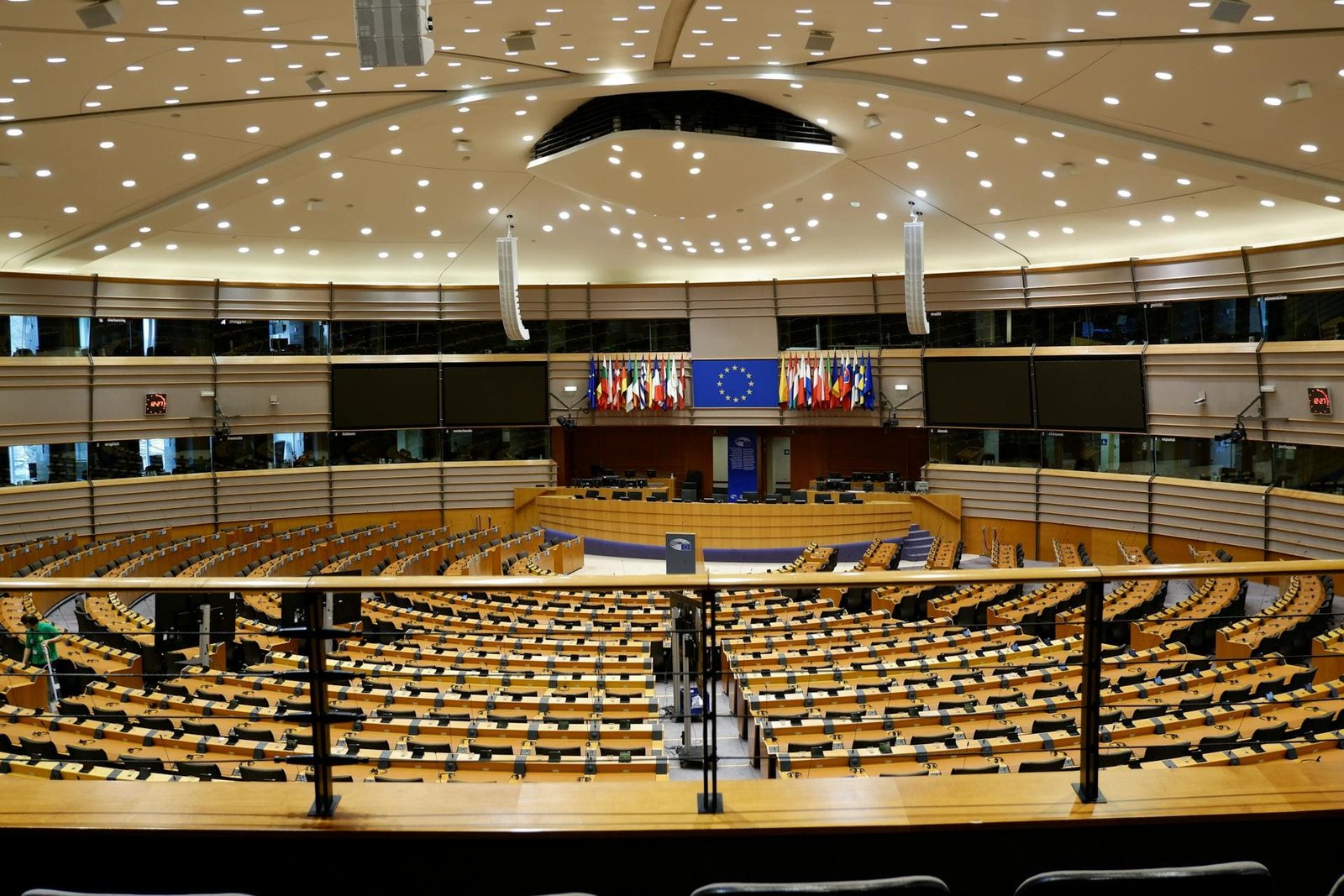
The European Parliament approved the decision to mobilise the European Union Solidarity Fund to provide aid to Romania, Cyprus and Spain following the 2025 natural disasters. The text authorises the President of the Parliament to sign this decision with the President of the Council and provides for its publication in the Official Journal. This is a final text: it will become law after this signature and its publication.
In 2025, Romania suffered severe flooding between late May and early June, Cyprus was hit by forest fires in July and Spain by a wave of fires in August. The Commission estimated direct damage at 573.59 million euros for Romania, 252.68 million euros for Cyprus and 4.32 billion euros for Spain. The European Union Solidarity Fund is the instrument that allows the EU to provide financial aid to a Member State affected by a major natural disaster.
Aid approved for three countriesParliament approves the decision to mobilise the European Union Solidarity Fund in favour of Romania, Cyprus and Spain.
Official signature and publicationThe President of the Parliament is authorised to sign the decision with the President of the Council and to ensure its publication in the Official Journal of the European Union.
Transmission to the institutionsThe resolution and its annex are transmitted to the Council and the Commission.
Call for faster proceduresParliament calls for speeding up and simplifying the Fund's procedures so that aid reaches the affected areas as quickly as possible, and for reducing the time between the submission of an application and the funding decision.
Call for additional fundingParliament recalls that the Fund has a limited budget and calls for other EU instruments to be mobilised in addition, in particular for the reconstruction of the Praid salt mine in Romania.
Parliament adopted the text by 642 votes in favour, 13 against and 1 abstention, in an electronic roll-call vote.
Residents of the flooded Romanian regions, the Limassol and Pafos areas in Cyprus and the Spanish autonomous communities affected by the fires will benefit from EU financial aid for the reconstruction of infrastructure, housing and essential services. Parliament insists that this aid reach families, businesses and local authorities quickly, and that the public be better informed about the existence of this fund.
Parliament approves aid from the Solidarity Fund to Romania, Cyprus and Spain, by 642 votes to 13. The money is justified: 573.59 million euros of damage in Romania, 252.68 million in Cyprus, 4.32 billion in Spain. But behind the consensual vote hides a question the resolution dodges: why does it take months to release emergency aid, and who pays for that delay?
The Solidarity Fund is a compensation mechanism: it reimburses part of the damage once it has been recorded, assessed and validated by the Commission. This is not a lack of generosity, it is a design flaw. Between the May 2025 flood in Romania and the July 2026 vote, more than a year went by. A family that has lost its home, an SME that has lost its workshop, cannot wait a year to rebuild. Parliament half admits this by calling for higher advances and a shorter time between request and decision. It should go further: pay a flat-rate advance within weeks of the request, on the basis of a national estimate, and settle the balance after verification. The European taxpayer gains in speed without losing control, because most of the risk lies in the balance, not the advance.
The resolution also calls for an assessment of the financial capacity of the Union budget. That is the right question, asked in the wrong place. The Fund has an annual ceiling; every major disaster puts it under strain and pushes towards reallocating credits from other programmes. Yet reallocating means taking from one project to give to another, without anyone having to publicly own the trade-off. Budget transparency would on the contrary require that each mobilisation be backed by a clearly identified line, and that Member States requesting the Fund have first mobilised their own reserves. Solidarity between nations must not replace each State's responsibility for its own risks.
The text links the intensity of disasters to climate change and calls for investment in adaptation. In principle, no one disputes that dikes, firebreaks and maintained water networks reduce damage. But the resolution stays at the level of incantation: it calls for investment without saying who decides, who pays and who is accountable. Yet prevention is local by nature: it is the municipality that maintains a ditch, the forestry operator that clears brush, the owner who reinforces a building in a flood zone. As long as the Union funds repair without conditioning aid on a verifiable prevention effort, it encourages the opposite behaviour: build where the water rises, count on Brussels for the aftermath. A simple conditionality, aid paid subject to a local prevention plan, would cost less than every new reconstruction.
Finally, Parliament calls for the mobilisation of all available instruments, from the EAFRD to the ESF+, down to the Praid salt mine. Flexibility is useful, but stacking up funding windows simplifies nothing for the beneficiary: each fund has its own rules, its own controls, its own deadlines. Real simplification would mean merging the channels for disaster victims, not multiplying the budget lines that can be mobilised.
Aid that arrives a year after the disaster is no longer emergency aid, it is late compensation.