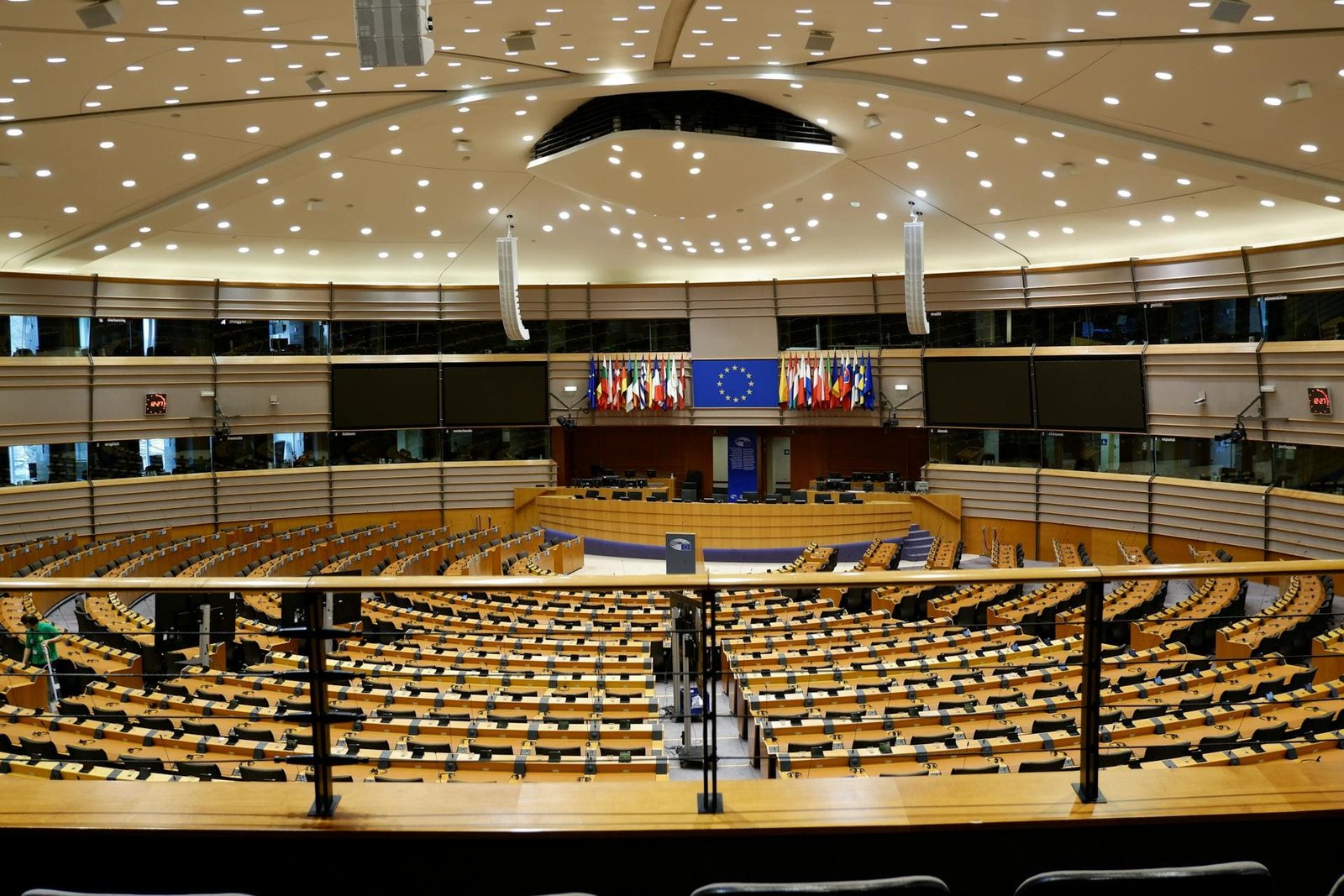
On 7 July 2026, the European Parliament adopted a resolution on the Union's competition policy. It calls on the Commission to equip itself with a new flexible market investigation tool, to strengthen the resources of its competition department and to apply the digital rules fully and impartially. Parliament also calls for regular dialogue with the Commission on these issues. This text is not a law: it expresses Parliament's political position.
Each year, Parliament examines the Commission's report on competition policy. The 2025 report is accompanied this time by the Commission's first review of the Digital Markets Act, published on 28 April 2026, which concludes that the regulation is fit for purpose but identifies artificial intelligence and cloud services as areas to monitor. Parliament uses this occasion to call for additional tools and resources, at a time when digital markets and cloud services are increasingly concentrated.
A new market investigation toolParliament calls on the Commission to create a flexible market investigation tool to address structural competition problems that fall outside the current rules on abuse of dominance and cartels.
More staff for competitionIt calls for the Commission's Directorate-General for Competition to be urgently given enough staff, resources and technical expertise to enforce the antitrust rules, the Digital Markets Act and merger control.
Study on a European authorityParliament calls for an impact assessment on the appropriateness of creating a specialised European competition authority, examining subsidiarity, the separation of competition and regulatory functions, accountability before Parliament and the consequences for the European Competition Network.
Strict enforcement of the digital regulationIt calls for full, consistent and impartial enforcement of the Digital Markets Act, warns against foreign interference and external pressure, and calls for cloud services obligations to be updated to remove barriers to switching providers.
Regular dialogue with ParliamentParliament calls for a structured and regular dialogue with the Commission on competition policy, full and rapid access to information on major decisions, and an interinstitutional agreement formalising its scrutiny role.
Parliament adopted the resolution by electronic roll-call vote: 501 votes in favour, 61 against and 95 abstentions.
This text does not directly change your rights or the rules applicable to companies: it is a political position, not a law. It does, however, indicate the direction Parliament wants to give to competition policy. In practice, it pushes for more resources to tackle abuses of dominance, stricter enforcement of the rules on large digital platforms and better monitoring of cloud services, where Microsoft Azure and Amazon Web Services are seen as potential gatekeepers. Parliament also calls for more transparency on State aid and a strengthened right of scrutiny over competition decisions. These requests will need to be taken up by the Commission to produce concrete effects.
On 7 July 2026, the European Parliament adopted by 501 votes to 61 with 95 abstentions a resolution calling on the Commission to strengthen the resources of its competition directorate, to create a new flexible market investigation tool and to fully apply the Digital Markets Act. This is not a law, but a political position that pushes for more public intervention. Behind the good intentions on display, the question is simple: who will pay the bill for competition managed by unelected experts?
Parliament wants a flexible market investigation tool to correct failures that current rules cannot address. The idea is appealing on paper: identify structural blockages before they become abuses. But who will decide what constitutes a market failure? An unelected administration, on the basis of criteria it will define itself. The risk is to turn competition policy into an instrument of discretionary planning, where successful companies are suspected on principle.
The liberal alternative would be to simplify existing rules and let national competition authorities, closer to the ground, intervene first. An additional European tool, without abolishing existing levels, adds complexity and delay, to the detriment of companies that want to grow.
Parliament asks that the Directorate-General for Competition urgently have enough staff, resources and technical expertise. No one disputes that enforcing antitrust rules and the DMA requires specialised skills. But increasing headcount without reducing the formalities imposed on companies means weighing down the machine without improving speed. Every new compliance requirement costs time and money for SMEs, which do not have the legal departments of large groups.
The alternative would be to concentrate resources on proven abuses, simplify notification procedures and guarantee short decision deadlines. Competition is not decreed by headcount, it is observed through open markets and stable rules.
Parliament insists on full and impartial enforcement of the Digital Markets Act, while warning against foreign pressure. It also asks that obligations on cloud services be updated to remove obstacles to switching providers. In principle, fair competition in the digital sector is essential. But DMA enforcement must remain proportionate and must not become a tool of disguised protectionism.
On 28 April 2026 the Commission concluded that the DMA is fit for purpose and should not be amended at this stage. Parliament wants to go further, particularly on the cloud. The alternative would be to let markets evolve and intervene only in cases of clear abuse, rather than piling up preventive obligations that freeze business models.
Competition managed by unelected experts is not free competition, it is a guardianship that does not know itself.