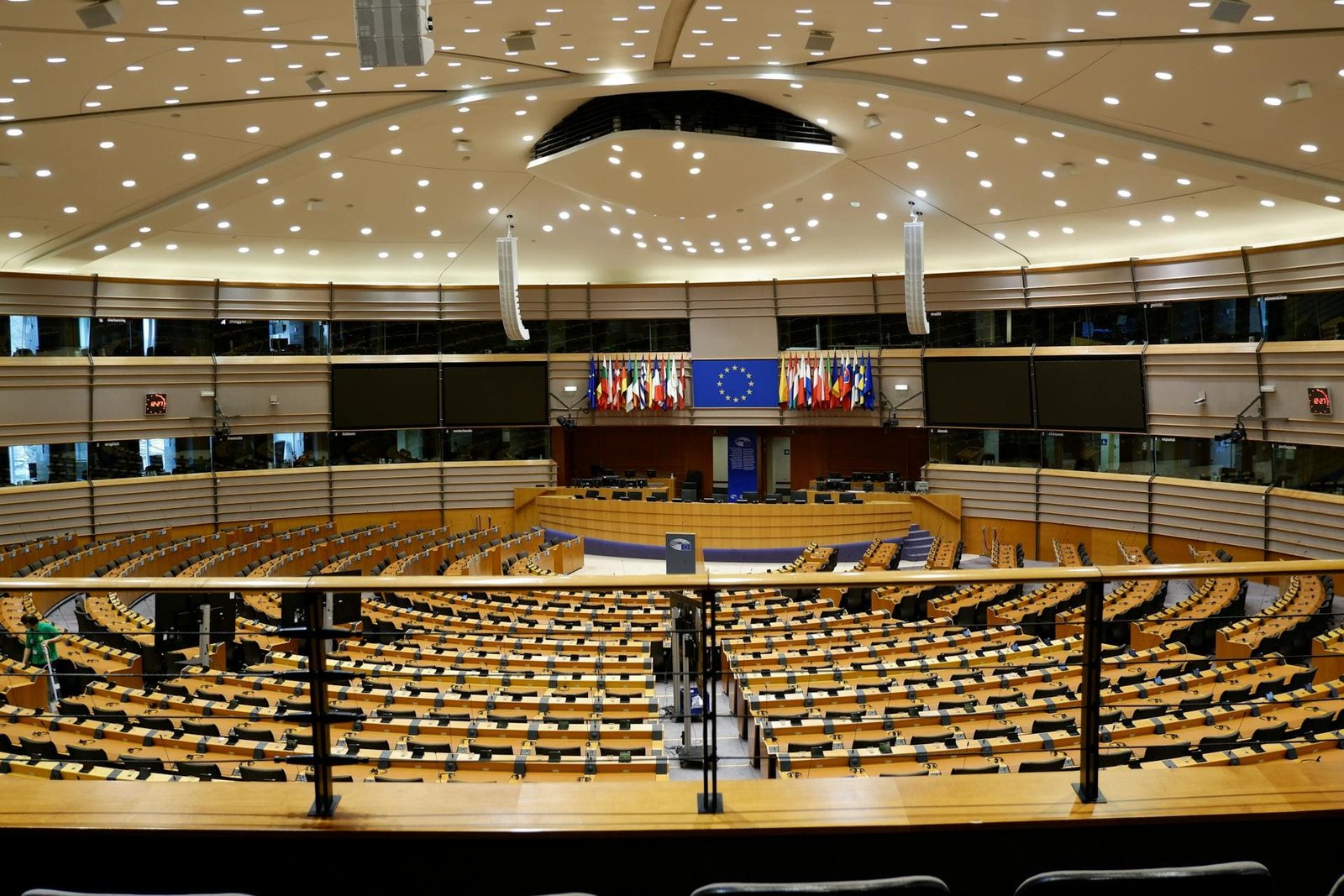
The European Parliament adopted a resolution that firmly condemns the dissolution and suspension of civil society organisations in Burkina Faso and calls on the Burkinabe authorities to immediately reverse these measures. It also demands an end to intimidation, abductions and arbitrary detentions targeting journalists, human rights defenders and opponents. The text calls for a credible roadmap towards free elections and civilian governance. The Parliament asks the European Commission to act; this is not a law.
Since the 2022 military coup, the political, security and human rights situation has deteriorated sharply in Burkina Faso. The government has dissolved all political parties and 118 civil society organisations, suspended hundreds of associations including the General Union of Burkinabe Students, and required organisations to close their bank accounts and transfer them to a state-controlled bank. Law No. 011-2025/ALT on freedom of association imposes restrictive requirements, the new personal and family code criminalises the promotion of homosexual relations, and a bill aimed at restoring the death penalty has been tabled. Millions of people are displaced and depend on humanitarian aid.
Immediate reversal of the dissolutionsThe Parliament firmly condemns the dissolution and suspension of civil society organisations and calls on the Burkinabe authorities to reverse these measures without delay, in particular by amending Law No. 011-2025/ALT, in order to guarantee freedom of association, assembly and expression.
End to intimidation and detentionsIt demands the immediate cessation of acts of intimidation, illegal conscription, harassment, arbitrary detentions and enforced disappearances targeting civil society actors, journalists, human rights defenders, humanitarian workers and political opponents, and calls for independent investigations into all allegations of crimes and human rights violations.
Freedom of the press and of partiesThe Parliament calls on the Burkinabe authorities to respect freedom of the press, to lift the restrictions imposed on the media and to allow journalists to work freely and safely. It also calls for the rights of student organisations and political parties to organise to be restored and for a credible roadmap towards free and transparent elections and civilian governance to be presented.
No to the return of the death penaltyIt calls on the authorities to refrain from restoring the death penalty, to reverse their decision to withdraw from the International Criminal Court and to stop criminalising the actions of civil society that defend human rights, equality and non-discrimination.
Counter-terrorism and partnersThe Parliament reaffirms that the fight against terrorism must fully respect international human rights law and international humanitarian law. It notes that the expulsion of European troops, the dismantling of security partnerships and the pursuit of a partnership with Russia have not improved security, and it calls on the European Union to coordinate its action with its African partners and to strengthen its support for civil society and humanitarian actors.
The resolution was adopted by 476 votes in favour, 11 against and 75 abstentions in an electronic roll-call vote on 18 June 2026.
This resolution does not create a legal obligation for European citizens, but it commits the official position of the European Parliament. It calls on the European Union to provide greater support to civil society and humanitarian actors in Burkina Faso and to coordinate its action with African partners. The Burkinabe authorities are called upon to reverse the dissolution of organisations, to release persons arbitrarily detained and to commit to free elections. The Parliament also calls on the European Commission and the Member States to act accordingly; this is not a law.
On 18 June 2026, the European Parliament adopted by 476 votes for, 11 against and 75 abstentions a resolution that unequivocally condemns the dissolution of 118 civil society organisations and of all political parties in Burkina Faso. It is not a law, but a political act that commits the Union and puts the Burkinabe authorities face to face with their contradictions: the junta replaced security partnerships with an alliance with Russia, and security has not improved. The text demands the immediate annulment of the dissolutions, an end to arbitrary detentions and a roadmap towards free elections.
The resolution does not get lost in general considerations. It points to a precise mechanism: since the 2022 coup, the junta has dissolved all political parties and 118 civil society organisations, suspended hundreds of associations including the General Union of Burkinabe Students, and required organisations to close their bank accounts and transfer them to a state-controlled bank. Law No. 011-2025/ALT on freedom of association imposes restrictive requirements that financially and administratively stifle independent associations. The Parliament demands the immediate annulment of these measures and the amendment of that law. This is not interference: when a state criminalises the defence of human rights, the Union has the right to say so.
The text also demands an end to acts of intimidation, illegal conscription, harassment, arbitrary detentions and enforced disappearances. It calls for independent investigations into all allegations of crimes. This is not a concession to some "understanding" of the circumstances: the fight against terrorism, however legitimate, justifies neither enforced disappearances nor the ethnic cleansing of Peul communities. The Parliament reaffirms that the fight against terrorism must respect international human rights law and international humanitarian law. It is a reminder that the end does not justify the means.
The resolution does not stop at civil rights. It calls on the authorities to refrain from reinstating the death penalty, to reverse their decision to withdraw from the International Criminal Court and to stop criminalising the actions of civil society that defend equality and non-discrimination. On this last point, the new code on persons and the family makes the "promotion" of homosexual relations an offence. The Parliament is not asking Burkina Faso to change its society: it is asking it not to imprison those who defend fundamental rights. The distinction is essential and the text holds to it.
The strongest passage is perhaps the finding on security. The Parliament notes that the expulsion of European troops, the dismantling of security partnerships and the search for a partnership with Russia have not improved security. It is a fact: terrorist attacks continue, millions of people are displaced and depend on humanitarian aid. This finding is not interference in internal affairs, it is an assessment of results. The junta chose to break with its historic partners and turn to Moscow; it must now account for the consequences. The Parliament also expresses its concern at the growing influence of Russia, which contributes to human rights violations and authoritarian drift.
The resolution calls on the European Union to coordinate its action with its African partners and to strengthen its support for civil society and humanitarian actors. That is the right response: do not abandon the populations, but do not whitewash a regime that has chosen repression either. The Union must support those who, on the ground, defend freedoms, and make its aid conditional on verifiable progress. The text does not call for cutting humanitarian aid, which would be a moral fault, but it calls for not closing one's eyes to violations.
The vote is unambiguous: 476 votes for, 11 against and 75 abstentions. The groups that abstained or opposed did not want to clearly condemn a junta that has dissolved all political opposition. This is not a position of principle, it is a political choice. The Parliament, for its part, chose to name the repression and to set requirements. A resolution is not a law, but it is a political act that commits the Union and its member states. It will be transmitted to the Council, the Commission, the VP/HR, the member states, the Burkinabe authorities, the African Union and the United Nations. That is little, but it is a marker.
The liberal and subsidiarity-minded alternative would be to go further: explicitly make development aid and security support conditional on respect for freedom of association and on the holding of free elections, rather than settling for appeals. The Parliament could have called for a binding monitoring mechanism. It did not. That is a missed opportunity, but the signal sent remains strong.
When a regime dissolves 118 organisations and all the parties, the European Parliament has a duty to name the repression, not to relativise it.