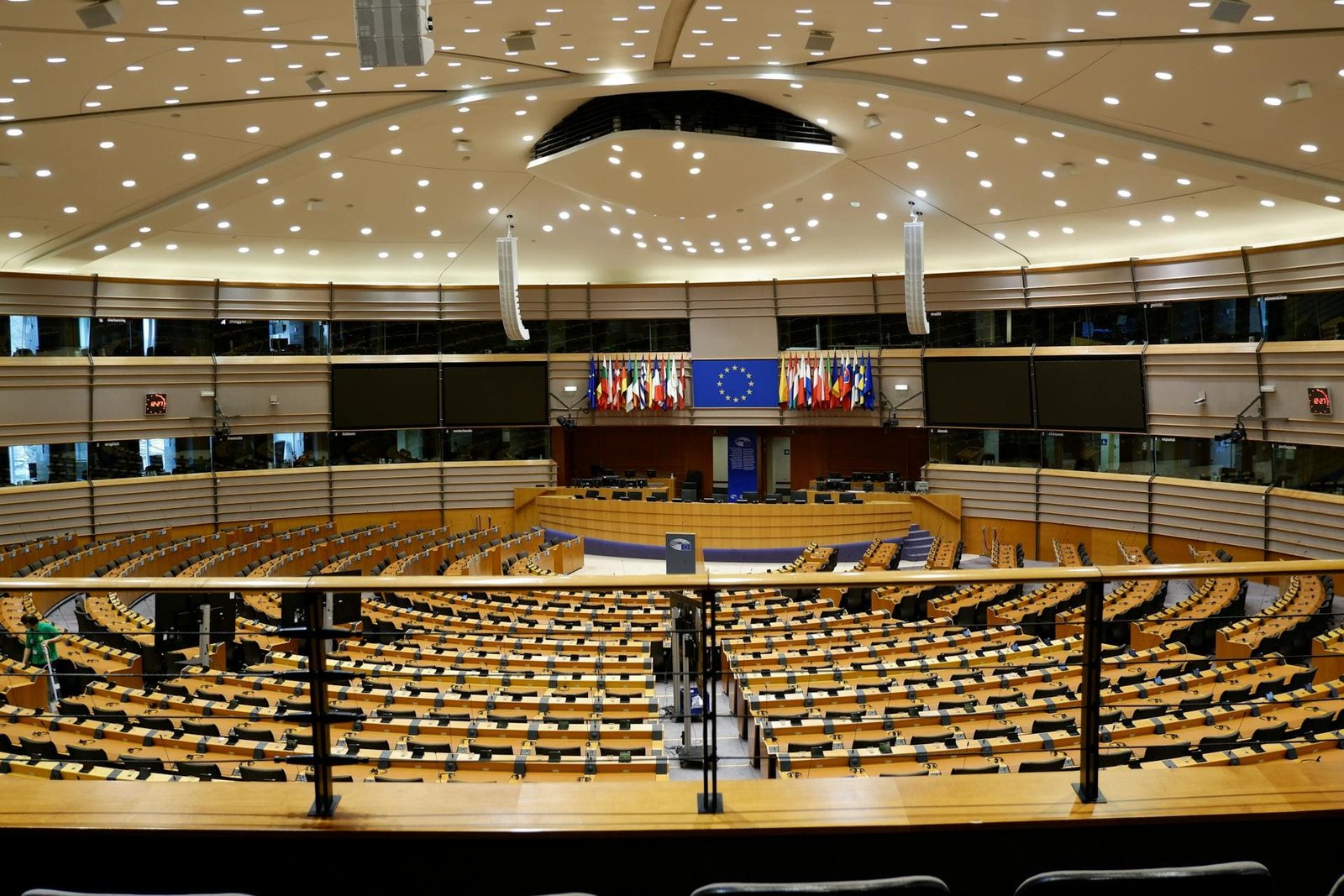
The European Parliament adopted a resolution demanding the immediate and unconditional release of Aliaksandra Pulinovich and all political prisoners in Belarus, as well as their full rehabilitation. It condemns political prosecutions and calls for the immediate repeal of Article 411 of the Belarusian Criminal Code, used to arbitrarily extend detentions. The text also calls for strengthening targeted sanctions and supporting international justice mechanisms, such as the International Criminal Court. The Parliament asks the Commission and the Member States to act; this is not a law.
Belarus arbitrarily holds 853 political prisoners according to the Parliament, including Aliaksandra Pulinovich, 16, sentenced to more than 10 years in prison for anti-war graffiti. Article 411 of the Criminal Code is used to indefinitely extend sentences on the basis of fabricated disciplinary violations, affecting more than 80 people since 2020. The Parliament considers that the release of all political prisoners and the end of repression are preconditions for any political dialogue and any economic cooperation with the regime.
Immediate release demandedThe Parliament demands the immediate and unconditional release of Aliaksandra Pulinovich and all political prisoners, their full rehabilitation and the complete restoration of their rights.
Repeal of Article 411It condemns the systematic use of Article 411 of the Belarusian Criminal Code as a tool of political persecution, calls for its immediate repeal and demands the release and full legal rehabilitation of all persons convicted under this provision. Around 50 political prisoners remain detained under this charge.
End of ill-treatmentThe Parliament urges the Belarusian authorities to end all forms of ill-treatment, incommunicado detention, denial of medical care and access to lawyers and family, as well as forced labor, and to investigate deaths in detention and allegations of torture.
Strengthened targeted sanctionsIt calls on the Council to expand, strengthen and strictly enforce targeted sanctions against all persons and entities responsible for political prosecutions, repression and acts of torture.
Support for international justiceThe Parliament calls on the Union and its Member States to support the collection of evidence of crimes of the Lukashenko regime, including at the United Nations level, and to strengthen accountability through the International Criminal Court and national proceedings based on extraterritorial and universal jurisdiction.
The resolution was adopted by 504 votes in favor, 4 against and 55 abstentions in an electronic roll-call vote.
This resolution has no legally binding force: it expresses the political position of the European Parliament and calls on the Commission, the Council and the Member States to act. Concretely, it calls for strengthening sanctions against Belarusian officials, granting humanitarian visas to released political prisoners and supporting prosecutions before the International Criminal Court. For European citizens, this means that the Union is urged to maintain pressure on the Belarusian regime and not to normalize its relations as long as all political prisoners are not released and repression does not cease.
The European Parliament has adopted a resolution demanding the immediate and unconditional release of Aliaksandra Pulinovich and all Belarusian political prisoners. It is not a law, but a political act that commits the Union not to normalize its relations with a regime that imprisons teenagers for anti-war graffiti.
Aliaksandra Pulinovich was 16 when she was arrested for graffiti against the war in Ukraine. She was tried behind closed doors, sentenced to more than ten years in prison and placed on a terrorist list. Her case is not isolated: 853 political prisoners remain arbitrarily detained, according to the Parliament. Article 411 of the Belarusian Criminal Code allows sentences to be extended indefinitely on the basis of fabricated disciplinary violations, turning detention into psychological torture. More than 80 people have been sentenced under this provision since 2020, and about 50 remain imprisoned, their lives and health gravely threatened.
The Parliament does not merely condemn: it demands the immediate repeal of Article 411 and the full legal rehabilitation of all those convicted under this provision. It also calls for an end to ill-treatment, incommunicado detention, the denial of medical care and access to lawyers, as well as investigations into deaths in custody and allegations of torture. These are clear demands, but they are addressed to a regime that recognizes no legitimacy in these rights. The text acknowledges US efforts to secure releases, while stressing that they are driven by the regime's economic survival and justify no normalization. The release of all political prisoners and the end of repression remain preconditions for any political dialogue and any economic cooperation.
The European Union is called upon to step up its efforts: to summon the regime's ambassadors to disclose the health status and location of prisoners, grant humanitarian visas, provide rehabilitation assistance. The Council is urged to broaden and strictly apply targeted sanctions against those responsible for political prosecutions, repression and torture. The Parliament also supports the collection of evidence of the regime's crimes, including at the United Nations level, and prosecutions before the International Criminal Court, notably the referral by Lithuania, as well as national proceedings based on universal jurisdiction. An approach based on subsidiarity and the market would have consisted in targeting the individuals responsible rather than imposing broad economic sanctions that hit the population, and in making any economic cooperation conditional on verifiable political reforms, rather than on promises of release with no follow-through.
Imprisoning a teenager for graffiti is the confession of a regime that fears nothing but the freedom of its citizens.