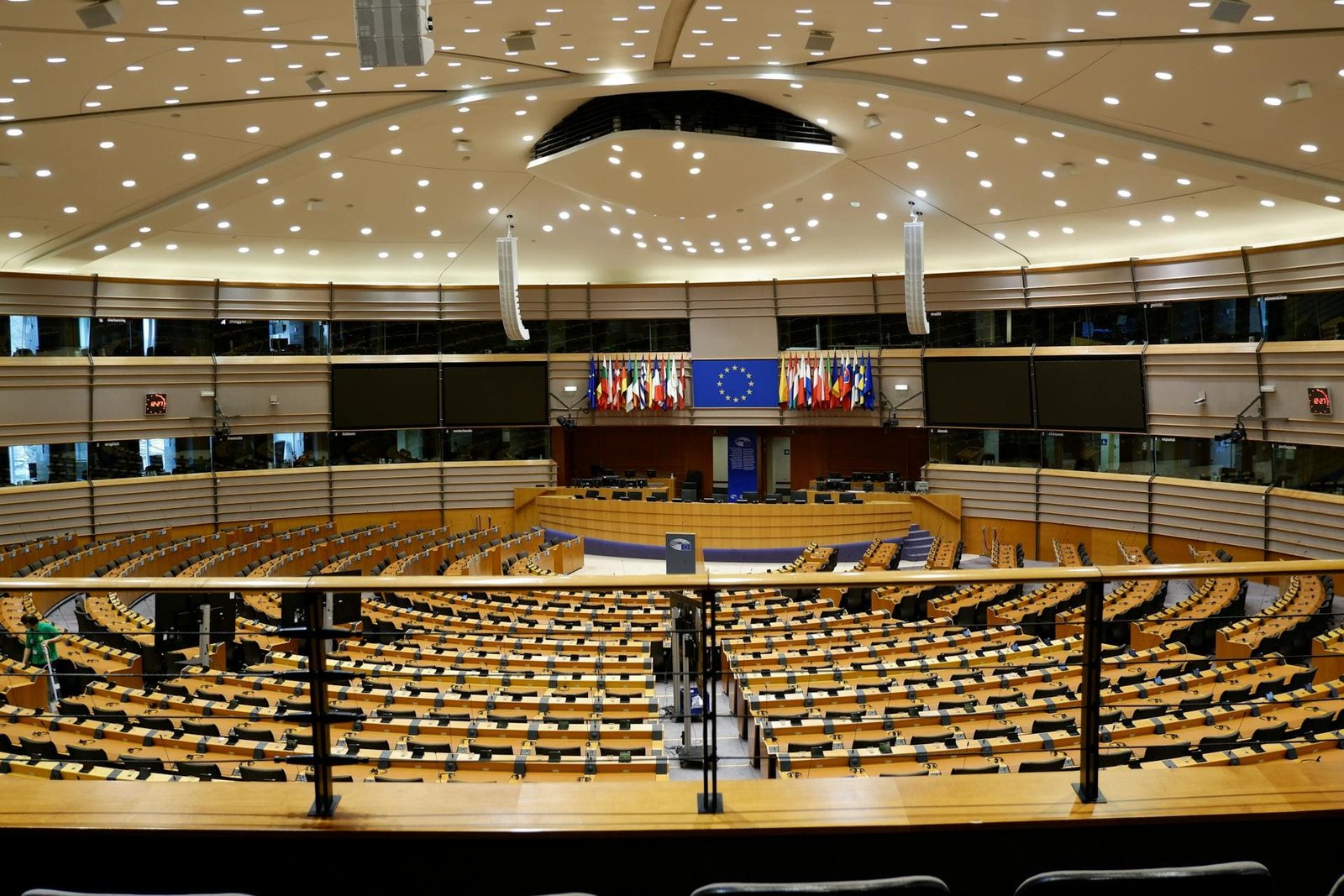
The European Parliament has adopted a resolution condemning the systematic repression by the Cuban regime and demanding the immediate and unconditional release of all political prisoners, including minors. It calls for targeted sanctions against those responsible for the repression, including Miguel Díaz-Canel and the leaders of GAESA, and asks the Union to suspend the political dialogue and cooperation agreement with Cuba if concrete democratic transition measures are not taken quickly. The text also calls for delivering humanitarian aid directly to the Cuban people, bypassing the state.
Cuba is going through a deep crisis: power cuts lasting up to 22 hours a day, shortages of food, water and medicine, and cumulative inflation of more than 500% over four years. According to the NGO Prisoners Defenders, 1,281 political prisoners were being held at the end of May 2026, including minors. The European Parliament had already repeatedly raised the alarm about the human rights situation on the island and about the implementation of the EU-Cuba agreement signed in 2016.
Release of political prisonersParliament demands the immediate and unconditional release of all political prisoners and arbitrarily detained persons, including minors, an end to torture and ill-treatment, and immediate access to fair trials and medical care for those who are seriously ill.
Targeted sanctions against those responsibleIt calls for targeted measures under the EU global human rights sanctions regime against those responsible for the repression, starting with the highest-ranking leaders, including Miguel Díaz-Canel, those responsible in the security, judicial and prison chain of command, as well as the leaders of GAESA.
Conditional suspension of the EU-Cuba agreementParliament calls on the Vice-President of the Commission and the Member States to declare that, without explicit, concrete and significant short-term measures (a roadmap for democratic transition, the release of nearly 1,300 political prisoners, permission for exiles to return without reprisals), the Union will immediately suspend the political dialogue and cooperation agreement.
Humanitarian aid without state intermediationIt calls on the Commission and the Member States to set up humanitarian channels to provide energy, food and medicine directly to the Cuban people and to independent businesses, bypassing the state, and calls on all donors to increase aid that must remain protected and must never fund the regime.
Access to places of detentionParliament demands that the regime grant the International Committee of the Red Cross, United Nations special rapporteurs, a European Parliament delegation and independent observers unhindered access to all places of detention.
The resolution was adopted by 283 votes in favour, 199 against and 85 abstentions in an electronic roll-call vote.
This resolution is a political position of the European Parliament: it does not directly change EU law or the status of the agreement with Cuba, but it commits Parliament to holding the Cuban regime to account. In practice, it calls for sanctions against named officials and for a suspension of the agreement if nothing moves, and it supports humanitarian aid that reaches Cubans directly without going through the state. For European citizens, this means that their Parliament is pushing for a firmer line towards Havana, without any immediate legal obligation for the Member States.
The European Parliament has adopted a resolution condemning the systematic repression of the Cuban regime and demanding the immediate and unconditional release of all political prisoners, including minors. It calls for targeted sanctions against those responsible for the repression, including Miguel Díaz-Canel and the leaders of GAESA, and asks that the Union suspend the political dialogue and cooperation agreement with Cuba if concrete democratic transition measures are not taken quickly. The text also calls for humanitarian aid to be delivered directly to the Cuban people, bypassing the state.
The European Parliament resolution does not merely condemn repression; it describes its mechanism. Fifty years of communist choices have plunged Cuba into a deep crisis: power cuts of up to 22 hours a day, shortages of food, water and medicine, cumulative inflation of more than 500% over four years. State wages, between 15 and 25 dollars a month at the black market rate, do not allow people to survive. According to the Cuban Observatory for Human Rights, 89% of families live in extreme poverty and seven out of ten Cubans skip meals. The regime keeps the population dependent through organized scarcity.
To this misery is added political repression. Prisoners Defenders counts 1,281 political prisoners at the end of May 2026, including minors, and documents systematic torture, sexual violence and denial of care. Parliament demands the immediate and unconditional release of all political prisoners and arbitrarily detained persons, an end to ill-treatment, fair trials and full reparation for victims. It also asks that the International Committee of the Red Cross, United Nations special rapporteurs, a European Parliament delegation and independent observers be able to access all places of detention without hindrance.
Parliament calls for targeted measures under the EU Global Human Rights Sanctions Regime against those responsible for the repression, starting with the highest leaders, including Miguel Díaz-Canel, those responsible in the security, judicial and prison chain of command, as well as the leaders of GAESA. These are not general economic sanctions that would hit the population, but individual measures against those who order or carry out the repression. This approach is liberal: it targets those responsible, not the victims.
On the political dialogue and cooperation agreement, Parliament urges the Vice-President of the Commission and the Member States to declare that, without explicit, concrete and significant measures in the short term (roadmap for democratic transition, release of nearly 1,300 political prisoners, authorization of return without reprisals for exiles), the Union will suspend the agreement without delay. The suspension clause already exists (Article 85(3)(b)); Parliament asks that we dare to use it. It is a question of credibility: an agreement systematically violated by the regime cannot serve as a screen.
The text also calls for direct humanitarian channels to the Cuban people and independent businesses, bypassing the state, and for aid never to fund the regime. The liberal alternative would be to condition all aid on real economic reforms: legal certainty, freedom to do business, openness to investment. Parliament asks for that too, but direct aid remains a lifeline, not a lasting solution. The solution is the end of the state monopoly on the economy.
A regime that starves its people and imprisons its dissidents cannot be a trading and political partner like any other.