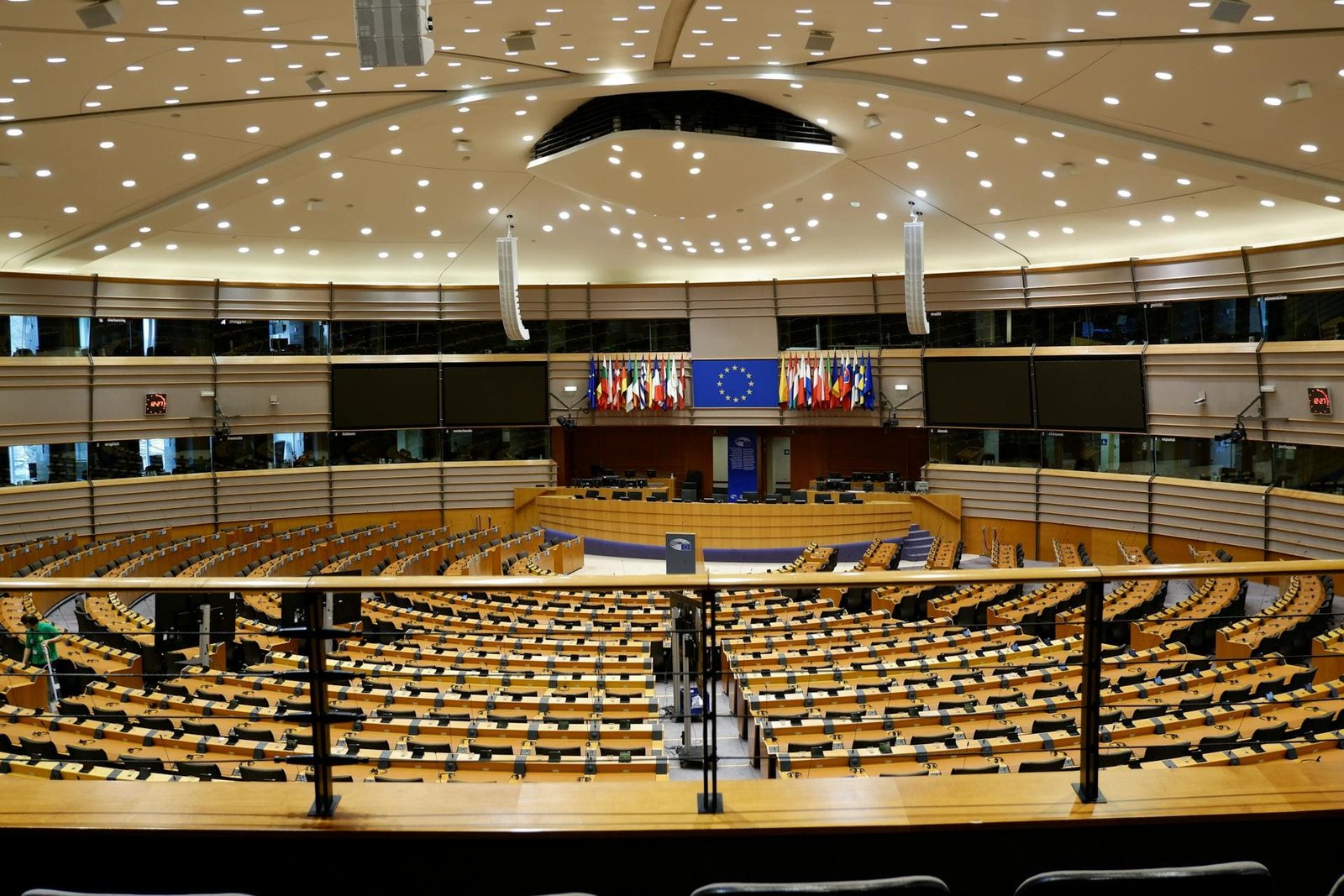
The European Parliament has adopted a resolution finding that Georgia's ruling party, Georgian Dream, has not only suspended but effectively reversed the country's European integration. It calls on the European Union and its member states to immediately impose targeted personal sanctions against Bidzina Ivanishvili, his family, his businesses, the leaders of Georgian Dream, judges, prosecutors and other officials responsible for the repression. The Parliament also calls for the immediate release of all political prisoners, including former President Mikheil Saakashvili, and reaffirms its support for Georgia's sovereignty and territorial integrity. The text was adopted by 436 votes in favour, 145 against and 47 abstentions.
In 2025 the European Commission published a report documenting democratic backsliding in Georgia and the de facto suspension of the country's accession process to the European Union. That report found that the Georgian authorities had not implemented the nine conditions required for candidate country status and were moving away from European standards. The European Parliament responded by adopting a resolution that goes further than a simple finding: it calls for sanctions and denounces a complete reversal of Georgia's European trajectory. This resolution is not a law: it expresses the Parliament's political position and calls on the Commission and the member states to act.
Personal sanctions against IvanishviliThe Parliament calls on the European Union and its member states to impose without delay targeted sanctions against Bidzina Ivanishvili, members of his family and his businesses, as well as against the main leaders of Georgian Dream, judges, prosecutors and other officials responsible for the repression and electoral fraud. It calls for the freezing of Ivanishvili's assets and for cooperation with the United Kingdom and the United States on this matter.
Lifting of the Hungarian vetoThe Parliament urges the new Hungarian government to lift the veto imposed by its predecessor on EU-wide targeted sanctions against Bidzina Ivanishvili and all the leaders of Georgian Dream. It calls on the Council to explore collective mechanisms when unanimity is not possible, so that the Union can respond effectively and in a unified way.
Release of political prisonersThe Parliament demands the immediate and unconditional release of all persons imprisoned on political grounds, including opposition leaders and former officials. It reiterates its call for the immediate release of former President Mikheil Saakashvili on humanitarian grounds and asks that Members of the European Parliament have unhindered access to Saakashvili and other political prisoners.
Non-recognition of the Georgian parliamentThe Parliament maintains its position of non-recognition of the legitimacy of the Georgian parliament and of the president designated by it, which it describes as a de facto single-party parliament. It calls on the Union's representatives and Members of the European Parliament to refrain from meeting representatives of the regime, starting with the current de facto president, as long as the repression and democratic backsliding continue.
Support for Georgian sovereigntyThe Parliament reaffirms its unwavering support for Georgia's sovereignty and territorial integrity and condemns the Russian occupation of the regions of Abkhazia and Tskhinvali/South Ossetia. It condemns the development of the Russian naval base at Ochamchire as a violation of territorial integrity and a direct threat to Black Sea security, and calls for the immediate and unconditional withdrawal of Russian forces.
The resolution was adopted by 436 votes in favour, 145 against and 47 abstentions in an electronic roll-call vote on 17 June 2026.
For European citizens, this vote means that the European Parliament is officially calling for sanctions against Georgian officials, but these sanctions are not yet in force: they must be approved unanimously by the member states in the Council. In practice, the individuals targeted by these sanctions would have their assets frozen in the Union and would be banned from entering the European area. The Parliament also asks that Members of the European Parliament be able to visit Mikheil Saakashvili and other political prisoners, and that the Union continue to support Georgian civil society and independent media. This resolution does not have the force of law: it expresses the Parliament's political position and calls on the Commission and the member states to act.
The European Parliament finds that Georgian Dream has not only suspended but reversed Georgia's European trajectory, and it names those it wants sanctioned: Bidzina Ivanishvili, his family, his companies, the party leaders, judges, prosecutors and complicit media owners. Adopted by 436 votes to 145 with 47 abstentions, this text is not a law: it is political pressure, and everything now depends on unanimity among member states in the Council.
A resolution freezes no account. But it sets a target and makes inaction costly for those who choose it. By naming Bidzina Ivanishvili, his family, his companies, the judges and prosecutors who serve the repression, Parliament moves beyond the register of diplomatic regrets. It says who has captured the state, and it says so publicly, with 436 votes.
The mechanism is simple and must be faced squarely: personal sanctions fall to the Council, where a single veto is enough. Parliament therefore explicitly asks the new Hungarian government to lift its predecessor's blockage, and invites the Council to study collective mechanisms when unanimity is out of reach. That is the real question raised: a Union that requires unanimity to defend its own values ends up demanding nothing at all.
The resolution describes a concrete chain of events, and that is where it is useful. A law on grants broadens the notion of foreign funding to the point of making it a criminal offence punishable by six years in prison, cutting civil society and independent media off from any foreign funding. An amendment to the electoral code bars citizens from voting from abroad. Opposition parties are targeted by a constitutional action brought by 88 MPs. Each measure lowers the cost of repression for the authorities and raises the cost of resistance for citizens.
Parliament therefore conditions relations with the authorities on verifiable reforms and restricts political contacts to the strict minimum, while maintaining engagement with civil society and independent media. That is the right balance: do not treat the regime as a normal partner, do not abandon those who are fighting. Nearly 75% of Georgians support European integration according to the text; they are the ones the Union must keep in view, not the leaders who deprive them of their vote.
The text remains a political recommendation, with no legal obligation. An approach based on subsidiarity and responsibility would have complemented pressure with assumed unilateral acts: member states that have already imposed visa bans, which Parliament welcomes, should coordinate their lists and publish their criteria, rather than wait for a unanimity that protects the interests of a single government. Transparency about who is targeted, and why, is worth more than one more press release.
The cost of delay must also be measured. Every month without sanctions means assets that move, structures that reorganize and networks that take hold, while Black Sea connectivity projects wait for a stable partner. Firmness is not a moral posture: it is what makes investment possible.
A Union that requires unanimity to defend its values ends up demanding nothing at all.