The European Parliament has given its approval to the conclusion of the agreement between the European Union and Pakistan amending the concessions for all tariff quotas in the EU's CLXXV list. This list sets out the import volumes at reduced duties that the EU grants to its trading partners. The agreement adapts these quotas following the United Kingdom's withdrawal from the Union. The text must still be formally adopted by the Council before it enters into force.
The EU's CLXXV list is the list of tariff concessions submitted to the World Trade Organization. It sets, for many products, tariff quotas, that is, quantities that can be imported at a reduced or zero customs duty. The United Kingdom's withdrawal from the EU changed the distribution of these quotas between the EU and the United Kingdom. The Union therefore had to renegotiate with its trading partners, including Pakistan, how these quotas are distributed. The agreement takes the form of an exchange of letters between the Union and Pakistan. The Council requested the European Parliament's approval in order to conclude this agreement on behalf of the Union.
Approval of the agreementParliament gives its approval to the conclusion of the EU-Pakistan agreement amending the concessions for all tariff quotas in the EU's CLXXV list.
Adaptation after BrexitThe agreement adapts the distribution of the EU's tariff quotas to take account of the United Kingdom's withdrawal from the European Union.
Transmission of the positionThe President of Parliament is instructed to transmit Parliament's position to the Council, the Commission, and the governments and parliaments of the Member States and of Pakistan.
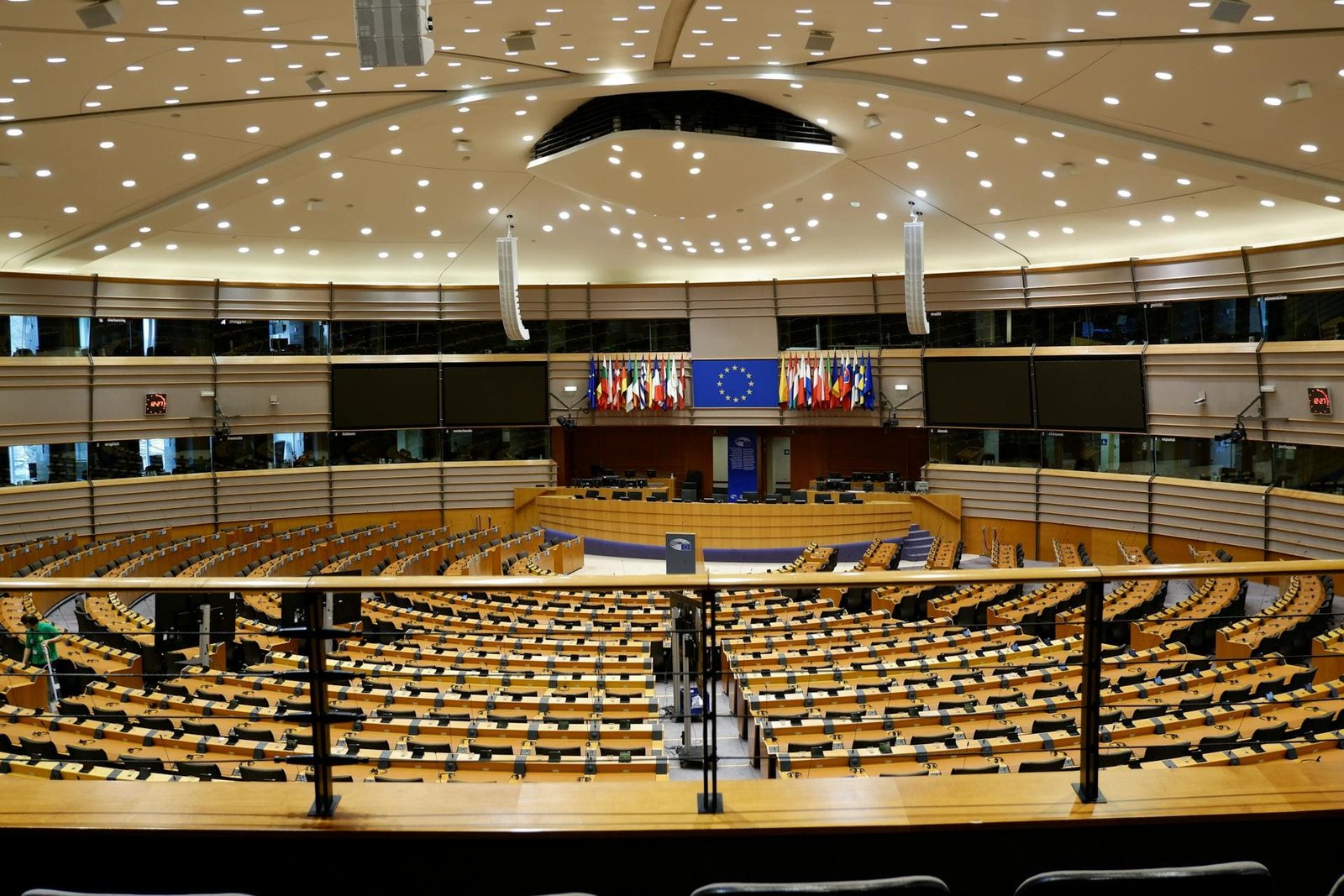
Parliament adopted the text by 276 votes in favour, 13 against and 9 abstentions, in an electronic roll-call vote.
This agreement does not change the customs duties you pay as a consumer. It adjusts the way the EU's tariff quotas are distributed between the Union and the United Kingdom after Brexit. Businesses importing Pakistani products under these quotas will continue to benefit from the same conditions of access to the European market. Trade between the EU and Pakistan remains governed by the same rules as before, with an updated distribution to take account of the United Kingdom's exit.
Parliament approved the EU-Pakistan agreement that reallocates the tariff quotas of Schedule CLXXV after the British withdrawal. A consent vote, not a renegotiation: volumes and duties remain identical, only the share falling to the EU is adjusted. For importers, nothing changes; for taxpayers, the question of the cost of the Brussels machine remains entirely open.
Brexit cut in two Schedule CLXXV, that catalogue filed with the World Trade Organization which sets the quantities of products that can enter the EU at reduced or zero duty. Without an agreement with trading partners, the quotas would have remained legally unclear, and importers would have suffered the uncertainty. The agreement with Pakistan clarifies the allocation: the British share is withdrawn, the European share maintained. Companies importing Pakistani textiles or rice under these quotas see neither their volumes nor their duties change.
The vote is massive (276 for, 13 against, 9 abstentions), which reflects less enthusiasm than a technical inevitability. The groups that voted against or abstained did not challenge the principle of the agreement, but may have wanted to signal their distance from a procedure in which Parliament can only approve or reject en bloc, without amending. This is the essence of the consent procedure provided for in Article 218, paragraph 6, of the treaty: a yes or a no, no room for negotiation.
The cost of this procedure is real: months of back-and-forth for a text the Council had already stitched together, and a Parliament reduced to rubber-stamping. An approach based on subsidiarity could have entrusted the management of these quotas to lighter bilateral agreements, or at least provided for an explicit negotiating mandate to avoid elected representatives being summoned only at the moment of saying yes.
The agreement touches neither general customs duties, nor sanitary standards, nor safeguard clauses. It merely allocates volumes. For European producers competing with Pakistani imports, the pressure remains identical: same quantities, same reduced duties. The question of reciprocity is not addressed: Pakistan continues to apply its own barriers, without the agreement requiring any greater openness.
The real issue lies elsewhere: Schedule CLXXV is an inheritance of the Common Agricultural Policy, and each post-Brexit renegotiation is an opportunity to ask whether these quotas, often inherited from decades of protectionism, still make sense. Parliament could have used this vote to demand an assessment of the impact of these quotas on European producers. It did not, and that is a missed opportunity to make trade policy more accountable.
A technical yes that rubber-stamps a bureaucratic sharing, without renegotiating volumes or duties.