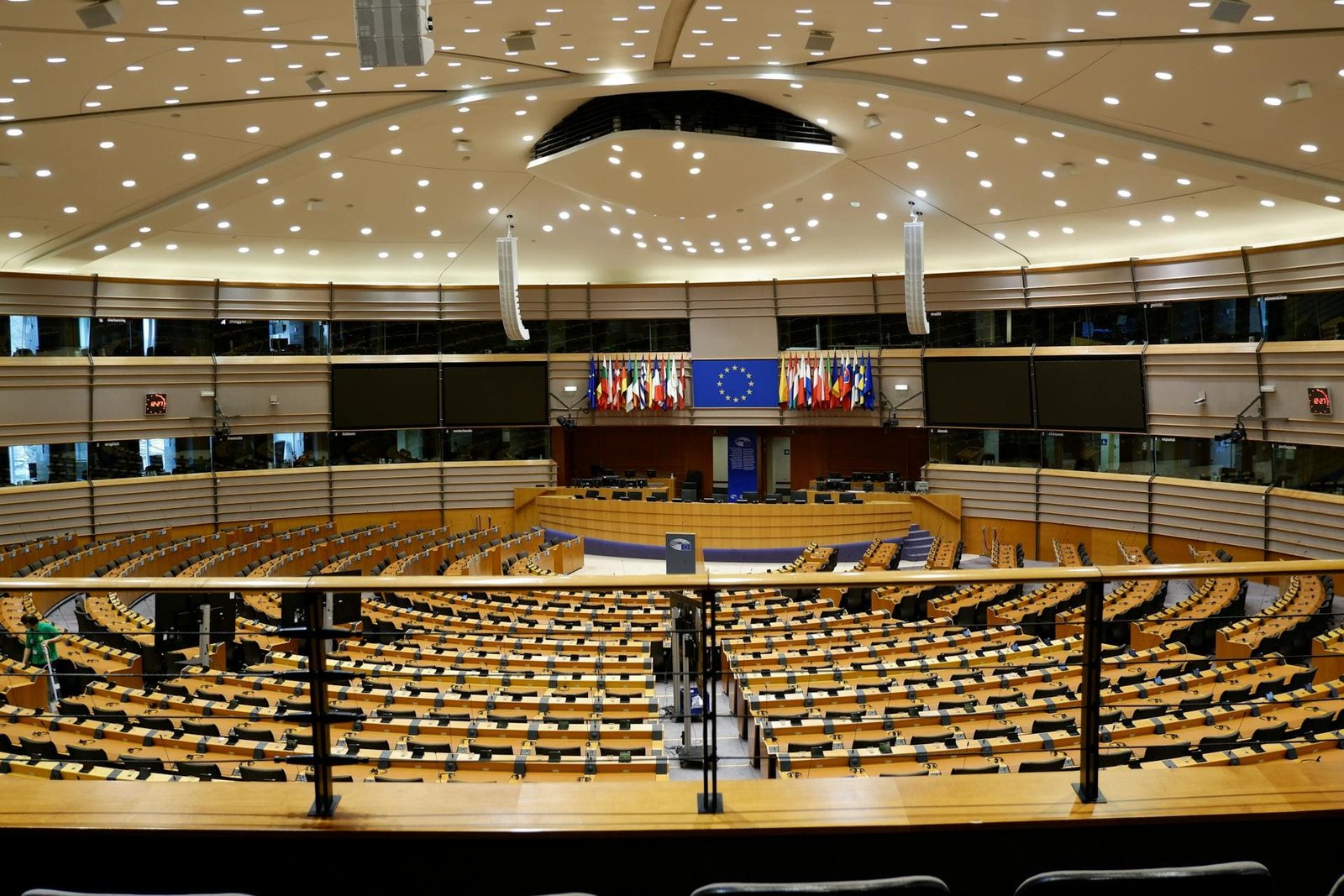
The European Parliament adopted a resolution welcoming the opening of all negotiation chapter clusters with Albania in 13 months and noting its ambition to close accession negotiations by the end of 2027. It also calls for electoral, judicial and anti-corruption reforms, a moratorium on construction in protected areas and corrective measures after irregularities in the IPARD II agricultural programme. The text is not a law: the Parliament is asking the Albanian government to act.
Each year, the Commission publishes a report on the progress of countries candidate to the European Union. The 2025 report on Albania serves as the basis for the Parliament to assess the country's reforms. Albania has been an official candidate since 2014 and has been negotiating its accession since 2022. In 2025 and 2026, it accelerated the pace by opening all negotiation chapter clusters in just 13 months. The Parliament uses this annual report to welcome progress and list what remains to be done before a possible accession.
Moratorium in protected areasThe Parliament calls on the Albanian authorities to immediately stop any new authorisation, any construction site and any development in protected areas. This moratorium must last until the repeal of the incompatible provisions of the amended law on protected areas and until full compliance with European nature protection standards. Any project will have to undergo a full environmental impact assessment, with public participation.
Electoral reform before the next electionsThe Parliament calls on the majority and the opposition to carry out a comprehensive electoral reform with civil society, implementing the pending recommendations of the OSCE/ODIHR and the Venice Commission well before the next electoral cycles. It points to unequal conditions of competition, the abusive use of administrative resources, party financing, vote buying and pressure on voters.
Correct the irregularities of the IPARD II programmeAfter serious irregularities found by the European Anti-Fraud Office (OLAF) in the implementation of the IPARD II programme in Albania, the Parliament demands immediate corrective measures and full transparency on the use of the Union's financial aid.
Independence of the judiciary and fight against corruptionThe Parliament calls for the full implementation of anti-corruption laws, in particular on the protection of whistleblowers and conflicts of interest. It wants sufficient resources for the special anti-corruption prosecution office (SPAK) without limiting its investigative powers, and more efforts to detect, freeze and confiscate criminal assets. It also calls for all decisions of the Constitutional Court to be executed within the deadlines.
Rights of minorities and same-sex couplesThe Parliament calls on Albania to strengthen the protection of ethnic and religious minorities and vulnerable groups (Roma, Egyptians, persons with disabilities, migrant workers, LGBTIQ+ people), to guarantee education in minority languages and to protect the property rights of the Greek minority. It invites the government to create a registered partnership to recognise and protect same-sex couples, in line with its 2021-2027 national action plan.
The Parliament adopted the resolution by 483 votes in favour, 103 against and 70 abstentions, in an electronic roll-call vote on 17 June 2026.
For Albanian citizens, this text has no force of law: it is a political request addressed to the authorities in Tirana. In practice, the European Parliament makes its support conditional on progress on the rule of law, the fight against corruption, media freedom and environmental protection. Residents of protected areas could see construction sites stop if the requested moratorium is applied. Same-sex couples are still waiting for legal recognition. Farmers benefiting from the IPARD II programme could face increased checks after the reported irregularities. For EU citizens, the issue is to ensure that European money is well used and that enlargement takes place on a solid basis.
On 17 June 2026 the European Parliament adopted a resolution on the Commission's 2025 report on Albania by 483 votes to 103, with 70 abstentions. It welcomes the opening of all negotiation chapter clusters in 13 months and takes note of Albania's ambition to close the negotiations by the end of 2027. But this text is not a law: it is a list of political conditions addressed to Tirana, and it is a heavy one.
Albania opened all chapter clusters in 13 months, and Parliament welcomes this without reservation. But opening chapters is not closing them. The text takes note of Tirana's ambition to conclude by the end of 2027, without turning that into a binding deadline. The real condition lies elsewhere: rigorous implementation of the legislation adopted. That is where the problem lies, and Parliament knows it.
The Commission's annual report serves as the basis for this resolution, which is not a legislative act. It changes no rule and creates no direct legal obligation. It states what Parliament expects, and it states it precisely. For Albanian citizens, this means that European support remains conditional on concrete results: an independent judiciary, corruption prosecuted, free media, a protected environment.
Parliament calls for sufficient resources for the Special Anti-Corruption Prosecutor's Office (SPAK) without limiting its investigative powers, and for greater efforts to detect, freeze and confiscate criminal assets. It notes that Albania fell to 91st place in the corruption perceptions index in 2025, from 80th in 2024. This is not a detail: high-level corruption discourages investment and diverts public money. Without effective confiscation, criminal networks keep their profits and continue to buy complicity.
On the IPARD II programme, the serious irregularities found by OLAF call for immediate corrective measures. Parliament demands full transparency on the use of the Union's aid. For the Albanian farmers who are beneficiaries, this could mean tighter controls; for the European taxpayer, it is the minimum condition for the money paid out not to be lost in opaque circuits. Confidence in enlargement is at stake in this kind of verification, not in speeches.
Parliament demands an immediate moratorium on all new authorisation procedures, construction works and development interventions in protected areas, until the incompatible provisions of the amended law on protected areas are repealed and until European nature protection standards are fully respected. Every project should be subject to a full environmental impact assessment, with public participation. This is a political demand, not a law: it does not stop construction sites by itself, but it ties the progress of accession to this point.
A moratorium is not an environmental policy. It suspends decisions, it does not replace them. The subsidiary alternative would be to make European funds conditional on measurable results, rather than piling up procedures. But Parliament has chosen the political route: it sets conditions, and it leaves it to Tirana to meet them. The residents of the areas concerned will see whether promises turn into action.
Opening chapters in 13 months is only worth it if the reforms follow. Parliament has set the price, not the date.