Loading

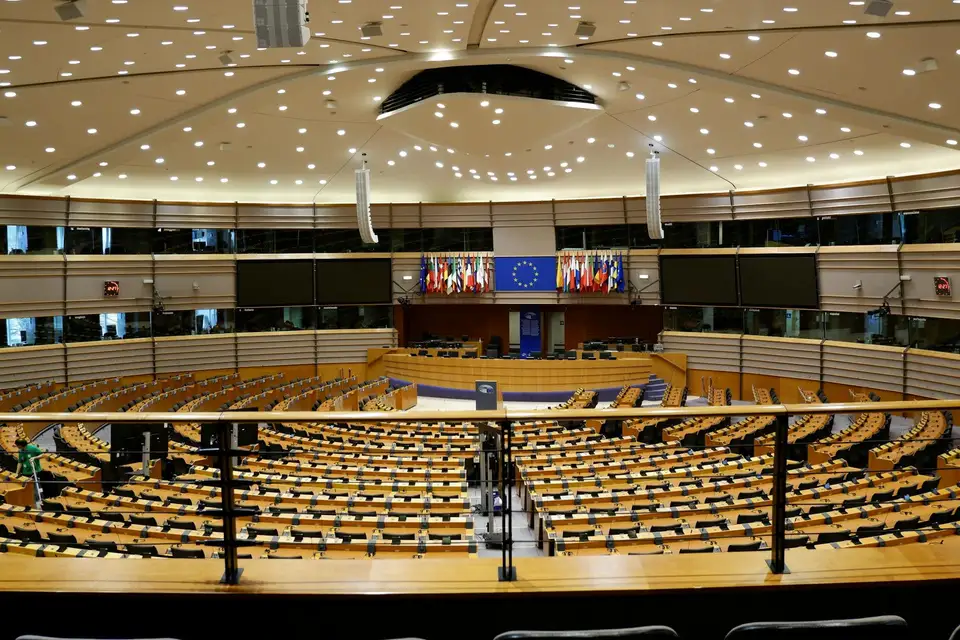
On 16 June 2026, the European Parliament adopted a proposal to simplify the implementation of the Artificial Intelligence (AI) Regulation, while introducing new bans to combat non-consensual intimate content and AI-generated child sexual abuse material. The text was approved by 423 votes in favour, 57 against and 174 abstentions.
Regulation (EU) 2024/1689, known as the 'AI Act', sets horizontal rules for AI systems to protect health, safety and fundamental rights. However, its implementation has proved complex, especially for small and medium-sized enterprises (SMEs). The European Commission therefore proposed a 'digital omnibus package on AI' to simplify obligations, clarify certain definitions and reduce administrative burdens, while maintaining a high level of protection.
Parliament approved several key amendments:
The proposal was adopted at first reading by 423 votes in favour, 57 against and 174 abstentions. The text will now be examined by the Council of the EU before final adoption.
For citizens, these amendments provide better protection against harmful uses of AI, including the generation of non-consensual intimate images and child sexual abuse content. Businesses, especially SMEs, will benefit from clearer and less burdensome rules, which should foster innovation while maintaining strong safeguards for health, safety and fundamental rights.
On 16 June 2026, the European Parliament adopted by 423 votes to 57 with 174 abstentions an agreement with the Council that claims to simplify the AI Act. The text allows certain requirements for high-risk AI systems to be limited where other sectoral legislation offers equivalent or higher protection. But this flexibility is framed by delegated acts that the Commission will adopt by August 2027: it is the Commission, not companies, that will decide case by case which rules are waived. The announced simplification risks giving birth to a new layer of uncertainty.
The starting idea is liberal: if sectoral legislation already protects health, safety or fundamental rights, why impose a second layer of compliance? Article 2(13) therefore allows the requirements of Articles 9 to 15 and 17 to 25 to be limited for high-risk AI systems covered by Annex I, Section A. But the condition is twofold: sectoral legislation must offer an equivalent or higher level of protection, and the limitation must not reduce the overall level of protection. Who assesses this? The Commission, by delegated acts, by 2 August 2027. In plain terms, companies will have to wait for Brussels to specify, sector by sector, which requirements can be set aside. The cost of the delay is real: AI projects in health or transport will remain suspended on administrative decisions. A genuine simplification would have established a presumption of conformity as soon as sectoral legislation is complied with, leaving operators to document their situation, subject to ex post control.
Article 4a authorises, on an exceptional basis, the processing of special categories of personal data to detect and correct biases in high-risk systems. The conditions are strict: absolute necessity, pseudonymisation, no transmission to third parties, deletion after correction. This is a pragmatic step forward: without representative data, biases persist, and additional controls only make compliance more expensive without guaranteeing a result. The text specifies that this creates no obligation to correct biases, which avoids a new burden. One may regret that the Commission did not extend this possibility to all systems, but the principle of proportionality is respected.
The new prohibitions in Article 5 (realistic intimate images, child sexual abuse material) are welcome additions. They do not fall under simplification but under the protection of persons. Parliament was right to include them, even if one may wonder why they were not in the initial text. The fight against the most dangerous content does not, however, justify multiplying obligations for legitimate companies. The text moreover maintains exceptions for police and medicine, which is balanced.
A simplification that depends on delegated acts is not a simplification: it is a promise of uncertainty.