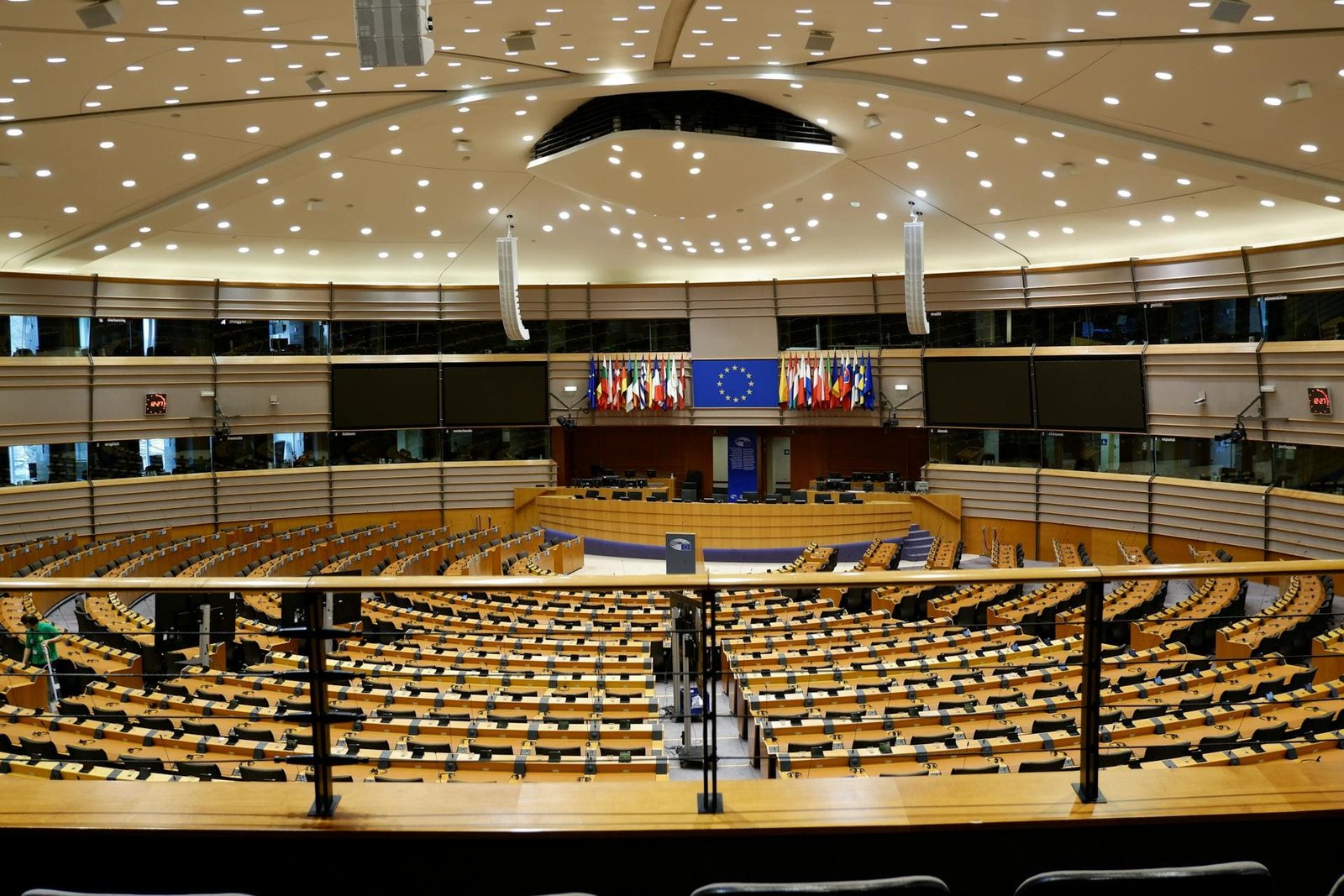
On 21 May 2026, the European Parliament adopted, by 440 votes in favour, 49 against and 84 abstentions, new rules that strengthen the rights of crime victims in the European Union. The text creates a single helpline reachable at 116 006 for national calls, obliges member states to allow online reporting of non-urgent and non-violent offences, and better protects victims' contact details. This is the final text agreed with EU governments; they must still formally approve it before it becomes law.
The 2012 directive on victims' rights did not offer a helpline common to the whole EU, did not explicitly provide for online reporting and did not clearly protect victims' personal contact details from offenders. The European Commission proposed in 2023 to strengthen this framework. Parliament amended that proposal and reached an agreement with the Council, resulting in Directive (EU) 2026/1472, which amends the 2012 directive without replacing it.
Single 116 006 helplineMember states must set up accessible, free and confidential support lines for victims, reachable at 116 006 for national calls, as well as through other secure means such as apps or websites. A separate number is planned for international calls, with no obligation for it to be free of charge.
Online reporting of offencesVictims must be able to report offences through free, accessible, safe and easy-to-use channels, including online for non-urgent cases and non-violent offences, when this is in their interest. People in detention or in closed centres must also be able to report offences effectively.
Protection of personal contact detailsThe victim's place of residence, telephone number and email address must not be disclosed to the offender, unless this is necessary for the exercise of the rights of the defence or justified by a superior legitimate interest. This rule applies to criminal proceedings started after 2 July 2029.
Stronger individual assessmentThe assessment of the victim's needs must be launched as soon as possible, for example at the first contact with the authorities, and updated throughout the proceedings if the situation changes. It must cover in particular the need for additional psychological support and access to specialised services.
Children and vulnerable peopleChild victims must be able to report offences in a safe, confidential and age-appropriate way, without the consent of the holder of parental authority being required in the event of a conflict of interest. Victims who are third-country nationals, whatever their residence status, must not be discouraged from reporting and must be treated without discrimination.
Parliament adopted the text by 440 votes in favour, 49 against and 84 abstentions, in an electronic roll-call vote on 21 May 2026.
In practice, a victim in any EU country will be able to call 116 006 to obtain information, emotional support and be referred to support services. They will also be able to report an offence online if it is not urgent or violent, without travelling. Their personal contact details will not be passed on to the offender, except in justified cases, and this protection will apply to proceedings started after 2 July 2029. Children and people in detention will benefit from suitable reporting channels. Member states will also have to train police officers and judicial staff in how to receive victims.
On 21 May 2026, the European Parliament adopted Directive (EU) 2026/1472 strengthening the rights of crime victims, by 440 votes in favour, 49 against and 84 abstentions. The final text, agreed with the Council, creates a single helpline reachable on 116 006 for national calls, requires online reporting of non-urgent and non-violent offences, and protects victims' personal contact details from the perpetrator. This is not a bureaucratic revolution: it is a concrete simplification for those who suffer a crime and who, all too often, give up on reporting it.
The mechanism is simple: instead of forcing a victim to go to a police station for a non-urgent offence, Member States will have to offer a free, accessible and secure online channel. For someone hesitating to file a complaint, the difference between an online procedure and a physical trip can be the difference between reporting and giving up. The cost of the process goes down, and that is precisely what matters.
The text also requires that detained persons be able to effectively report offences committed in places of detention, and that children be able to do so without parental consent in the event of a conflict of interest. These are openings in blind spots, not additional layers of control. The logic is one of access, not suspicion.
The most concrete provision is perhaps the most discreet: the victim's place of residence, telephone number and email address will no longer be communicated to the perpetrator of the offence, except where necessary for the rights of the defence or a superior legitimate interest. This rule applies to proceedings initiated after 2 July 2029. Three years of transition is a long time for a victim whose address may still leak tomorrow.
The fallback alternative would be to let each Member State set its own safeguards, but the risk of fragmentation is real: a victim residing in one country might see their contact details protected, another might not. The European approach is justified here by equal treatment, provided that the implementation deadline does not become a pretext for postponing what matters.
The text strengthens rights, but it does not eliminate procedural complexity. The individual assessment must be launched as early as possible and updated, but victims will still have to navigate between national authorities, support services and courts. The cost of time remains borne by the victim, not by the administration. A genuine simplification would have eliminated duplicate procedures, not merely sped up the queue.
The vote is broad: 440 in favour, 49 against, 84 abstentions. Groups did not all vote for the same reasons, but the majority judged that access to justice took precedence over national reluctance. It is a signal: when Europe simplifies access to the law, it does not merely regulate, it delivers a service.
A victim who can report online and whose address remains protected is not one more victim in the statistics, but a person taking back control.