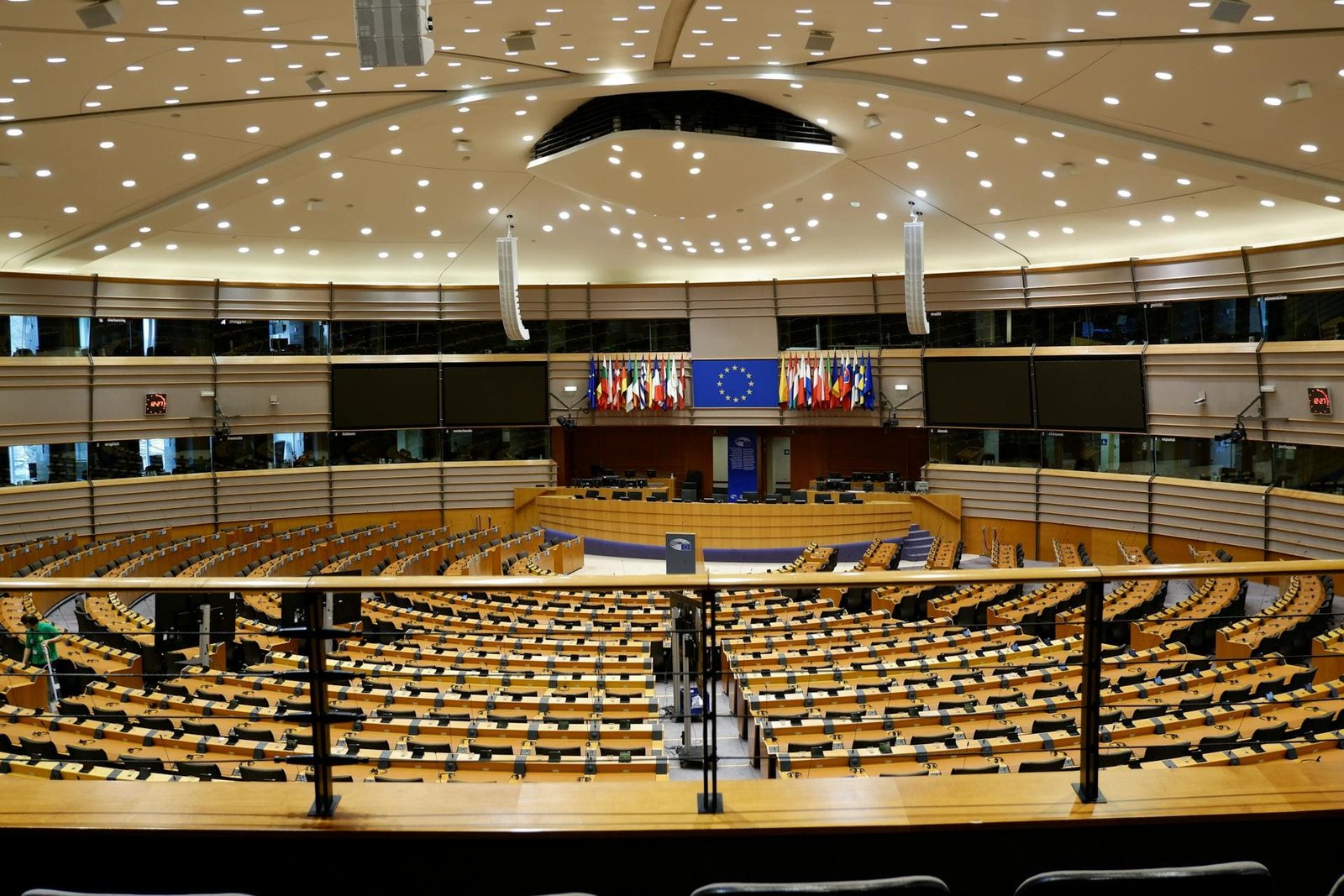
The European Parliament approved the agreement between the European Union and Canada setting out the conditions under which Canadian companies and products may participate in public procurement financed by the SAFE instrument. The vote was adopted by 466 votes in favour, 169 against and 14 abstentions. This is an approval decision: Parliament gives its green light, it does not propose amendments and does not negotiate the text.
The SAFE instrument is a European funding programme linked to security and defence. For companies or products from a country outside the Union to access markets financed by this instrument, an international agreement is required. The Council asked Parliament to approve the agreement negotiated with Canada. Without this approval, the agreement could not enter into force.
Green light for the EU-Canada agreementParliament approves the conclusion of the agreement setting out the conditions for the participation of Canadian legal entities and products originating in Canada in procurement under the SAFE instrument.
Transmission of the positionThe President of Parliament is instructed to transmit Parliament's position to the Council, the Commission, and the governments and parliaments of the Member States and of Canada.
No changes to the textParliament did not amend the agreement: it approves it as negotiated, without setting additional thresholds, dates or conditions in its resolution.
The electronic roll-call vote gave 466 votes in favour, 169 against and 14 abstentions. The approval is adopted.
In practice, Canadian companies will be able to participate in public procurement financed by the SAFE instrument under the same conditions as those set out in the agreement, and Canadian products will be treated according to these rules. For European citizens, this means that Canadian suppliers will be able to compete for contracts linked to security and defence projects financed by the Union. The agreement does not create any new tax or direct obligation for individuals. This approval is one step: the text must still be formally adopted by the Council before it can enter into force.
The European Parliament has given the green light to the agreement opening SAFE instrument markets to Canadian companies and products. By 466 votes in favour, 169 against and 14 abstentions, it approves without amendment a text that could have been the occasion to impose counterparts. Nothing was demanded.
The SAFE instrument is a European financing programme linked to security and defence. For a company or product from a third country to access the markets it finances, an international agreement is necessary. Canada has obtained one. Parliament could have seized this occasion to demand reciprocity, guarantees on intellectual property or equivalent access to Canadian markets. It did not do so.
The resolution is limited to giving approval and transmitting Parliament's position. No threshold, no review clause, no local content condition was added. The 169 votes against and 14 abstentions reflect unease, but the majority preferred to endorse the agreement as is. For European taxpayers, this means that Canadian suppliers will be able to secure contracts financed by the Union without the Union obtaining any explicit counterpart.
Opening SAFE markets to a third country without demanding symmetrical access to its own public procurement markets creates an imbalance. European companies bidding in Canada often come up against local purchasing rules or procedures that disadvantage them. The agreement, as approved, does not correct this asymmetry: it opens European markets without guaranteeing the reverse.
An approach based on reciprocity would have conditioned the opening of SAFE markets on effective access for European companies to Canadian defence and security markets. Parliament could have demanded a review clause or participation thresholds. It did not do so, leaving the Council and the Commission as sole judges of the balance.
Approving without conditions means opening European markets without any guarantee of access to Canadian markets.