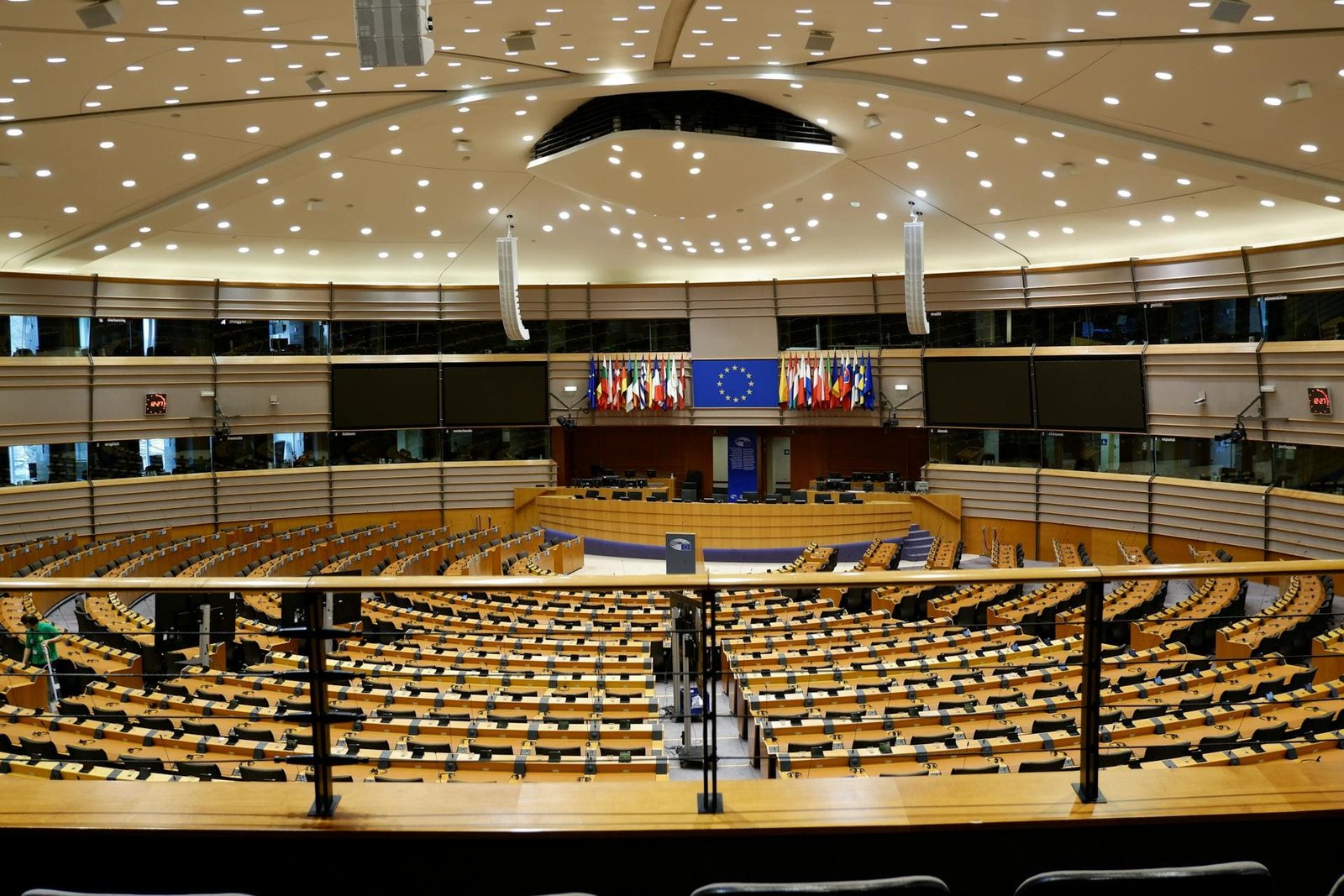
The European Parliament granted discharge to the Executive Director of the Clean Aviation Joint Undertaking for the implementation of its 2024 budget. It also adopted observations that form an integral part of this decision. The vote took place by electronic roll call: 525 for, 104 against, 16 abstentions. This budgetary decision is final and will be published in the Official Journal.
The Clean Aviation Joint Undertaking is a public-private partnership that funds research and innovation to make aviation sustainable and climate neutral. Each year, Parliament examines the accounts of the EU joint undertakings and decides whether their budgetary management can be approved. The Court of Auditors published its annual report and its statement of assurance for the 2024 financial year, and the Council recommended granting discharge on 2 March 2026. Parliament followed this recommendation by voting in favour of discharge.
Discharge granted for 2024The Executive Director of the Clean Aviation Joint Undertaking receives discharge for the implementation of the joint undertaking's budget for the 2024 financial year.
Observations integrated into the decisionParliament adopted a resolution containing its observations, which forms an integral part of the discharge decision.
Official transmissionThe President of Parliament must forward the decision and the resolution to the Executive Director of the Clean Aviation Joint Undertaking, the Council, the Commission and the Court of Auditors.
Publication in the Official JournalThe decision and the resolution will be published in the Official Journal of the European Union, L series.
Parliament granted discharge by electronic roll call with 525 votes in favour, 104 against and 16 abstentions.
This decision closes the budgetary scrutiny of the Clean Aviation Joint Undertaking for 2024. It means that the expenditure of this sustainable aviation research body has been examined and approved by Parliament. Citizens who fund the EU through their taxes can consider that this part of aeronautical research has been held to account. The observations adopted may guide the future management of the joint undertaking, but they do not create new rules or new expenditure.
Parliament granted discharge to the executive director of the Clean Aviation Joint Undertaking for the 2024 financial year (525 votes in favour, 104 against, 16 abstentions). The decision is final and will be published in the Official Journal. But signing off on accounts is not evaluating a policy: the taxpayer funds a public-private partnership whose results are not put to a vote.
Discharge is a budgetary sign-off: the Court of Auditors certifies that the accounts are reliable and the operations lawful, the Council recommends, Parliament approves. This annual cycle is necessary, but it says nothing about the joint undertaking's effectiveness. A structure can spend every euro by the book and never deliver the promised technologies. The vote concerns regularity, not results.
The Clean Aviation Joint Undertaking is a public-private partnership that funds research to decarbonise aviation. It receives public and private money, and its record should be judged on what it produces: patents, prototypes, standards adopted by industry. Parliament signs off on the accounts without those indicators being put to a vote. The citizen who pays does not know whether their money accelerated or weighed down innovation.
In a sector where every year of delay is paid for in emissions and competitiveness, procedural compliance is not a sufficient criterion. Companies taking part in these partnerships bear application, reporting and audit costs. If those costs exceed the expected benefit, the best projects do not apply, and public money funds consortia accustomed to subsidies rather than innovators.
Discharge does not change these incentives. It records that the rules were followed. An approach grounded in subsidiarity and the market would ask a different question: is this public-private partnership the best vehicle for funding aeronautical research? An alternative would be to fund the most promising projects directly through competitive calls for tenders, with payments conditional on verifiable results, and to let companies decide on their own consortia.
Signing off on accounts is not evaluating a policy: the taxpayer funds, but does not vote on the results.