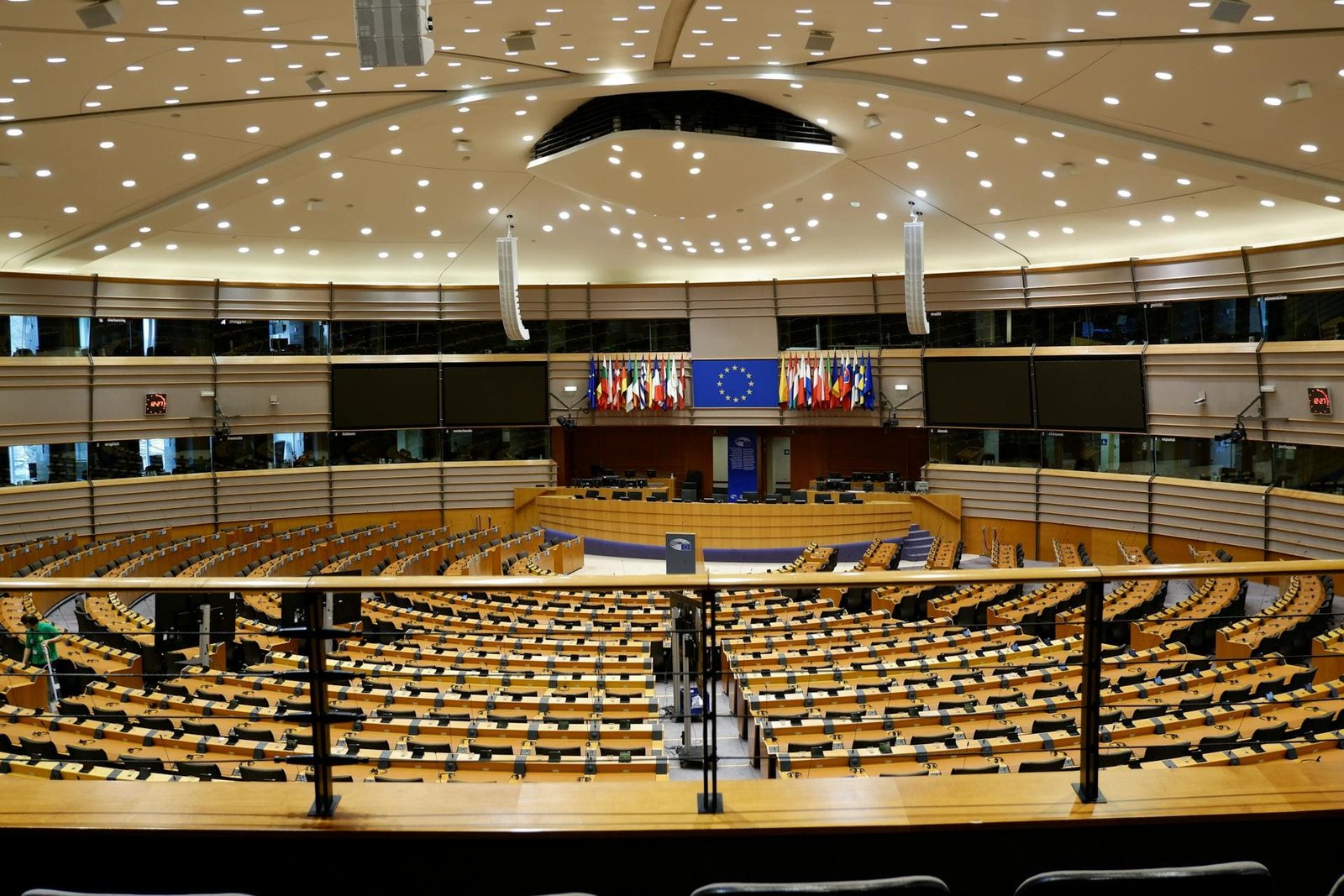
The European Parliament approved the payment of EUR 2,033,869 to Belgium to help 507 former employees of the company Liberty, who were made redundant in the metallurgy sector in Liège. This sum covers 85 per cent of the total cost of the measures, estimated at EUR 2,392,788. The money will be used to fund training, job search assistance and personalised support. The text is final on the Parliament's side and now awaits the formal agreement of the governments of the European Union.
Liberty, a steel company in the province of Liège, was declared bankrupt on 22 April 2025. This bankruptcy led to the dismissal of 507 workers. Belgium requested help from the European Globalisation Adjustment Fund (EGF), a fund that supports workers losing their jobs because of major global economic changes. The request was submitted on 13 November 2025 and the European Commission completed its assessment on 2 March 2026.
Aid of EUR 2,033,869Belgium will receive EUR 2,033,869 from the European Globalisation Adjustment Fund. This sum represents 85 per cent of the total cost of the measures, which amounts to EUR 2,392,788.
507 workers concernedThe money is intended for 507 former Liberty employees, made redundant in the metallurgy sector in Liège. The reference period for these redundancies runs from 24 April 2025 to 24 August 2025.
Training and supportThe funds will finance personalised services for EUR 2,358,922: job search assistance, training and retraining, particularly in IT, and support for business creation. The remaining EUR 33,866 covers preparation, management, information and control.
Start of services on 1 June 2025Belgium began providing personalised services to the beneficiaries on 1 June 2025. Expenditure incurred from that date may be reimbursed by the fund for 24 months after the entry into force of the financing decision.
Eligible administrative expenditureAdministrative expenditure incurred by Belgium since 22 April 2025 may be covered by the fund for 31 months after the entry into force of the financing decision.
Parliament adopted the text by 586 votes in favour, 48 against and 16 abstentions in an electronic roll-call vote.
In practice, 507 former Liberty employees in Liège will be able to benefit from training, support to find a job and assistance to create their own business. The European Union covers 85 per cent of the cost of these measures, with the rest financed by Belgium. This aid is one-off and does not replace national responsibilities in the field of employment. The text must still receive the formal approval of the governments of the Member States before becoming final.
The European Parliament approves the payment of 2,033,869 euros to Belgium for 507 former Liberty workers in Liège. A one-off and legitimate aid, which replaces neither the company's responsibility nor an industrial policy worthy of the name.
The bankruptcy of Liberty, declared on 22 April 2025, left 507 workers on the scrapheap. The EGF steps in to fund training, support and aid for business creation. It is a social shock absorber, not an industrial solution. European money will not bring back the Liège galvanising lines, shut down since December 2021, nor resurrect an economic model that has failed.
The text itself half-admits it: Parliament "regrets that production activity has not resumed despite the takeover" and is concerned "about the financial viability of the business model and the failure to honour investment commitments". In other words, the bankruptcy is not only the fruit of globalisation or energy prices: it is also the result of corporate choices. The EGF cannot correct that; it can only mitigate the consequences for the workers.
The Belgian application was submitted on 13 November 2025; the Commission completed its assessment on 2 March 2026. In the meantime, the workers waited. Parliament calls for "shortening the time between the submission of an EGF application and the funding decision". That is an admission: every month of delay means training that does not start and skills that are lost. Administrative simplification is not a luxury, it is a condition for aid to arrive on time.
Parliament also insists on the need for "policies fostering industrial competitiveness" and for a "competitive and resilient European steel sector". But it does not say how to achieve this. The energy transition is mentioned, without any mention of the costs it imposes on manufacturers. Yet as long as European energy remains more expensive than elsewhere, bankruptcies will continue, and the EGF will continue to pick up the pieces. An approach based on subsidiarity and the market would have consisted first of lightening the burdens weighing on companies, rather than funding their failures after the fact.
The EGF is a bandage on a wooden leg: it soothes the pain, it does not replace the amputated limb.