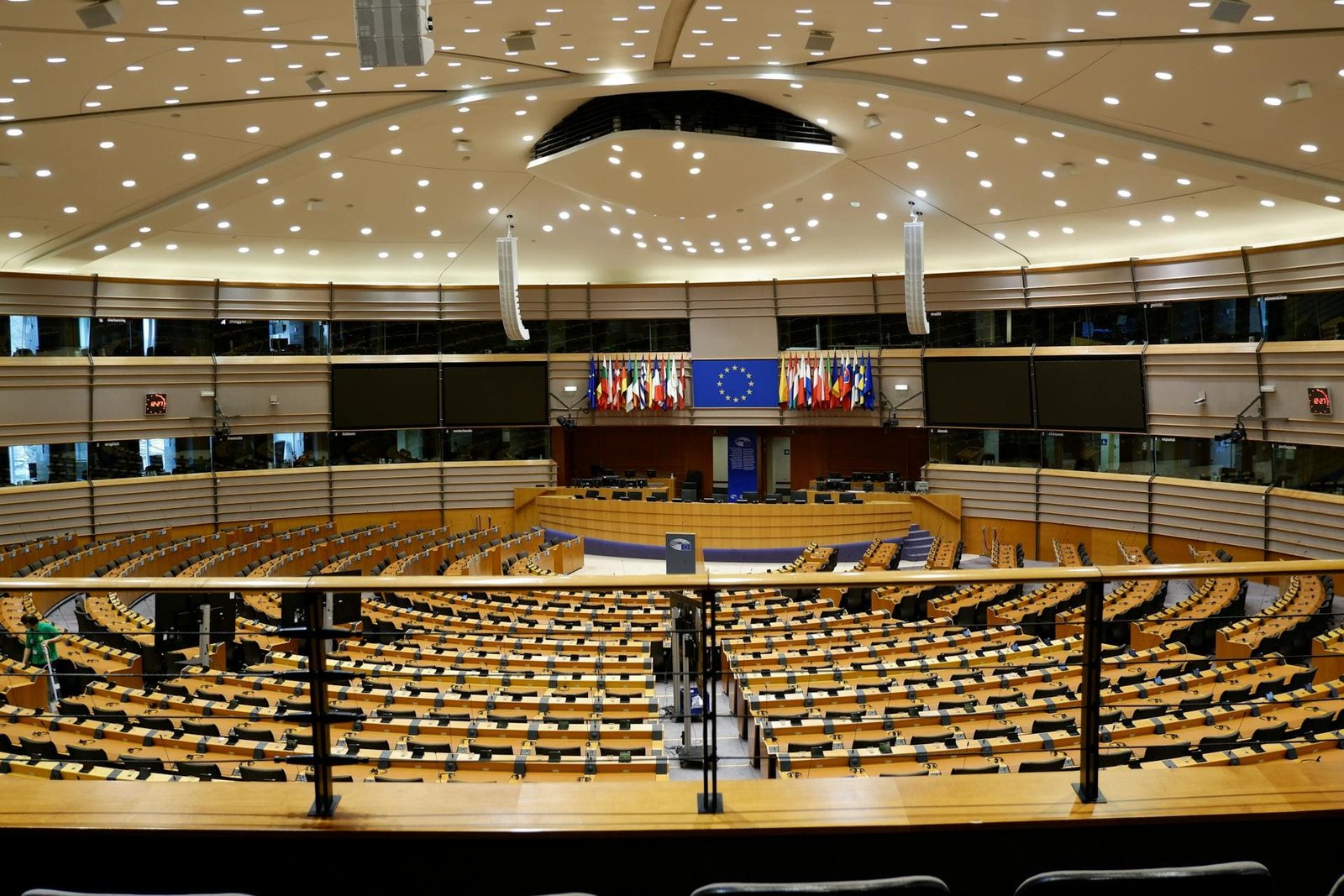
The European Parliament granted discharge to the High Representative of the Union for Foreign Affairs and Security Policy for the implementation of the 2024 budget of the European External Action Service (EEAS), the Union's diplomatic service. In practice, this means that Parliament closes its scrutiny of the EEAS's administrative expenditure for 2024 and declares it regular. Parliament accompanied this decision with a resolution of observations that forms an integral part of the discharge. This vote does not amend an existing law: it validates the management of a budget that has already been implemented.
Each year, the European Parliament examines the accounts of the Union's institutions and decides whether or not to grant discharge, that is, whether it approves the way the money was spent. For the 2024 financial year, the EEAS managed the administrative expenditure of its headquarters in Brussels and of a network of 145 Union delegations and offices around the world. The EEAS also manages, through service level agreements, the Commission staff present in these delegations. Parliament relied on the annual report of the Court of Auditors, on the Court's statement of assurance concerning the reliability of the accounts and the regularity of the transactions, as well as on the EEAS's annual report on the internal audits carried out in 2024.
Discharge granted for 2024Parliament grants discharge to the High Representative of the Union for Foreign Affairs and Security Policy for the implementation of the EEAS budget for the 2024 financial year.
Observations in an accompanying resolutionParliament sets out its observations in a resolution that forms an integral part of the discharge decision.
Transmission to seven recipientsThe President of Parliament is instructed to forward the decision and the resolution to the EEAS, the Council, the Commission, the Court of Auditors, the European Ombudsman and the European Data Protection Supervisor.
Publication in the Official JournalThe decision and the resolution must be published in the Official Journal of the European Union, L series.
The vote took place on 29 April 2026 by electronic roll call: 429 votes in favour, 145 against and 76 abstentions. Discharge is therefore granted.
This vote does not create any new rule or new tax. It means that the European Parliament has examined and validated the management of the administrative budget of the Union's diplomatic service for 2024, a budget that finances the operation of the EEAS headquarters in Brussels and of 145 delegations and offices around the world. Citizens who follow the use of public money thus have a formal parliamentary scrutiny: the EEAS's 2024 accounts are approved and Parliament's observations are published together with the decision. As discharge has been granted, the file on the EEAS's 2024 budgetary scrutiny is closed on Parliament's side.
The European Parliament has granted discharge to the High Representative for the execution of the 2024 budget of the European External Action Service (EEAS), the Union's diplomatic service. In plain terms: the EEAS's administrative expenditure is declared regular and the 2024 parliamentary scrutiny is closed. This vote creates no new rule, but it serves as a reminder that behind the 145 delegations and the Brussels headquarters there is public money that the taxpayer has the right to follow.
Discharge is an act of accountability: Parliament examines the accounts, verifies that the money was spent in accordance with the rules and decides whether or not to approve the management. In granting it, Parliament is not saying that the Union's foreign policy is good or bad; it is saying that the EEAS's administrative accounts for 2024 are regular. This is an essential distinction: budgetary control does not judge diplomatic choices, it judges the probity of expenditure.
The EEAS is a peculiar administrative object: it was born from the merger of the external services of the Council and the Commission, with national diplomats integrated into it. It manages a network of 145 delegations and offices and, through service-level agreements, the administration of Commission staff in those delegations. This hybrid architecture makes scrutiny more difficult: who is responsible for what? Parliament could have demanded a clarification of responsibilities between the EEAS and the Commission. It did not do so in the decision, but the accompanying resolution is there to raise the questions.
The EEAS budget is not a cooperation budget: it is an administrative operating budget. It funds buildings, salaries, travel and meetings. For the citizen, this means that most of the expenditure cannot be directly correlated with a visible result on the ground. Parliamentary scrutiny is therefore the only democratic safeguard. The discharge granted today is a validation, not a performance evaluation. Parliament could have made discharge conditional on cost-effectiveness indicators per delegation, but it did not do so.
The vote is clear: 429 in favour, 145 against, 76 abstentions. The groups that voted against or abstained did not prevent discharge. The message is clear: the majority considers that the EEAS's 2024 accounts are in order. This is not a blank cheque for the future: every year, the scrutiny starts again. The ball is now in the EEAS's court to address the observations contained in the resolution, in particular on coordination with national diplomatic networks in order to avoid duplicate structures and duplicate spending.
Discharge is not an applause, it is a clearance: the accounts are in order, not necessarily the diplomacy.