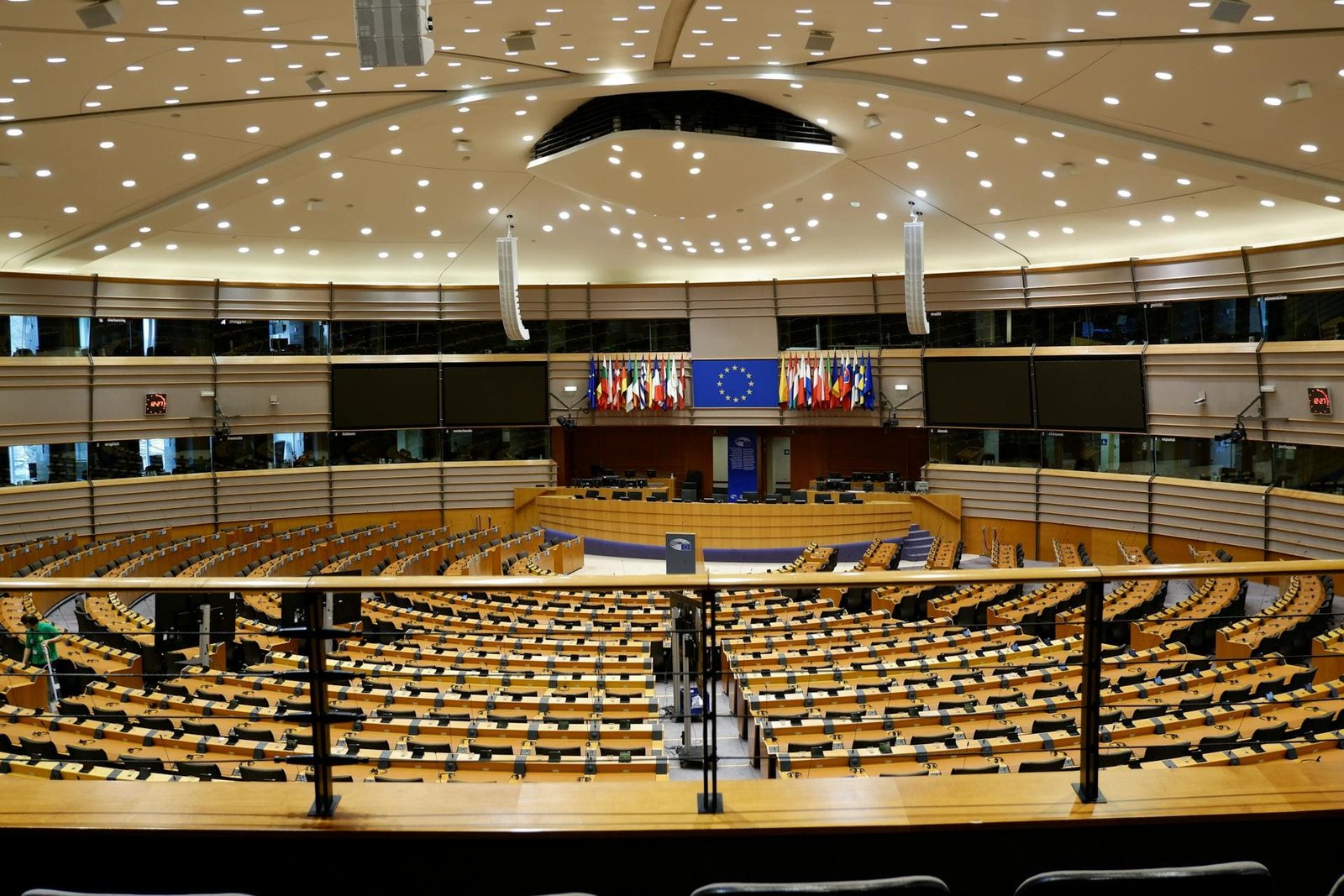
The European Parliament has approved a revised agreement setting new rules for its relations with the European Commission. Commissioners will now have to be present during question time for a maximum of 90 minutes when their portfolios are concerned, and the Commission will have to justify in writing any request for an urgent debate. The agreement was adopted by 446 votes in favour, 100 against and 72 abstentions. This is the final text negotiated with the EU governments; they still have to give their formal approval before it becomes applicable.
The 2010 framework agreement between Parliament and the Commission had not been updated for a long time. After Parliament's reform in 2024 and the revision of its rules of procedure in April 2024, both institutions considered it necessary to clarify and strengthen the rules of cooperation. The Commission had committed, through its President, to revising this agreement to better respect the institutional balance and Parliament's prerogatives.
Question time: 90 minutes maximumDuring question time, Commissioners whose portfolios correspond to the questions asked will have to be present, for a maximum of 90 minutes. Previously, no maximum duration or obligation for portfolio correspondence was provided for.
Limited replacement of CommissionersA Commissioner may be replaced by a competent senior official at committee meetings only if their presence has not been expressly requested. Previously, such replacement was possible more broadly.
Withdrawal of a proposal: the Commissioner presentWhen the Commission plans to withdraw a proposal, the competent Commissioner will have to attend committee meetings to discuss it. Previously, no such commitment existed.
Justification of emergency measuresThe Commission will have to provide without delay a justification and complete information on exceptional and urgent cases based on Article 122 of the Treaty, both when presenting the request to Parliament and after the implementation of the act. It will also have to justify in writing any request for an urgent debate.
Information on initiatives outside the programmeThe Commission undertakes to inform Parliament of political initiatives and legislative proposals that are not in its work programme, and to present key initiatives in plenary immediately after their adoption by the College of Commissioners.
The agreement was adopted by 446 votes in favour, 100 against and 72 abstentions.
These new rules aim to make the Commission's work more transparent and more accountable to the elected members of the European Parliament. In practice, Commissioners will have to answer questions from MEPs more often and more directly, and citizens will be better able to know which initiatives the Commission is preparing, even those not in its official programme. The Commission will also have to explain publicly why it takes emergency measures and why it withdraws certain proposals. The agreement still has to be formally approved by the EU governments before it enters into force.
The European Parliament approved on 11 March 2026, by 446 votes to 100 with 72 abstentions, a revised framework agreement with the Commission. Behind the 90 minutes of questions and the written justifications, what is being put in place is a mechanism of political accountability. But an interinstitutional agreement does not reduce public spending or the regulatory burden: it organizes the traceability of decisions. The real issue is whether this traceability will weigh on concrete choices or remain a procedural ritual.
The revised framework agreement sets transparency obligations: the Commission will inform Parliament of initiatives not included in its work programme and will present key initiatives in plenary after their adoption by the College. Commissioners will have to attend committee meetings, and their replacement by a senior official will be limited to cases where their presence was not expressly requested. These rules make political control more predictable, but they do nothing to reduce the volume of regulation or the cost of compliance for businesses. They add a layer of procedure: meetings, written justifications, information in plenary. The benefit is democratic; the cost is administrative.
The question of impact assessments is revealing. Parliament deplores that the Commission does not indicate whether new legislative initiatives will be accompanied by an impact assessment and does not justify their absence. But the agreement does not create a binding obligation: it refers to a commitment by the Commission. Yet an impact assessment carried out under the Commission's responsibility, even with a transparent procedure, remains an internal tool. For businesses, what matters is not that the assessment exists, but that it concludes in favour of the proportionality and necessity of the measure. In the absence of constraint, the risk is that the assessment becomes an after-the-fact justification.
Article 122, which allows the Council to adopt exceptional measures on a proposal from the Commission, illustrates the same gap. The Commission will have to provide without delay a justification and full information, before and after implementation. This is progress for transparency, but it does not limit recourse to this article to bypass the ordinary legislative procedure. An approach based on subsidiarity would have consisted in strictly framing the conditions for recourse to Article 122, for example by requiring a demonstration of genuine urgency and a sunset clause. Here, what is organized is the justification, not the limitation.
The strengthening of Parliament's right of initiative under Article 225, including to propose amending or repealing existing legislation, is presented as progress. It can indeed make it possible to request the repeal of obsolete rules. But the mechanism remains in the hands of the Commission, which decides whether or not to follow up. Improved monitoring does not change the balance of power: the Commission retains the monopoly on legislative initiative. For entrepreneurs, the cost of uncertainty remains: a proposal for repeal can take years to succeed, and businesses continue to apply rules whose removal has been requested.
The agreement also provides that the Commission justifies in writing any request for urgent debate. That is a good thing: urgency is often used to short-circuit debate. But here again, the justification does not guarantee that Parliament will have the time needed to examine the text. A liberal approach would have consisted in limiting urgent procedures to strictly defined cases and guaranteeing a minimum examination period. The text is content to require a justification, without framing the practice.
An agreement that organizes transparency does not replace a reduction in the regulatory burden.