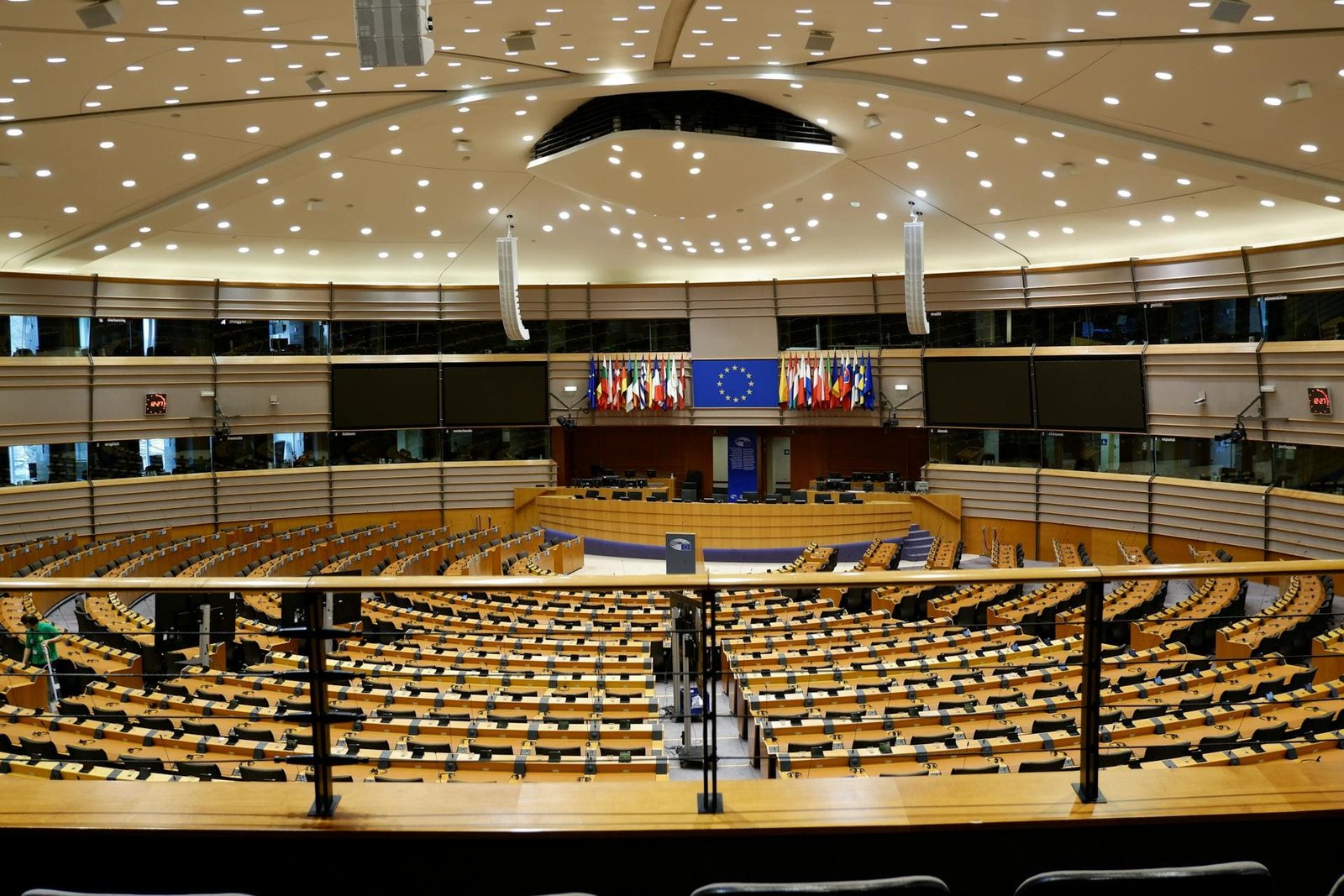
On 28 April 2026, the European Parliament adopted an interim report on the next long-term EU budget, called the multiannual financial framework (MFF), which will cover the period 2028-2034. This text serves as the Parliament's negotiating position ahead of discussions with the Member States.
The MFF is the European Union's multiannual budget plan. It sets the maximum amounts (ceilings) that the EU can spend each year in different areas (agriculture, cohesion, research, etc.). The European Commission proposed a new MFF for 2028-2034 in July 2025. Parliament must give its consent (assent procedure) for the Council to adopt the regulation. This interim report sets out the changes Parliament wishes to make to the Commission's proposal.
Parliament voted on 24 amendments. The main points are:
The report was adopted by 370 votes in favour, 201 against and 84 abstentions.
This vote is only one step. Parliament sets its position before negotiations with the Council (Member States). If the changes are retained, the future budget would offer more flexibility to deal with crises (natural disasters, support for Ukraine) and ensure that recovery plan repayments do not squeeze existing programmes. Citizens can expect the EU to maintain its rapid response capacity while upholding budgetary discipline.
The European Parliament has adopted its interim report on the Multiannual Financial Framework (MFF) 2028-2034, which sets out its negotiating position with the Council. It rejects the Commission's approach of a single plan per Member State and calls for a more ambitious budget: 1.27% of GNI excluding NGEU debt service, plus 0.11% above the ceilings, for a total of 1.38%. The Commission proposed 1.26% of GNI, including NGEU debt repayment within the ceilings, for a total of EUR 2,000 billion in current prices (EUR 1,763 billion in 2025 constant prices).
The European Parliament adopted its interim report by 370 votes to 201, with 84 abstentions. This text constitutes its negotiating mandate for the MFF 2028-2034. It is not a final legislative act, but a political position that must be taken into account by the Council in accordance with Article 312(5) TFEU.
The Commission proposed to merge different policies into a single plan per Member State, the PNR regulation (COM(2025)0558). Parliament rejects this approach. It considers that it compromises the policies enshrined in the treaties, creates unnecessary competition between beneficiaries, jeopardizes the European dimension of spending, weakens multilevel governance and calls into question the principles of subsidiarity and proportionality. In plain terms, a single plan per country concentrates decisions in the hands of governments and national administrations, to the detriment of regions, local stakeholders and European priorities.
Parliament instead calls for maintaining the European dimension of the budget, shared management and multilevel governance. It also demands that amounts not allocated under the PNR plans be fully assigned to the policies concerned, in order to guarantee predictability for final beneficiaries. This approach is more consistent with the principle of subsidiarity: decisions should be taken at the level closest to citizens, not centralized in a single plan negotiated with the States.
Parliament demands that the MFF 2028-2034 be set at 1.27% of the Union's GNI, excluding NGEU repayments. It requires that NGEU debt service, which represents 0.11% of GNI, be counted above the MFF ceilings, bringing the total amount to 1.38% of GNI. The Commission proposed 1.26% of GNI, including NGEU debt repayment within the ceilings, or EUR 1,763 billion in 2025 constant prices. Parliament considers this proposal insufficient and regrets that it freezes the budget in real terms.
Parliament calls for an increase in the heading 1 allocation to maintain at least the funding level of the current MFF. The Commission proposed EUR 797.2 billion in 2025 prices for heading 1, against EUR 810.1 billion in the MFF 2021-2027. Parliament considers this cut unacceptable. It also calls for an adequate strengthening of the priority programs under headings 2 and 3, in particular the European Competitiveness Fund, Horizon Europe, the Connecting Europe Facility, Erasmus+, and support for Ukraine.
On revenue, Parliament supports the Commission's "basket" approach for new own resources, but it goes further: it demands that revenue reach at least EUR 60 billion per year. The aim is to finance the Union's increased ambitions without increasing pressure on national budgets. However, the creation of new own resources raises the question of the fiscal sovereignty of Member States. A more liberal approach would consist of reducing spending rather than creating new European taxes.
Parliament rejects the single plan per Member State and demands a budget at 1.38% of GNI, but the real battle will be over own resources and budgetary discipline.