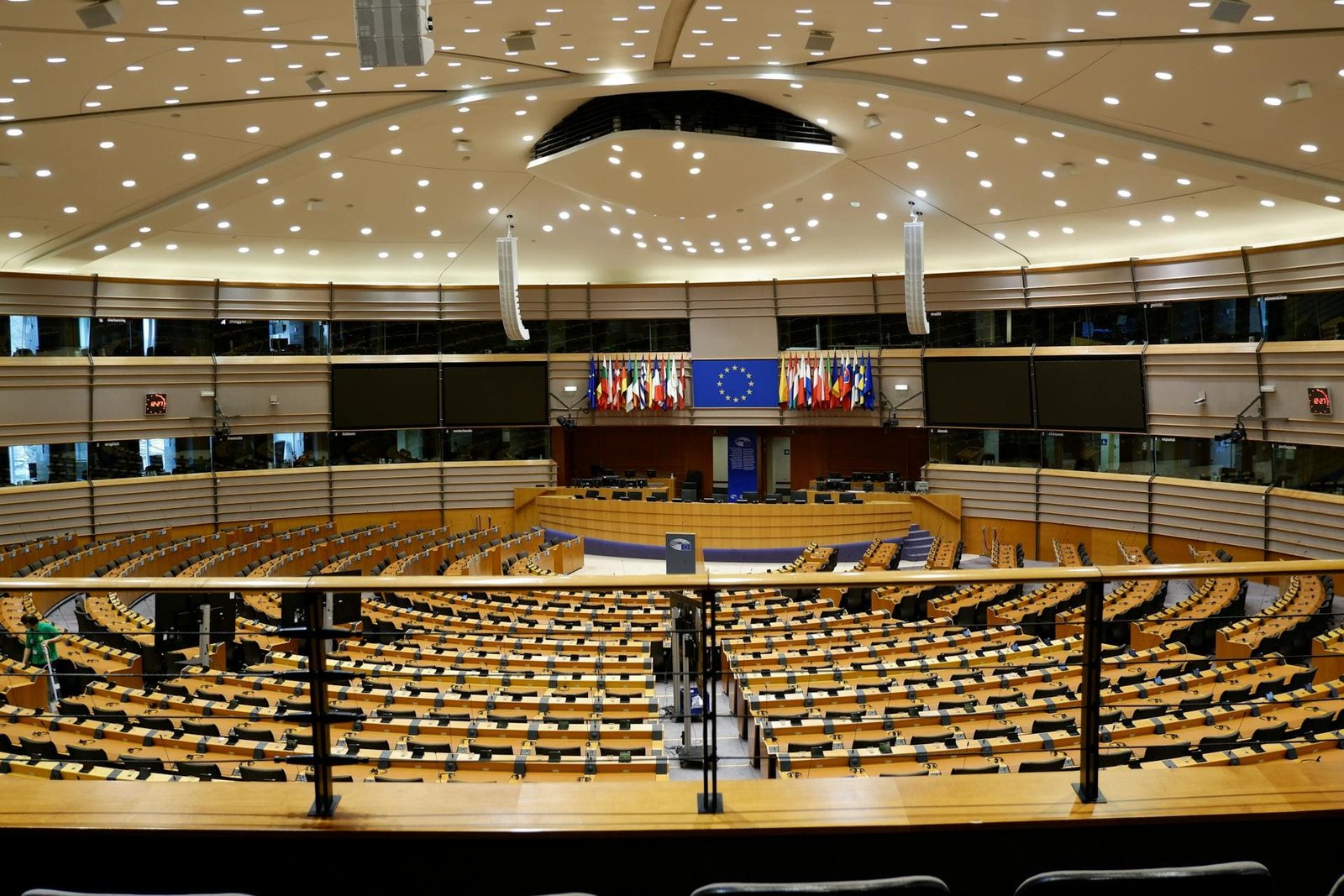
On 24 February 2026, the fourth anniversary of the Russian invasion, the European Parliament adopted a strong resolution condemning the aggression and defining European contributions to a just peace and lasting security for Ukraine. The text was approved by 437 votes in favour, 82 against and 70 abstentions.
Since 24 February 2022, Russia has been waging a war of aggression against Ukraine. Four years later, the conflict continues, with major humanitarian, economic and security consequences for Ukraine and Europe. The European Parliament has already adopted several resolutions of support, but this one comes at a key moment, as discussions on a possible ceasefire and security guarantees intensify.
The resolution strongly condemns Russia's war of aggression and reaffirms Parliament's unwavering support for Ukraine's independence, sovereignty and territorial integrity within its internationally recognised borders. It calls for:
The text also insists on the need for a "just peace", i.e. a peace that respects international law and Ukraine's sovereignty, and not an imposed capitulation.
The resolution was adopted by 437 votes in favour, 82 against and 70 abstentions. The votes against come mainly from far-right groups and some radical left MEPs, while the abstentions reflect reservations on certain aspects, notably military enlargement.
This resolution has no binding legal effect, but it sends a strong political signal. For European citizens, it means that the EU continues to support Ukraine, which may have repercussions on energy prices, security in Europe and the reception of refugees. Maintaining sanctions against Russia may also affect certain imports. By supporting a "just peace", Parliament seeks to avoid a frozen conflict that would threaten the long-term stability of the continent.
On 24 February 2026, the European Parliament adopted by 437 votes to 82 with 70 abstentions a resolution that does not merely commemorate: it demands Russia's defeat, the unconditional withdrawal of its forces and security guarantees equivalent to NATO Article 5 for Ukraine. A clear signal, but one that leaves the problem of financing and real coercion entirely unresolved.
Parliament sets a non-negotiable condition: no sanctions will be lifted before a peace agreement is negotiated and durably implemented. This is a break with the logic of preventive concessions. Russia has no incentive to negotiate seriously as long as sanctions can be eased without verifiable counterpart. By explicitly linking the lifting of sanctions to the implementation of an agreement, Parliament strengthens Ukraine's position and deprives Moscow of a lever for dividing Europeans.
But the resolution does not say how to secure the support of reluctant member states. It calls for sanctions against the shadow fleet, Rosatom and Roscosmos, and for secondary sanctions against Chinese, Iranian and North Korean entities. Yet these measures require unanimity in the Council. The text may rail at states that "hinder" the Union's policy, but it proposes no mechanism to bypass that veto. This is a weakness: without an adapted decision-making procedure, the calls will remain dead letters. An approach based on subsidiarity would have consisted in letting willing states move forward alone, rather than subordinating every step to unanimity among the 27.
Parliament asks that the cash balances associated with immobilized Russian sovereign assets be used to finance a reparation loan for Ukraine. In principle, this is obvious: Russia must pay for the destruction it has caused. But the text remains evasive on the legal modalities. Who will manage this loan? What guarantees for investors? What timetable? Parliament welcomes the flexibility offered by Article 13(5) of the proposed regulation on the support loan, but that flexibility is a derogation, not a sustainable financing solution.
The real issue is the cost of time. Every month of delay in setting up this mechanism means Ukrainian infrastructure that is not rebuilt, businesses that do not restart, capital that does not return. Parliament should have demanded a binding timetable and a clear guarantee mechanism, rather than settling for a favourable welcome to a technical derogation.
The resolution welcomes the "coalition of the willing" and the proposal for a multinational reassurance force, while deploring that these guarantees would apply only after a ceasefire. This is a contradiction: a security guarantee that is activated only after the fighting stops has no deterrent value. Russia could violate the ceasefire without fearing automatic retaliation. The text calls for guarantees equivalent to NATO Article 5, but without saying who will provide them or how they will be triggered. The United States is explicitly called upon to provide them, but Parliament notes with concern that the American administration favours "strategic stability" with Russia. This lucidity is welcome, but it does not relieve Europe of the duty to define its own guarantee, independent of Washington.
On the industrial front, Parliament calls for integrating Ukraine's defence industrial base into the European one (EDIP) and for lifting restrictions on the use of Western weapons against military targets in Russia. This is a common-sense measure: a weapon that is forbidden to use against the enemy is useless. But here again, the text does not settle the question of financing. The 90 billion euro loan guaranteed by the Union, decided by the European Council on 18 December 2025, is a step, but it remains insufficient given the scale of the needs. Parliament should have conditioned its support on a binding monitoring mechanism for arms deliveries, to prevent promises from being lost in bureaucratic sands.
A security guarantee that is activated only after the ceasefire is not a guarantee, it is an invitation to the next aggression.