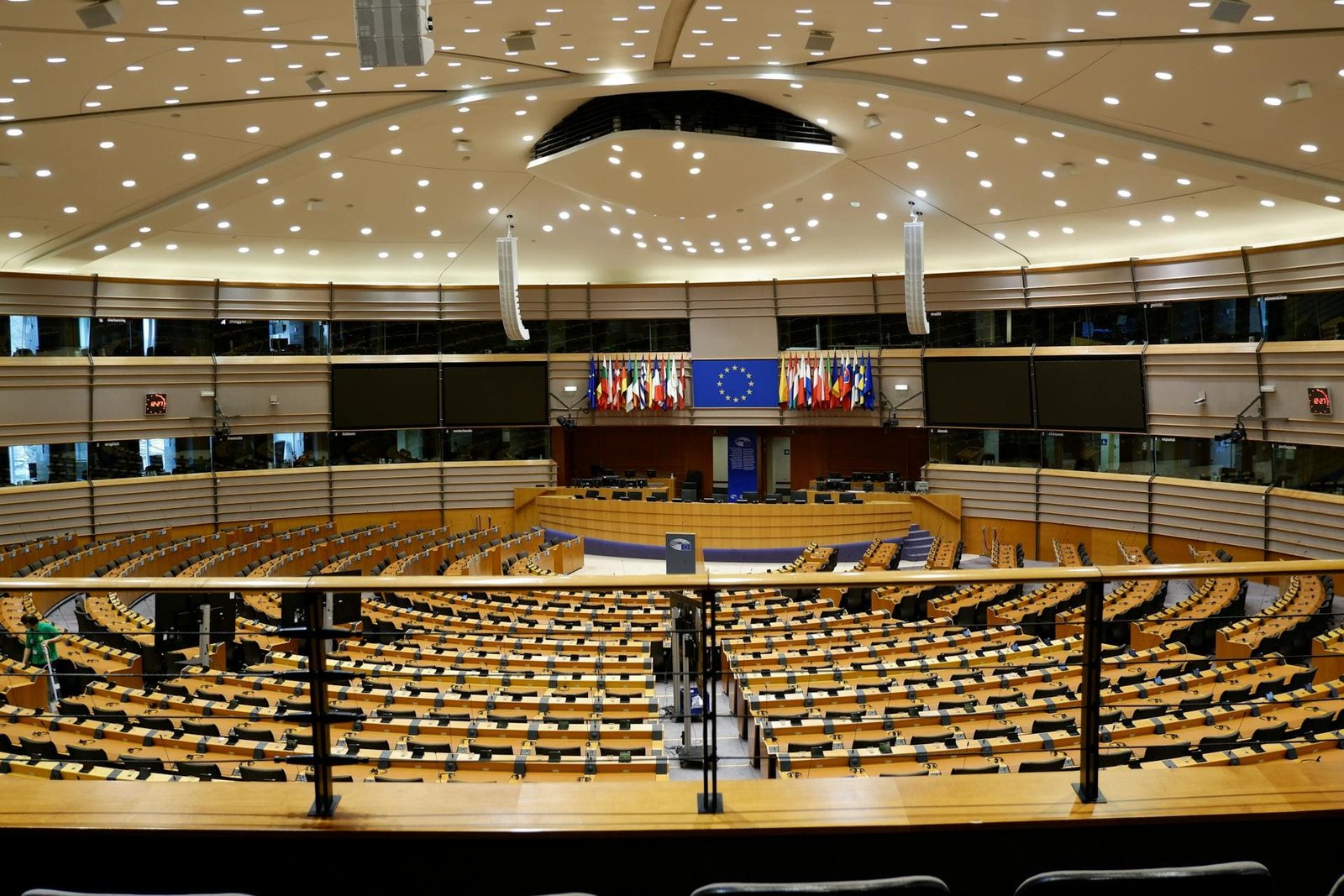
The European Parliament has adopted a resolution calling on the Commission and the Member States to better protect fundamental rights in the Union. It calls in particular for the opening of an enhanced procedure against Hungary, a systematic use of the mechanism that makes European funds conditional on respect for the rule of law, and a European strategy to combat poverty. This text is a political position: it does not create new legal obligations.
Each year, the European Parliament examines the situation of fundamental rights in the Union and votes on a resolution listing its findings and requests. The adopted text covers the rule of law, media freedom, the fight against corruption, social rights and poverty. It is based on reports from the Fundamental Rights Agency and the Commission.
Enhanced procedure against HungaryParliament calls on the Commission and the Member States to initiate the procedure under Article 7(2) of the Treaty on European Union against Hungary, which has already been subject to a procedure since 2018. It also calls on the Council to adopt country-specific recommendations with clear deadlines and measurable criteria.
European funds conditional on the rule of lawParliament invites the Commission to use systematically and rigorously the regulation that allows European funds to be suspended in the event of a violation of the rule of law, so that Union money does not finance attacks on the Union's values.
Anti-poverty strategy for 2035Parliament invites the Commission to draw up a European strategy to combat poverty aiming to eliminate poverty by 2035, with measurable intermediate objectives, and to create a Union task force on poverty.
Protection of journalists and mediaParliament calls for the full implementation of the European Media Freedom Regulation and rapid transposition of the directive against SLAPP lawsuits. It calls for the protection of journalists in exile, in particular against the abusive use of Interpol red notices.
Fight against corruptionParliament calls on the Member States to comply fully with GRECO recommendations and to cooperate with the European Public Prosecutor's Office. It calls for rapid and ambitious implementation of the anti-corruption directive and for the protection of whistleblowers.
Parliament adopted the resolution by 328 votes in favour, 199 against and 98 abstentions in an electronic roll-call vote.
This resolution does not directly change your rights: it expresses the political position of the European Parliament and calls on the Commission and the Member States to act. In practice, it argues for European funds to be cut in the event of serious violations of the rule of law, for better protection of journalists and for a strategy aiming to eliminate poverty by 2035. These requests have no force of law as long as the Commission does not propose binding texts and the Member States do not adopt them.
By 328 votes to 199 with 98 abstentions, the European Parliament adopted a resolution calling for the opening of the Article 7(2) procedure against Hungary, for the systematic use of the regulation that conditions European funds on the rule of law, and for the launch of an anti-poverty strategy for 2035. This text has no binding force: it expresses a political majority, it does not change a single right of citizens.
The European Parliament adopted a resolution on fundamental rights in 2024 and 2025. It asks the Commission to carry out systematic fundamental rights impact assessments before each legislative proposal, to strengthen its annual reports on the Charter and to open infringement procedures. It also calls on the Council to adopt country-specific recommendations with deadlines and measurable criteria. None of this creates a legal obligation: the Commission remains free to follow them or not, and the member states are not bound.
The rule of law conditionality mechanism deserves closer attention. This regulation allows the Commission to suspend payments of European funds when it finds that rule of law violations affect sound financial management. Parliament wants it to use it "systematically and rigorously". But it is the Commission, not Parliament, that decides. And the Commission has already shown that it prefers to negotiate recovery plans rather than cut funds. The resolution does not change this balance of power.
The call to open Article 7(2) against Hungary is a strong political signal. The procedure has existed since 2018, but it is blocked in the Council, where several governments refuse to go further. A Parliament resolution will not unlock this deadlock. It serves to document positions and to influence public opinion, not to produce legal effects.
Parliament calls for a European strategy to combat poverty aiming to eliminate poverty by 2035, with intermediate targets and a Union working group. The intention is generous, but the method is questionable. Poverty cannot be decreed; it depends on growth, employment, housing costs and the effectiveness of social transfers, areas in which the member states hold most of the competences. Creating a working group and European targets risks adding coordination without addressing the causes: taxation too heavy on labour, regulation that drives up construction costs, a rigid labour market.
The text also asks that housing no longer be treated as a commodity. But housing is a scarce good where construction is hampered by planning rules and administrative costs. The real liberal answer would be to free up land and reduce obstacles to construction, not to multiply funds and strategies. Parliament prefers the first option: it calls for a specific fund for affordable housing. That is adding a layer of public spending without guaranteeing that supply will follow.
A resolution binds only those who voted for it; it changes neither the treaties nor the lives of citizens.