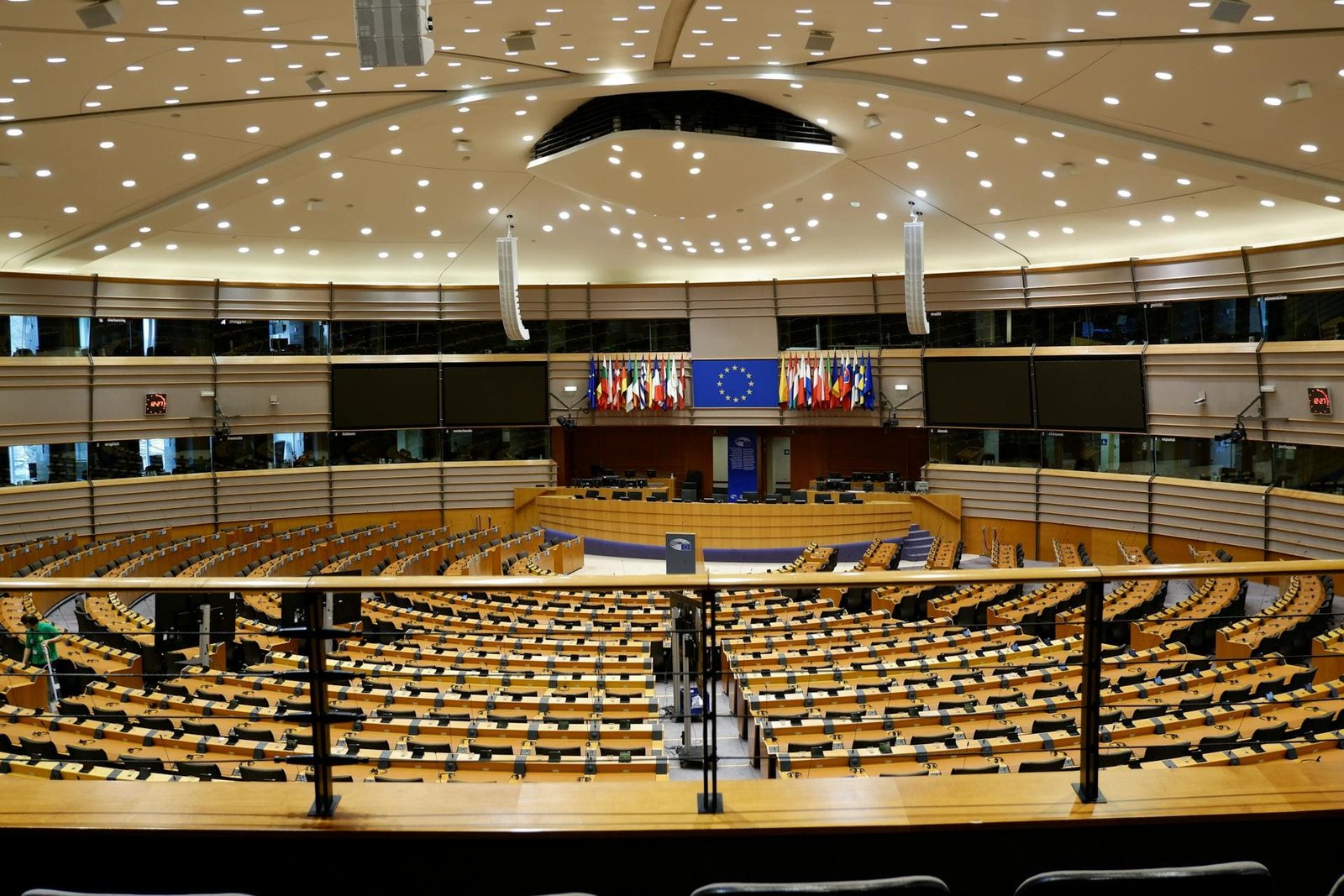
On 10 March 2026, the European Parliament adopted a report on public access to documents of EU institutions for the period 2022-2024. This text evaluates the implementation of Regulation (EC) No 1049/2001, which guarantees every citizen the right to consult documents of the European institutions. The report makes recommendations to improve transparency and access to information.
The right of access to documents is a pillar of European democracy. It allows citizens, journalists and researchers to monitor the work of the institutions. The report covers the years 2022 to 2024 and follows recent cases (notably the De Capitani and Public.Resource.Org judgments) which clarified the limits of this right. The rapporteur, Veronika Cifrová Ostrihoňová (Renew Europe, Slovakia), stressed the need to modernise the rules in the face of digital challenges.
Parliament adopted the report by 602 votes in favour, 9 against and 8 abstentions. It calls in particular for:
The report also criticises the slowness of institutions in responding to access requests and recommends shorter deadlines.
The text was adopted by a very large majority: 602 MEPs voted in favour, 9 against and 8 abstained. This massive support shows that transparency is a cross-party priority.
Although this report has no direct legal effect, it sends a strong political signal. It could lead to a revision of the regulation on access to documents, which would make it easier for you to obtain information on European decisions. Concretely, you could more easily consult draft laws, internal notes or meeting minutes. Journalists and NGOs would also gain investigative capacity. In the meantime, you can already exercise your right by submitting a request to the relevant institution via its website.
The European Parliament adopted on 10 March 2026, by 602 votes to 9 with 8 abstentions, a resolution that slams the door shut in the name of transparency. But behind the facade of unanimity, the text does not change a single comma of Regulation 1049/2001: it notes, it denounces, it requests. And that is precisely where the problem lies.
Parliament reaffirms that access to documents is a fundamental right. It is right. But a right that institutions violate with impunity is merely a stage set. The figures it cites are damning: in 2024, the Commission received 6,938 initial requests and 641 confirmatory ones. Above all, in 85% of cases examined, it did not rule within the legal deadlines, and in 60% of cases, the delay exceeded sixty working days. A citizen who waits three months to obtain a document has already lost the political use of the information.
The resolution also targets the revised internal framework adopted by the Commission in 2024. By narrowing the definition of what a document is, by adding exceptions to registration and presumptions of non-disclosure, the Commission weakens the scope of the regulation. Parliament calls for compliance with the Court's case law. But who imposes sanctions? No one. The text even requests that possible sanctions be provided for. It is an admission: as things stand, transparency is not binding, it is discretionary.
The Council is no better. Parliament denounces the LIMITE marking applied to most preparatory documents of ongoing legislative procedures. In concrete terms, this means citizens cannot know what their government is defending in Brussels before the decision is taken. The Court has nevertheless recognized access to Council working group documents. But access must still be requested, and the Council systematically refuses to open trilogue documents: agendas, four-column documents, minutes. Transparency becomes a privilege for insiders.
Parliament calls on the Council to proactively publish the positions of member states. The gap with reality is striking: the Council register contained more than 527,000 documents at the end of 2024, but more than 72% were already accessible. The problem is not volume, it is selection. The documents that matter, those that shed light on the balance of power, remain opaque. The resolution says so, but without direct effect.
The real lever is not to pile up political requests, but to force those who decide to be accountable. An approach based on subsidiarity and the market would say: let us make documents accessible by default, with strictly defined exceptions and a binding response deadline, on pain of nullity of the decision. Transparency must be a cost for the administration, not for the citizen. Parliament proposes training, campaigns, tools. That is useful, but it does not replace sanctions. The Commission and the Council have no interest in speeding up if delay remains without consequence.
The resolution also calls for an independent mechanism to review classifications, and a regular audit by the Ombudsman. Why not, provided that this body has decision-making power, not merely advisory power. On artificial intelligence, Parliament demands transparency on algorithms and training data. Here again, without a binding obligation, it will remain a pious wish. Companies know what it costs not to be transparent: they lose markets. Institutions lose nothing.
A right without sanction is not a right, it is a paper promise.