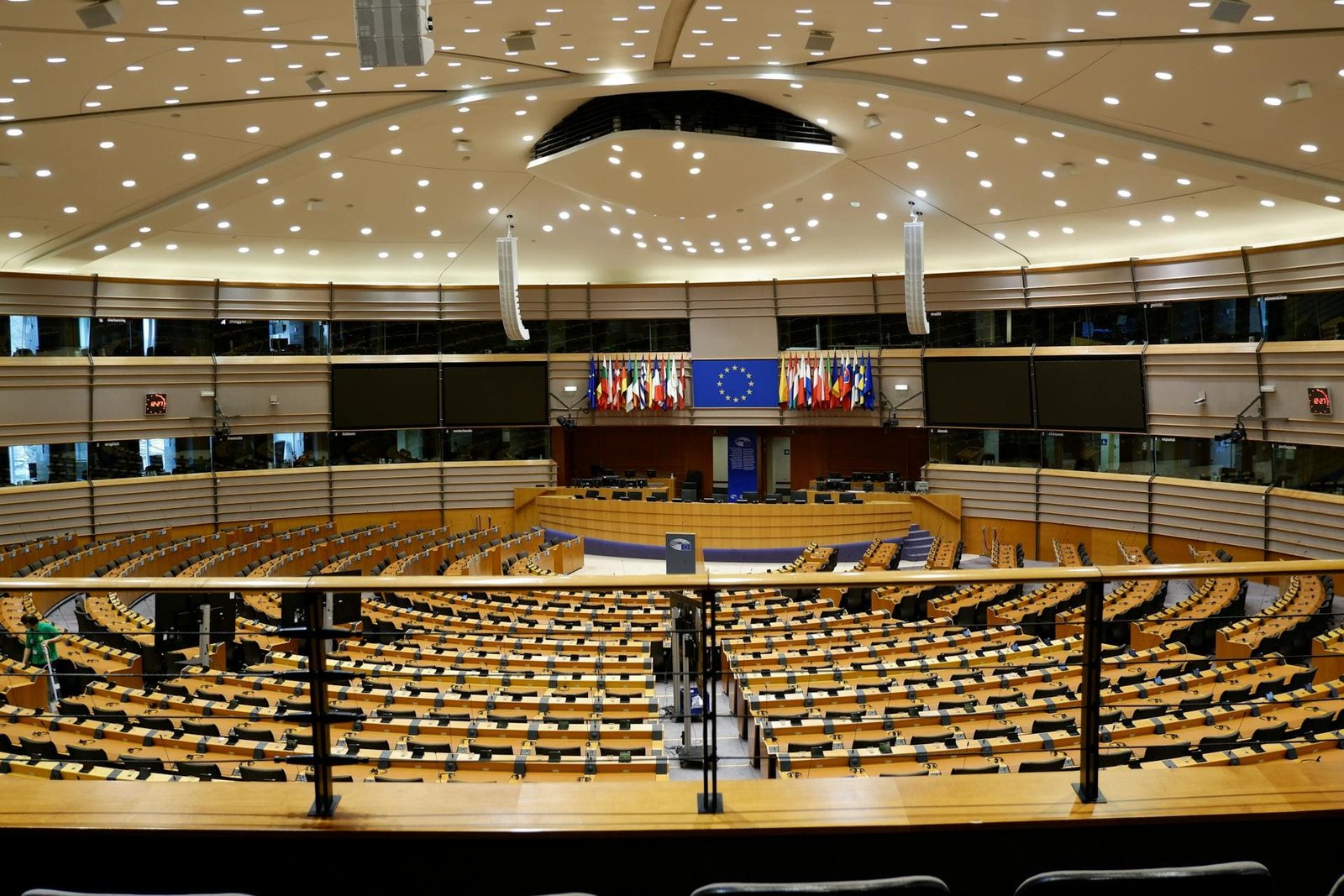
On 11 March 2026, the European Parliament adopted a resolution on social and employment priorities for the European Semester 2026. This text, led by MEP Nela Riehl, defines Parliament's position on the coordination of economic policies in the EU, focusing on quality employment, social protection and inclusion.
The European Semester is an annual cycle of coordination of the economic and budgetary policies of EU Member States. Each year, the European Commission publishes guidelines, which Parliament examines and votes on a resolution. For 2026, the debate takes place in a context of post-pandemic recovery, inflationary pressures and demographic challenges. Parliament insists on the need to reconcile budgetary discipline with social investments.
In its resolution, Parliament:
The resolution was adopted by 404 votes in favour, 208 against and 20 abstentions. This broad support reflects a consensus among the main political groups on the need to maintain a strong social dimension in European economic coordination.
Although this resolution does not directly create new laws, it influences the recommendations that the Commission will address to Member States. Concretely, it may encourage your government to:
As a citizen, you can follow the recommendations specific to your country and participate in national consultations on the European Semester.
The European Parliament has adopted a resolution that turns the European Semester into a machine for producing social objectives, without touching the mechanisms that actually decide spending. The vote (404 for, 208 against, 20 abstentions) creates no legal obligation, but it sets a course: that of an economic coordination ever more loaded with missions, without anyone bearing the political cost.
The European Semester is an annual cycle for coordinating the economic and budgetary policies of the Member States. By integrating the objectives of the European Pillar of Social Rights as benchmarks, Parliament wants poverty, youth unemployment and the employment gap for people with disabilities to weigh as much as the public deficit. The problem is not measuring these realities, but believing that an additional grid of indicators creates jobs or lifts children out of poverty. Each new objective adds a layer of reporting, not a euro of growth.
Parliament also calls for a specific budget of 20 billion euros for the European Child Guarantee and a floor allocation of 5% of ESF+ funds to child poverty. These amounts are addressed to the budgetary authority, but they say nothing about how the money will be spent. Experience with the structural funds shows that absorption rates and spending efficiency vary considerably depending on national administrations. Setting a spending floor without result conditionality rewards the states that spend the most, not those that achieve results.
The resolution states that the Semester must respect subsidiarity and national competences. But it simultaneously asks that country-specific recommendations assess the conformity of national budgets with the minimum resources allocated to combating child poverty. In other words, Brussels would set the spending priority, and the Member States would bear the political responsibility for implementation. This transfer of responsibility without a transfer of power is exactly what citizens reproach the Union for: objectives decided elsewhere, costs borne here.
Parliament also asks that social partners and civil society be systematically involved in the Semester. On paper, this is a good intention. In practice, it adds mandatory consultations and delays, without anyone knowing who decides in the end. For an SME waiting for administrative simplification, each new layer of governance is one more cost. The resolution half-acknowledges this by calling for simplification to preserve social rights, but it does not say how to reconcile the two.
A subsidiarity-based approach would have consisted in letting Member States define their own social objectives, making European funds conditional on measurable results rather than spending rates, and eliminating the overlaps between the Semester, ESF+ and national recovery plans. Parliament could have called for an independent evaluation of the effectiveness of existing social spending before asking for 20 billion more. It did not.
The resolution creates no legal obligations, but it reinforces a dynamic: that of a Union that produces objectives and indicators, and leaves it to the Member States to find the money and face the voters. The vote of 11 March 2026 shows a broad majority for this approach. The 208 votes against and the 20 abstentions are a reminder that a minority refuses this extension of the scope of economic coordination to all social policies.
You do not get out of poverty with indicators, you get out of it with jobs and growth.