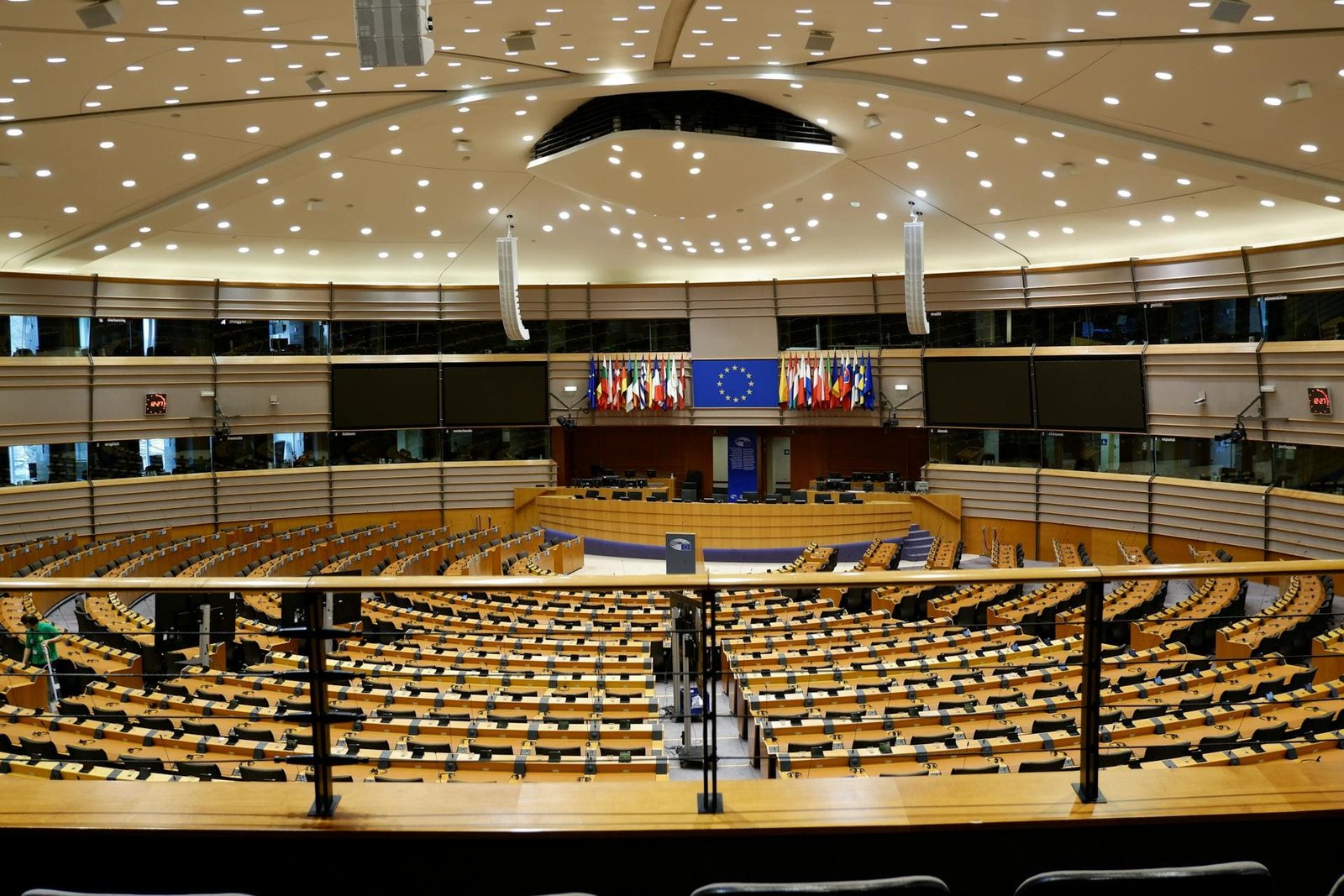
On 10 March 2026, the European Parliament adopted a resolution on the opportunities and challenges of copyright in the face of generative artificial intelligence (AI). This text, non-legislative but political, aims to guide future European rules to reconcile technological innovation and protection of creators.
Generative AI (like ChatGPT or image generators) can create texts, images or music by training on vast amounts of data, often protected by copyright. Creators (authors, artists, publishers) fear that their works are used without authorisation or remuneration. The Parliament therefore wanted to clarify the applicable rules, building on existing directives such as the Directive on Copyright in the Digital Single Market (2019/790) or the General Data Protection Regulation (GDPR, 2016/679).
The resolution affirms several key principles:
The Parliament also asks the European Commission to propose specific legislation to fill current gaps.
The resolution was adopted by 460 votes in favour, 71 against and 88 abstentions. This broad support shows a strong political consensus, even if some groups criticised a text too favourable to large publishers or, on the contrary, too restrictive for innovation.
Concretely, this resolution has no immediate legal effect, but it sends a clear signal to Member States and the Commission. In the long term, citizens could benefit from:
In summary, the European Parliament is laying the foundations for an ethical and fair framework for generative AI, where creators and citizens are protected without hindering technological progress.
On 10 March 2026 the European Parliament adopted a resolution calling on the Commission to urgently clarify how copyright applies to generative AI. Behind the vote (460 for, 71 against, 88 abstentions) lies a simple observation: the current laissez-faire approach organizes the transfer of value from creators to AI providers, without transparency or consent.
Copyright is a property right. In the absence of clear rules, AI providers train their models on protected works without authorization or remuneration. Parliament notes that the application of the copyright directive in the digital single market is ambiguous and calls for rapid clarifications. The point is not to block AI, but to enforce a simple principle: whoever uses someone else's work must obtain a license and pay.
The proposed mechanism is coherent: full transparency on training sources, documentation of the works used, and the possibility for rights holders to exclude their content through a trusted intermediary, EUIPO. This is not one more bureaucracy, but a centralized registry that spares each creator from negotiating alone with tech giants. Participation would be simple and without excessive cost, and prior refusals would remain valid. For a creative SME, this means a single window instead of a costly legal battle.
Parliament goes further: it calls for a rebuttable presumption of use where transparency obligations are not met. In practice, if an AI provider does not document its sources, the courts will presume that it used protected works. And if it loses, it will pay the rights holder's legal costs. The burden of proof shifts sides: the party holding the data must produce it.
This resolution is not a law. It invites the Commission to act, without creating directly applicable obligations. The risk is that these good intentions remain a dead letter if the Commission delays legislating. Parliament calls for a rigorous assessment before the planned review of the framework, but also for a solution for past uses. On this point, it opposes any blanket license with a flat-rate payment, which would amount to setting an administered price disconnected from the real value of the works. A liberal approach would have been to let the market negotiate, with voluntary collective licenses and a clear right of exclusion, rather than contemplating an imposed remuneration for the past.
Another reservation: Parliament suggests extending press publishers' neighboring rights to uses by AI, and studying compensation for loss of audience and revenue. The intention is commendable, but the mechanism risks being complex and creating new rents. It would be better to stick to transparency and negotiated agreements, without a presumption of collective management that weakens contractual freedom.
Finally, the text calls for combating deepfakes and labeling AI-generated content. These measures are justified, but they must not serve as a pretext for generalized content control. The priority remains individual responsibility: those who spread a fake must answer for their actions, not the platform for all of its users.
Copyright is not an obstacle to innovation, it is the condition for creators to keep innovating.