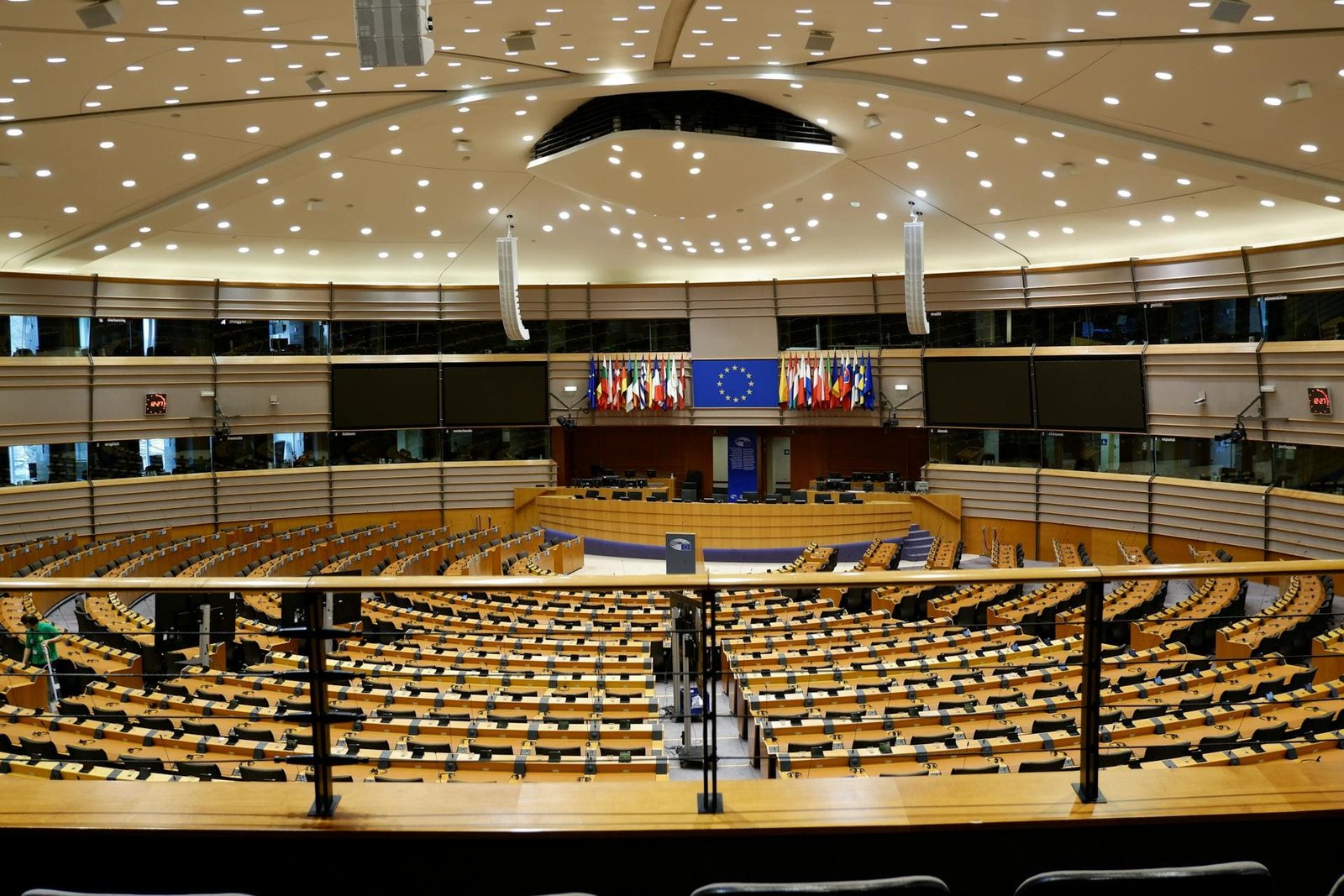
On 10 March 2026, the European Parliament adopted a resolution on the housing crisis in the European Union (EU). The text, led by Spanish MEP Borja Giménez Larraz, aims to propose concrete solutions to guarantee decent, sustainable and affordable housing for all citizens. Faced with rising prices and a housing shortage, Parliament calls for coordinated action at European, national and local levels.
The EU is experiencing an unprecedented housing crisis. Property prices and rents are rising faster than incomes, making housing inaccessible for many households, particularly young people, low-income families and people with disabilities. Homelessness is increasing. Although housing policies are primarily the responsibility of Member States, the EU can play a role by coordinating actions, encouraging investment and setting common objectives.
The European Parliament resolution makes several recommendations:
The resolution was adopted by 367 votes in favour, 166 against and 84 abstentions. This vote shows broad support among MEPs, but also divisions: opponents believe that the EU should not interfere in national housing policies.
This resolution has no direct legal effect, but it sends a strong political signal. It could influence future legislative proposals from the European Commission and encourage Member States to act. For citizens, this means increased pressure for governments to invest in affordable housing, protect tenants and fight exclusion. Young people and low-income households could benefit from targeted measures, such as housing allowances or social housing construction programmes. In short, the European Parliament puts housing at the heart of the European political agenda.
The European Parliament adopted on 10 March 2026 a resolution calling on the Commission to propose a European plan for affordable housing, a summit, a simplification package and a regulatory audit. The vote (367 for, 166 against, 84 abstentions) is not a transfer of competence: the text repeatedly recognises that housing remains a national competence. Its most useful contribution lies elsewhere: it points to the European and national rules that make construction more expensive, and calls for them to be lightened.
The resolution names the causes of the crisis: insufficient supply, endless permit-granting procedures, land prices, construction and energy costs, labour shortages. It asks public authorities to reduce regulatory burdens, avoid piling on new administrative layers and remove unnecessary formalities. That is the right direction: every superfluous rule delays a building site, and every year of delay means a home that never gets built.
But the text remains a non-legislative resolution. It amends no directive, removes no obligation, sets no binding deadline. The Commission is invited to act, not obliged to. The risk is yet another plan with no effect on the cost of a building permit. The announced simplification remains at the stage of a political request.
Parliament recalls that available data show that price controls and state interventions can have unintended consequences and discourage investment. This is an elementary economic truth: a cap on rents or prices discourages putting property on the rental market and discourages construction, thus reducing supply and worsening the shortage. The text invites Member States to limit market distortions, which is wise.
But it also calls for increasing the supply of public, cooperative and non-profit housing, and for helping local authorities to access European funds directly. Doubtless useful locally, but it is not a structural response. The priority should be to free up land, speed up permits and let private actors build where demand exists. One more public housing unit does not offset thousands of private projects blocked by paperwork.
The text recognises that housing falls under the Member States. The logical consequence would be to withdraw the European rules that make construction more expensive, rather than adding a plan, a summit, a data platform and an annual report. Every new coordination structure has an administrative cost and distracts attention from the real obstacles.
The requested regulatory audit is the most promising tool. If carried out seriously, it could identify the standards which, in the name of transition or safety, increase the cost per square metre without proportionate benefit. But an audit without the power to remove rules risks producing one more report. Genuine simplification would consist in repealing the rules identified as superfluous, not in compiling them into a new package.
Housing does not need one more European plan, but fewer rules that prevent construction.