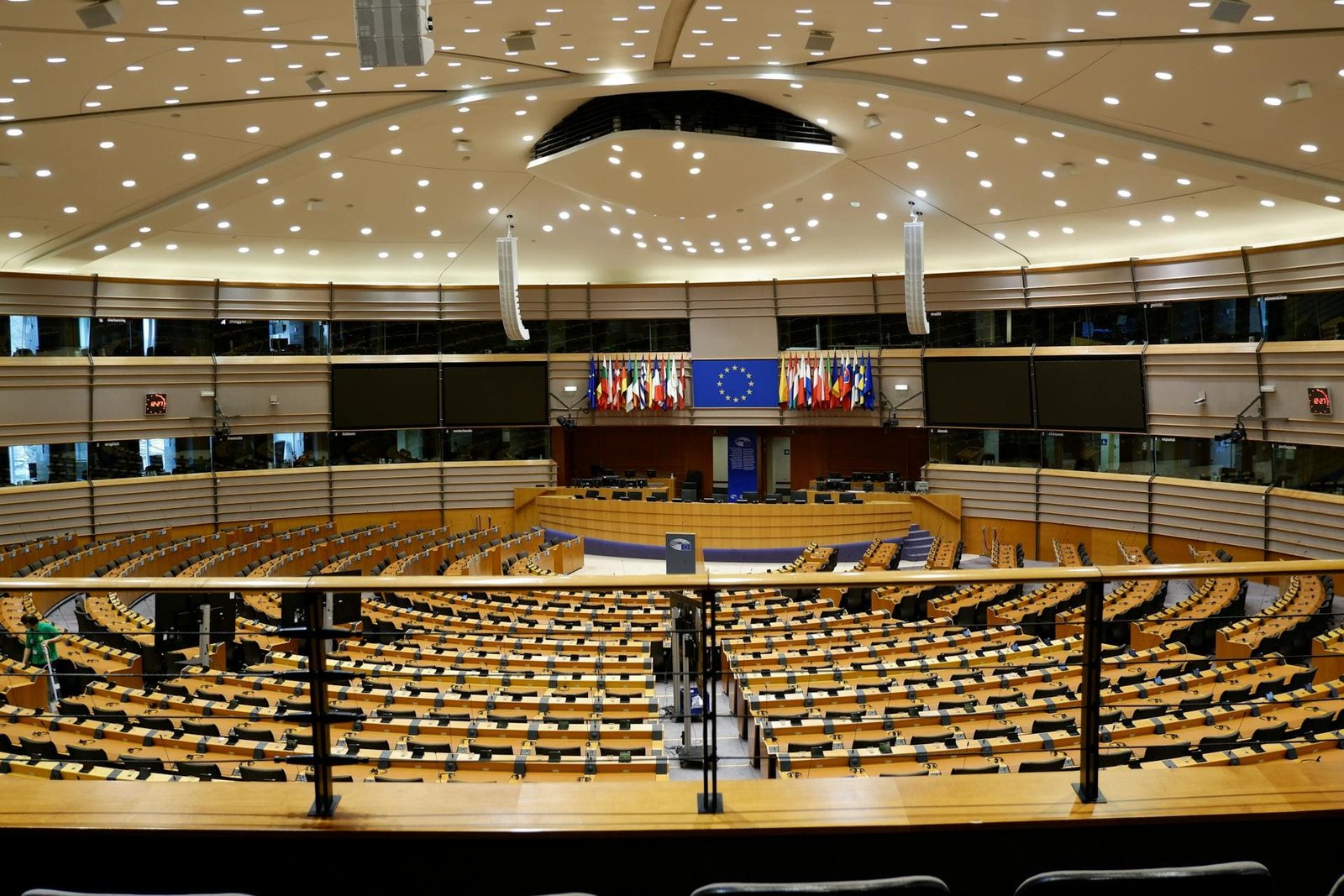
The European Parliament approved the payment of 1,806,624 euros to Austria to help the employees made redundant by KTM. This sum represents 60% of the total cost of 3,011,040 euros. The text is final and will become law after publication in the Official Journal of the European Union.
KTM, the largest motorcycle manufacturer in the European Union, filed for bankruptcy in November 2024. Its owner had relocated part of production to China and India in December 2023, which led to hundreds of redundancies. In total, 1,488 workers lost their jobs. Austria requested help from the European Globalisation Adjustment Fund (EGF), a fund that supports workers made redundant because of globalisation. The Commission assessed the request and proposed this contribution in February 2026.
Contribution of 1.8 million eurosAustria receives 1,806,624 euros from the European Globalisation Adjustment Fund, or 60% of the total cost of 3,011,040 euros. The rest is financed by Austria.
420 employees supportedOf the 1,488 workers affected by the bankruptcy of KTM, 420 are expected to take part in the measures. Personalised services include case management, career guidance, training and retraining, job search and training allowances.
2.9 million for servicesOf the total envelope, 2,895,120 euros are devoted to personalised services for workers and 115,920 euros to preparation, management, information, publicity, control and reporting costs.
Eligibility period from March 2025Expenditure on personalised services is eligible from 1 March 2025, for a period of 24 months. Administrative expenditure is eligible for 31 months from the entry into force of the financing decision.
Fund conditions metParliament confirms that the conditions of the EGF regulation are met: at least 200 workers lost their jobs over a four-month period, between 25 February and 25 June 2025, and 1,255 further redundancies are linked to the same event.
Parliament adopted the text by 584 votes in favour, 39 against and 13 abstentions.
In practice, 420 former KTM employees in Upper Austria will be able to benefit from training, job search assistance and training allowances. The European money complements national and regional funding. This aid is one-off and does not create a permanent right: it responds to a specific request linked to the bankruptcy of KTM. The text is final and will enter into force after its publication in the Official Journal of the European Union.
The European Parliament has approved the payment of 1,806,624 euros to Austria to help 420 former KTM employees, victims of the motorcycle manufacturer's bankruptcy. A massive vote (584 for, 39 against, 13 abstentions) that masks a fundamental question: is the EGF a one-off shock absorber or a crutch that removes companies' sense of responsibility?
The EGF intervenes after job losses. It finances training and support for 420 of the 1,488 affected employees. This is concrete aid, but it arrives once the damage is done. KTM's relocation to China and India in December 2023 was decided by the parent company, Pierer Mobility, without Austrian employees having a say. The European taxpayer is now paying 60% of the bill, while the company paid out dividends in 2021 and 2024 while receiving state aid during the pandemic (recital D).
The mechanism is simple: a company relocates, lays off workers, and the Union steps in to cushion the shock. This transfer of responsibility from the company to the public budget creates a moral hazard. If executives know that the EGF will cover part of the social costs, they factor this externality into their calculations. One-off solidarity is legitimate, but it must come with a counterpart: companies that make mass layoffs after paying dividends should not be able to count on public money without conditions.
Parliament itself acknowledges it: the EGF cannot replace a proactive industrial policy (paragraph 8). But the current industrial policy, made up of costly standards and a Green Deal that drives up energy prices, is precisely what pushed KTM to relocate. European rules increase production costs, and then the Union finances the retraining of those who lose their jobs because of those very rules. It is a vicious circle.
The alternative is well known: lighten the burdens weighing on industry, reduce authorisation times, secure property rights and freedom to do business. A company that can produce competitively in Europe does not need to relocate. The EGF must remain an exceptional safety net, not a habitual budget line. The massive vote in favour of this text shows that solidarity is easy to vote for when the bill is small. But true solidarity consists in creating the conditions so that these layoffs do not happen.
The EGF bandages the wounds, but it does not cure the disease: a Europe that costs too much to produce in.