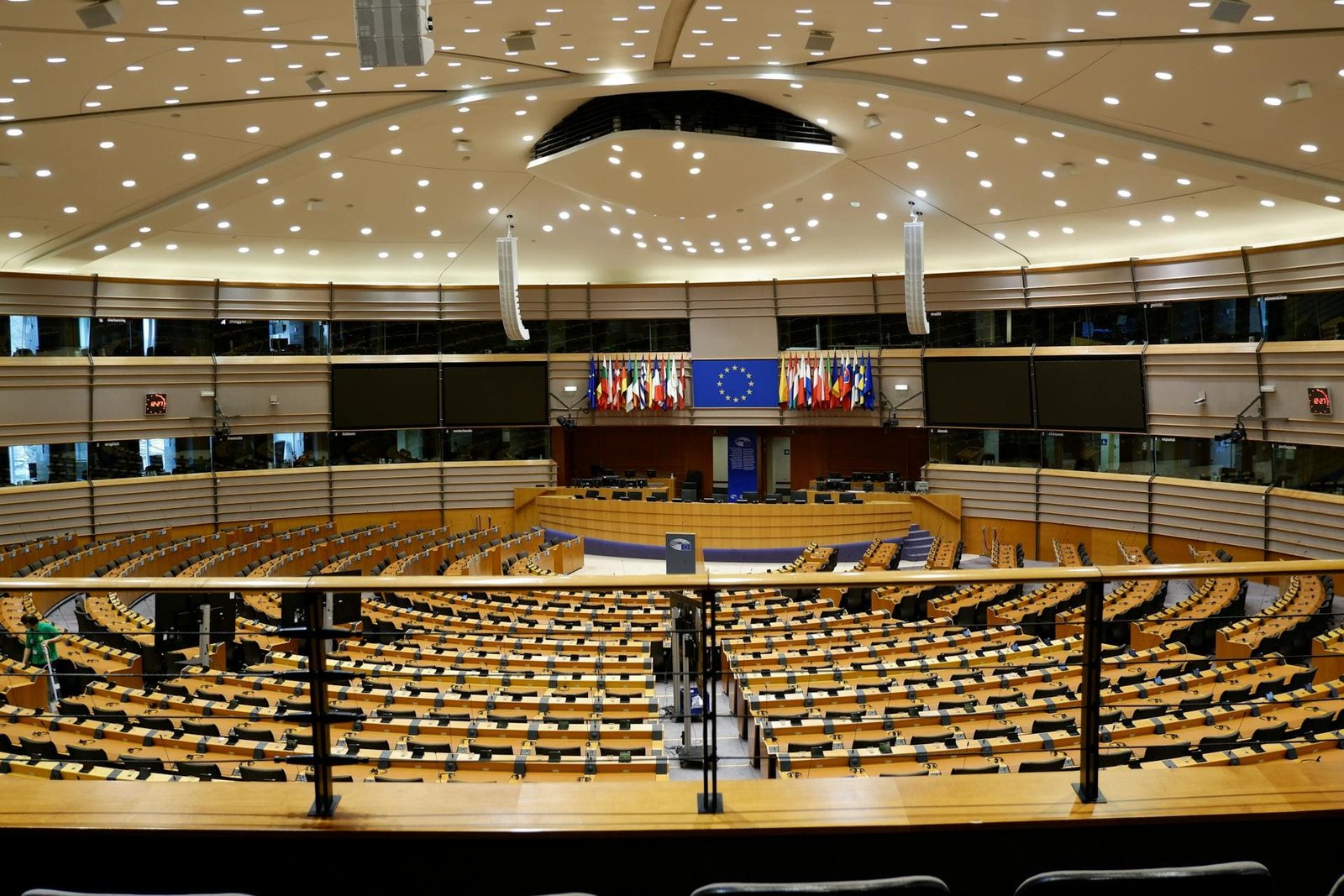
On 10 February 2026, the European Parliament adopted an amendment to Regulation (EU) 2024/1348 concerning the application of the concept of 'safe third country'. This text aims to harmonise the criteria for considering a country as safe for returning an asylum seeker, in order to avoid divergences between Member States and to guarantee effective protection of fundamental rights.
The concept of 'safe third country' allows a Member State not to examine an asylum application on its merits if the applicant had the opportunity to seek protection in another country deemed safe. Until now, each Member State applied its own criteria, creating inequalities and risks of return to countries where protection is not guaranteed. The European Commission proposed a revision to establish common rules, as part of the Pact on Migration and Asylum.
The Parliament approved at first reading an agreement with the Council (the Member States) which sets strict conditions for a country to be designated as a 'safe third country':
The adopted text corresponds to the final Regulation (EU) 2026/463, which amends Regulation (EU) 2024/1348.
The proposal was adopted by 396 votes in favour, 226 against and 30 abstentions. Opponents considered the criteria still too vague and could lead to abusive returns, while supporters stressed the need for a common approach to ease pressure on national asylum systems.
For asylum seekers, these rules bring more predictability: they will know in advance which countries can be considered safe and under what conditions a return is possible. For EU citizens, this means more consistent management of asylum applications, reducing the risks of 'asylum shopping' and contradictory decisions between Member States. However, human rights organisations remain vigilant about the practical application of these criteria.
Parliament has set its final position on Regulation (EU) 2026/463: 396 votes in favour, 226 against, 30 abstentions. The concept of a "safe third country" is becoming a common rule, no longer a national patchwork. The real issue is not the principle, it is what happens when a member state designates a country as safe and the applicant contests it.
The mechanism is simple to describe: a member state may return an applicant to a third country it deems safe, and the regulation now frames that designation. The point of a common rule is to reduce administrative arbitrariness, not to extend it. When each capital applies its own list, the applicant does not know what to expect and the national judge decides alone. A European framework makes the decision predictable and contestable under the same criteria everywhere.
The cost of this harmonisation is real: where a state used to act quickly, it will now have to document more. But the alternative, a patchwork of practices, produces the opposite of what the advocates of administrative laissez-faire promise: slower decisions, more contested, and less effective returns. Clear criteria are the condition for real returns, not an obstacle.
The vote says one clear thing: a majority exists to frame returns to a safe third country. It says nothing about the actual capacity to carry out those returns. A rejected applicant who stays on the territory because the country of return refuses to take them back turns a legislative victory into a dead letter. The regulation organises designation, not cooperation with destination countries.
Parliament approved the agreement with the Council without room for renegotiation: the position adopted corresponds to the final act. The groups that voted against did not offer a credible alternative on border control, only a refusal of the principle. A migration policy that does not distinguish the legitimate applicant from the one who circumvents the procedure ends up protecting neither.
Designating a country as safe is pointless if the return does not happen: the common rule is only a beginning.