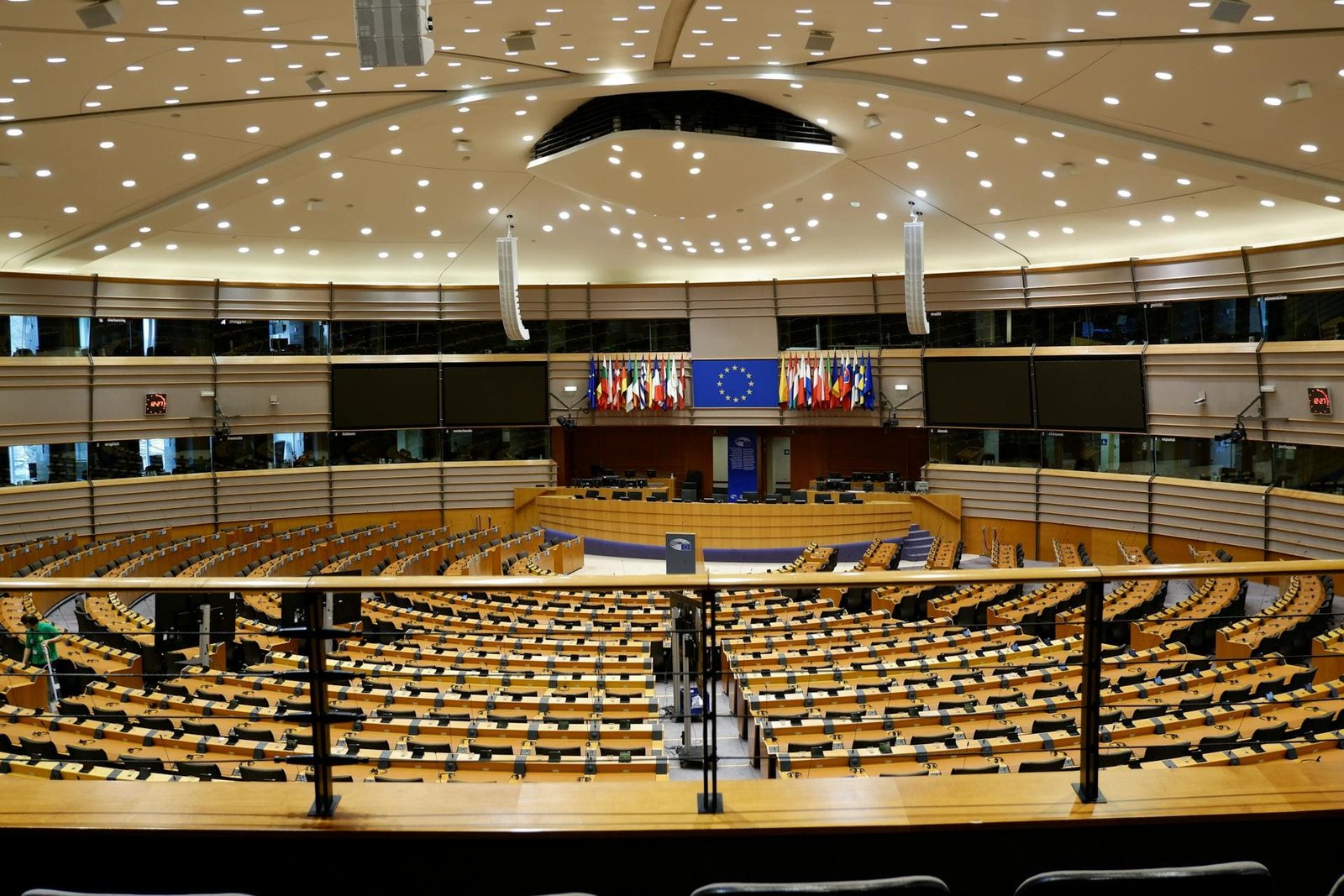
The European Parliament approved the conclusion of an agreement between the European Union and Ecuador allowing Europol to cooperate with the competent Ecuadorian authorities to combat serious forms of crime and terrorism. The vote was adopted by 586 votes in favour, 21 against and 11 abstentions. The agreement had already been negotiated; Parliament gives its green light without making any changes to it. This is an approval step: the text may become binding after official notification to the parties.
Europol, the European police cooperation agency, can already cooperate with the authorities of many non-EU countries. Until now, no formal framework allowed direct cooperation with Ecuador for investigations into serious crime and terrorism. The Commission and the Council negotiated an agreement to that effect. The European Parliament had to give its approval for the Union to conclude this agreement. That has now been done with the vote of 11 March 2026.
Green light for the Europol-Ecuador agreementParliament approves the conclusion of the agreement between the European Union and Ecuador on cooperation between Europol and the competent Ecuadorian authorities to combat serious forms of crime and terrorism.
No changes madeParliament did not amend the text of the agreement. It approves it as negotiated by the Commission and the Council.
Operational cooperation possibleOnce the agreement is in force, Europol and the Ecuadorian authorities will be able to exchange information and cooperate in joint investigations into serious crime and terrorism, within the limits provided for by the agreement.
Official transmission of the positionThe President of Parliament is responsible for transmitting Parliament's position to the Council, the Commission, and the governments and parliaments of the Member States and of the Republic of Ecuador.
Parliament adopted the resolution by 586 votes in favour, 21 against and 11 abstentions, in an electronic roll-call vote.
This agreement allows Europol to cooperate more directly with Ecuador to combat serious crime and terrorism. In practice, European investigations with ramifications in Ecuador will be able to benefit from a supervised channel for information exchange and police cooperation. This does not create new direct rights for citizens, but it strengthens the tools available to combat criminal and terrorist networks operating between Europe and Latin America. The agreement does not yet apply: it will enter into force after the final formalities between the parties.
Parliament gave the green light, by 586 votes to 21 with 11 abstentions, to the agreement that opens a direct cooperation channel between Europol and the Ecuadorian authorities against serious crime and terrorism. No amendment, no reservation: the groups approved a text that had already been negotiated. The question is not whether Europe should pursue criminal networks beyond its borders; it must. The question is who will answer for what this cooperation produces, and at what cost in freedoms and personal data.
The logic of the agreement is simple: more information shared, more investigations solved, fewer active networks. This cause-and-effect chain is not automatic. An exchange channel that is not used, or used to transmit unverifiable intelligence, produces no additional security. It produces paperwork and the illusion of action. The European taxpayer funds Europol; they are entitled to know what this agreement concretely changes in investigations.
The alternative, in a logic of subsidiarity, would have been to condition approval on a public annual report by Europol on the number and nature of exchanges with Ecuador, and on a review clause after three years. That would not have blocked the agreement, it would have made it accountable. Security is a public service; it deserves better than an approval vote with no follow-up.
The 21 votes against and 11 abstentions are a reminder that a minority refuses to see the Union cooperate with third countries in criminal matters. Their position is not tenable: refusing supervised channels means leaving national police forces to cobble together opaque bilateral agreements. Better a European framework, imperfect but transparent, than discreet arrangements.
Approving a police cooperation agreement without a monitoring mechanism means giving Europol a mandate with no democratic counterpart.