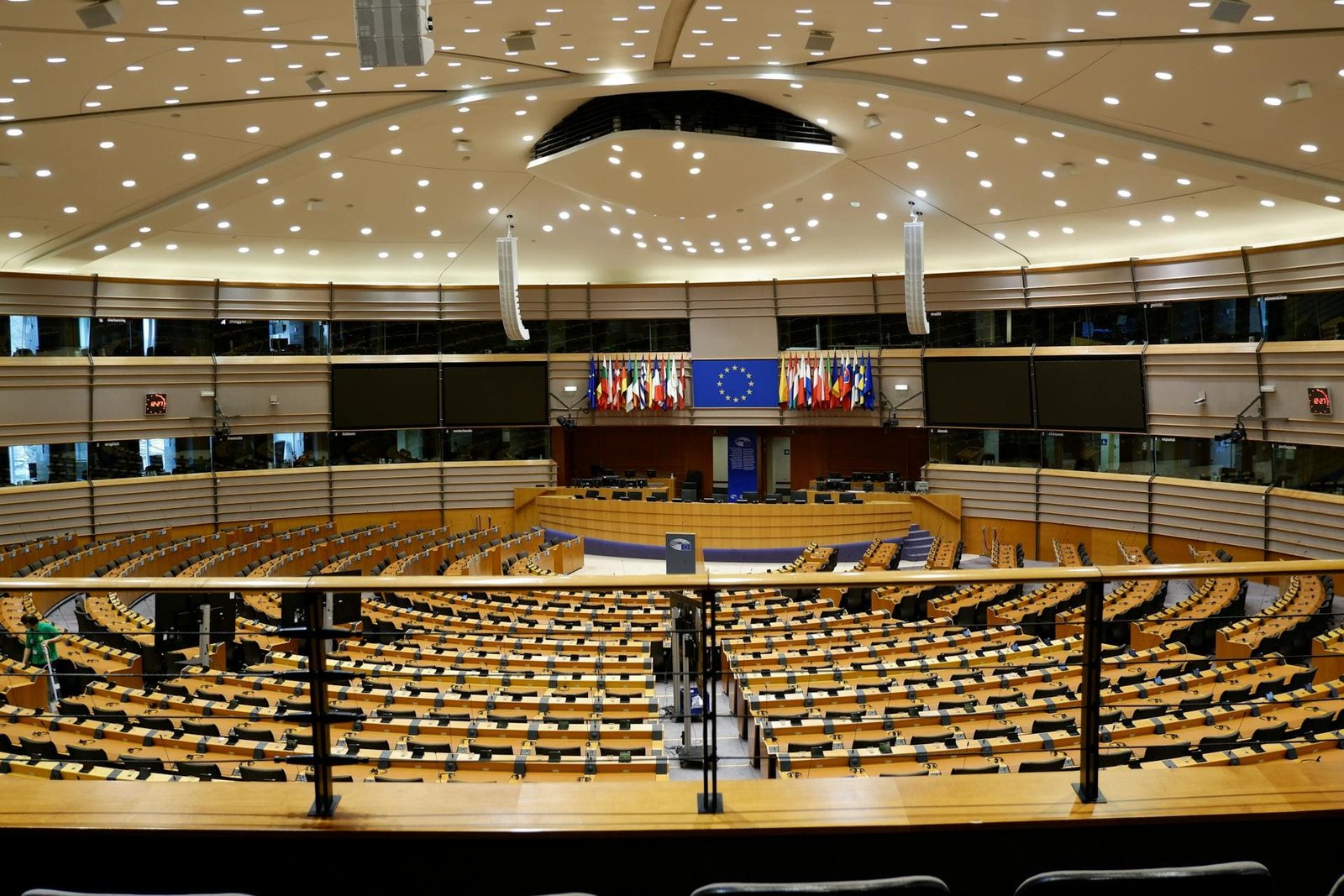
On 10 February 2026, the European Parliament adopted a resolution on the 2025 annual report of the European Central Bank (ECB). The text approves the ECB's main orientations while making recommendations on governance, monetary policy and the bank's role in supporting the European Union's economy.
Each year, the ECB publishes a report on its activities. The European Parliament examines this report and adopts a resolution expressing its position. This dialogue allows democratic oversight of the ECB, which is independent in its monetary policy but must report to the European institutions.
In its resolution, Parliament:
The resolution was adopted by 443 votes in favour, 71 against and 117 abstentions. This broad support shows a consensus among the main political groups on the positive assessment of the ECB's work.
The ECB sets interest rates that influence the cost of mortgages, business loans and savings. By approving its report, Parliament indirectly validates decisions that impact your purchasing power and the economy in general. The resolution also asks the ECB to better explain its actions, which can help you understand why rates change and how this affects your daily life.
On 10 February 2026, the European Parliament adopted by 443 votes to 71 with 117 abstentions a resolution taking note of the European Central Bank's 2025 annual report. Behind the customary congratulations on falling inflation, the text asks a simple question: can an independent central bank remain accountable to elected representatives for its choices without that accountability becoming political tutelage? The answer lies in a balance that the resolution seeks, sometimes clumsily.
The resolution rightly recalls that the ECB's statutory independence is the condition of its mandate: price stability. But it adds an essential nuance: central banks must be independent, not isolated. The mechanism is clear. A central bank that decides without giving an account ends up deciding without explaining, and therefore without correcting its mistakes. Parliament is not asking to vote on rates, it is asking to understand how they are set. That is the difference between democratic control and political interference.
The text welcomes the exchange of letters between Parliament and the ECB on interaction practices. That is a useful step, but only a step. Transparency on the Governing Council's models, assumptions and inflation assessments remains a wish. Yet without a publication requirement, each national central bank keeps its own interpretation of what "giving an account" means. The alternative would be a formal framework, adopted by Parliament and the ECB, setting minimum transparency requirements. The current text prefers the invitation, more diplomatic, less binding.
Parliament supports the ECB in its desire to reduce its direct role in buying securities and encourages it to gradually abandon government bond purchase programmes. This is a coherent liberal position: these programmes distort price signals and transfer interest rate risk to the central bank, and therefore to the taxpayer. The resolution also notes that the ECB has begun to shrink its balance sheet very gradually. Too gradually, one might add: every month of delay keeps downward pressure on sovereign yields, which allows states to postpone painful budgetary adjustments. The text says so in its own way by deploring the effect of the budgetary situation on the ECB's mandate.
Another technical but decisive point: Parliament invites the ECB to avoid paying banks deposit rates higher than market rates, because this runs counter to the principle of an open market economy with free competition. Behind the jargon, a simple mechanism: if the central bank remunerates excess reserves above the market, banks have no interest in lending to each other. The interbank market dries up, and the ECB becomes the only lender. The resolution calls for removing obstacles to the revival of that market. It is a common sense liberal measure, but it remains an invitation, not a rule.
An independent central bank is not an irresponsible central bank: it must explain its choices to those who bear the consequences.