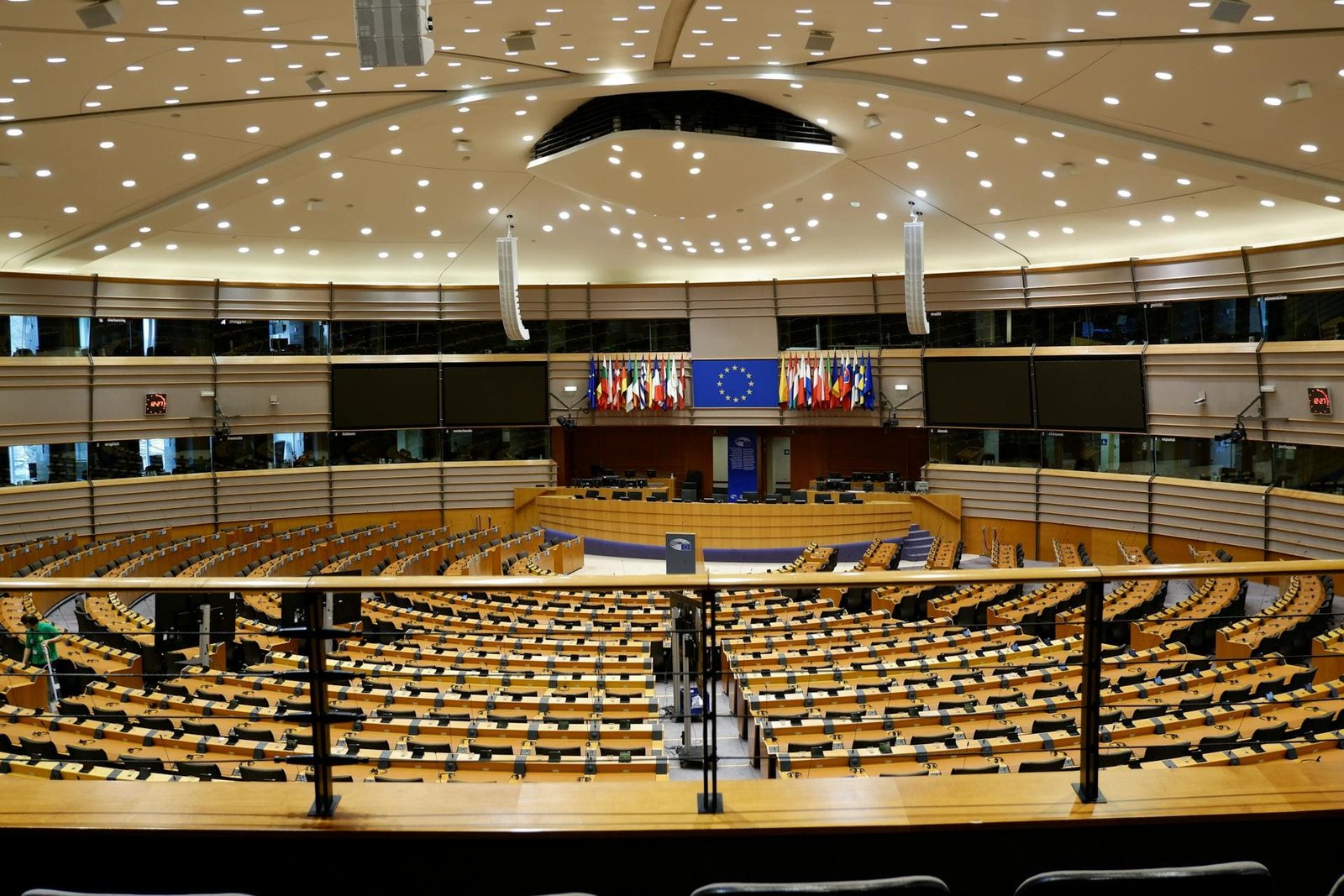
The European Parliament gave its approval to the conclusion of the agreement between the European Union and Iceland on the transfer of passenger name record (PNR) data for the prevention and detection of terrorist offences and serious crime, as well as for investigations and prosecutions in this area. The adopted text is a short legislative resolution that approves the agreement and instructs the President of Parliament to forward Parliament's position to the Council, the Commission, and the governments and parliaments of the Member States and of Iceland. This approval was required for the agreement to be concluded.
The agreement between the European Union and Iceland governs the transfer of passenger name record (PNR) data between airlines and the Icelandic authorities, with the aim of preventing, detecting, investigating and prosecuting terrorist offences and serious crime. The Council requested the European Parliament's approval to conclude this agreement. Without this approval, the agreement cannot be concluded by the European Union.
Approval of the agreementParliament gives its approval to the conclusion of the EU-Iceland agreement on the transfer of passenger name record (PNR) data for the prevention and detection of terrorist offences and serious crime, as well as for investigations and prosecutions in this area.
Forwarding of the positionThe President of Parliament is instructed to forward Parliament's position to the Council and the Commission, as well as to the governments and parliaments of the Member States and of Iceland.
Subject of the agreementThe agreement governs the transfer of PNR data between the European Union and Iceland for the prevention, detection, investigation and prosecution of terrorist offences and serious crime.
Parliament adopted the resolution by 532 votes in favour, 75 against and 28 abstentions, in an electronic roll-call vote.
Passenger name record (PNR) data from flights between the European Union and Iceland may be transferred to the Icelandic authorities within the framework defined by the agreement, for the purposes of combating terrorism and serious crime. Passengers on these flights will have their data processed according to the rules laid down in the agreement. The European Parliament approved this agreement, which allows it to enter into force after the final formalities.
The European Parliament has given the green light to the EU-Iceland agreement on the transfer of passenger name record (PNR) data by 532 votes for, 75 against and 28 abstentions. This is not a blank cheque for mass surveillance: it is a binding framework that allows Reykjavik to cooperate against terrorism and serious crime, while imposing clear rules. But approval does not dispense with examining what this agreement really costs airlines and passengers, and what it could have been if the logic of subsidiarity had prevailed.
The PNR agreement with Iceland is not a bureaucratic whim: it allows Icelandic authorities to access passenger data to track terrorists and serious criminals. Without this agreement, Iceland would become a hole in the European safety net, an entry point for those who want to escape surveillance. Parliament was therefore right to approve. But beware: approval does not mean the text is perfect. PNR data is a powerful tool, and like any powerful tool, it can be misused. The agreement must provide solid safeguards, and Parliament must remain vigilant about their application.
What is missing is an explicit cost-benefit assessment. Airlines will have to adapt their systems to transfer this data, which represents a not insignificant cost, particularly for small airlines. This cost will be passed on to passengers, in the form of more expensive tickets or reduced services. Parliament should have demanded an impact study before approving, to ensure that the security benefits justify these costs. An approach based on subsidiarity would have consisted in letting member states negotiate bilateral agreements with Iceland, according to their specific needs, rather than imposing a uniform framework.
The 75 votes against and 28 abstentions are not merely the expression of ideological timidity. They reflect a legitimate concern: that of seeing individual freedoms sacrificed on the altar of security. But those who voted against did not propose any credible alternative. Rejecting the agreement meant leaving Iceland outside the system, with the risk that terrorists would exploit this gap. The real question is not whether to cooperate, but how. An independent oversight mechanism, with investigative and sanctioning powers, would have been preferable to simple approval. Parliament could have demanded the creation of such a body before giving its green light.
By approving this agreement, Parliament sends a signal: cooperation on security is possible, but it must respect rules. This signal is important, but it must not mask the flaws in the text. The agreement does not provide for a binding review clause, which means that safeguards could be weakened without Parliament having a say. This is a gap that MEPs should have corrected.
Approving a security agreement is not a blank cheque: it is a commitment to monitor its abuses.