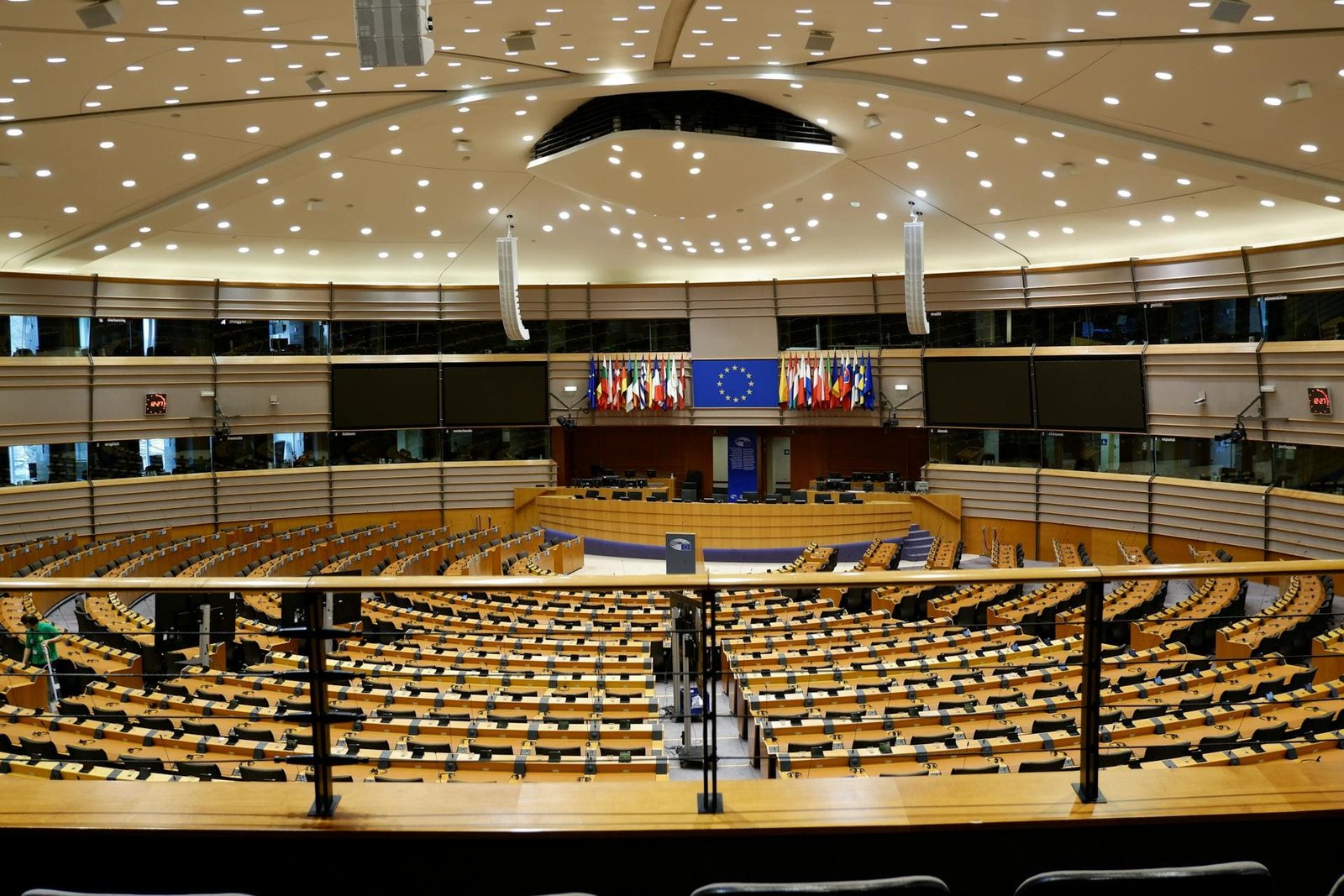
The European Parliament has adopted a proposal to strengthen the fight against migrant smuggling and human trafficking. The measure responds to the need for a more effective response to organized crime threatening Member States' security and victims' fundamental rights. The changes will affect all EU Member States and their law enforcement authorities.
The legal basis is Regulation (EU) 2016/794 on Europol. The main objective is to strengthen the capacity of Europol's specialized centre against migrant smuggling and human trafficking, and to ensure a permanent structure for coordinated action at Union level.
The position adopted at first reading will be transmitted to the Council and Commission. Further procedure includes Council approval and possible re-consultation of the Commission. Implementation will occur in cooperation with national authorities and in accordance with EU agencies' mandates.
Expected effects include better prevention and detection of criminal activities, increased security in the EU area, and improved protection of fundamental rights. Member States will have access to reinforced operational support, and victims to better identification and support. Coherence with existing legal frameworks and respect for the proportionality principle are emphasized.
On 25 November 2025, the European Parliament adopted Regulation (EU) 2025/2611 by 556 votes to 74, extending Europol's mandate to combating migrant smuggling and human trafficking. The objective is right: better coordinate national police forces against criminal networks that exploit misery. But without real control of the external borders, this police cooperation risks chasing flows it will not stop.
Europol is a support agency: it analyses, coordinates, trains, but arrests no one. The new regulation gives it a clearer mandate to help member states dismantle the networks that organise clandestine passage and the exploitation of migrants. This is real progress for investigators who run up against the fragmentation of information among 27 police forces. But Europol's effectiveness depends on what member states pass on to it. If national files remain compartmentalised, the agency will produce reports that no one uses.
Human trafficking is a heinous crime that thrives on porous borders and on the failure of return policies. Strengthening Europol without acting on these two levers means treating the symptoms while letting the disease spread. Networks adapt quickly; an agency, even a better equipped one, cannot compensate for the absence of control at entry points.
In recent years the European Union has adopted several texts on border management and asylum, but effective returns remain marginal and the external borders, in several member states, are regularly overwhelmed. Migrant smuggling is a criminal activity that pays well because demand for clandestine passage remains strong. As long as irregular entry is not deterred by physically controlled borders and asylum procedures processed quickly, the networks will have fine days ahead of them.
An approach based on individual responsibility and national sovereignty would call for concentrating resources on border protection and on binding readmission agreements with countries of origin and transit. Europol can help identify smugglers, but it is not the one that will stop a boat from leaving. Parliament has approved a useful text; it has not settled the fundamental question.
Without controlled borders, Europol will count crimes better, not fewer.